

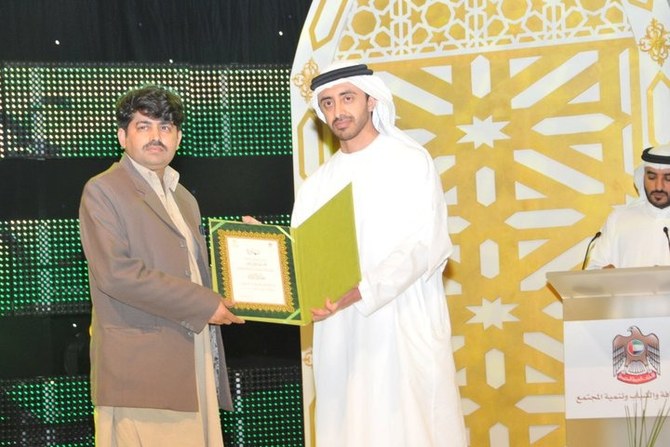

ISLAMABAD: A Pakistani calligrapher, the first from his country to win a prestigious international competition last month, said on Friday his greatest wish had finally been fulfilled.
Muhammad Ali Zahid became the first artist from his country whose creative abilities were recognized at Albaraka Türk International Calligraphy Competition.
Counted among the most refined cultural events in Turkey, the contest has been held every three years since 2005 and attracts entries from some of the best calligraphers across the world.
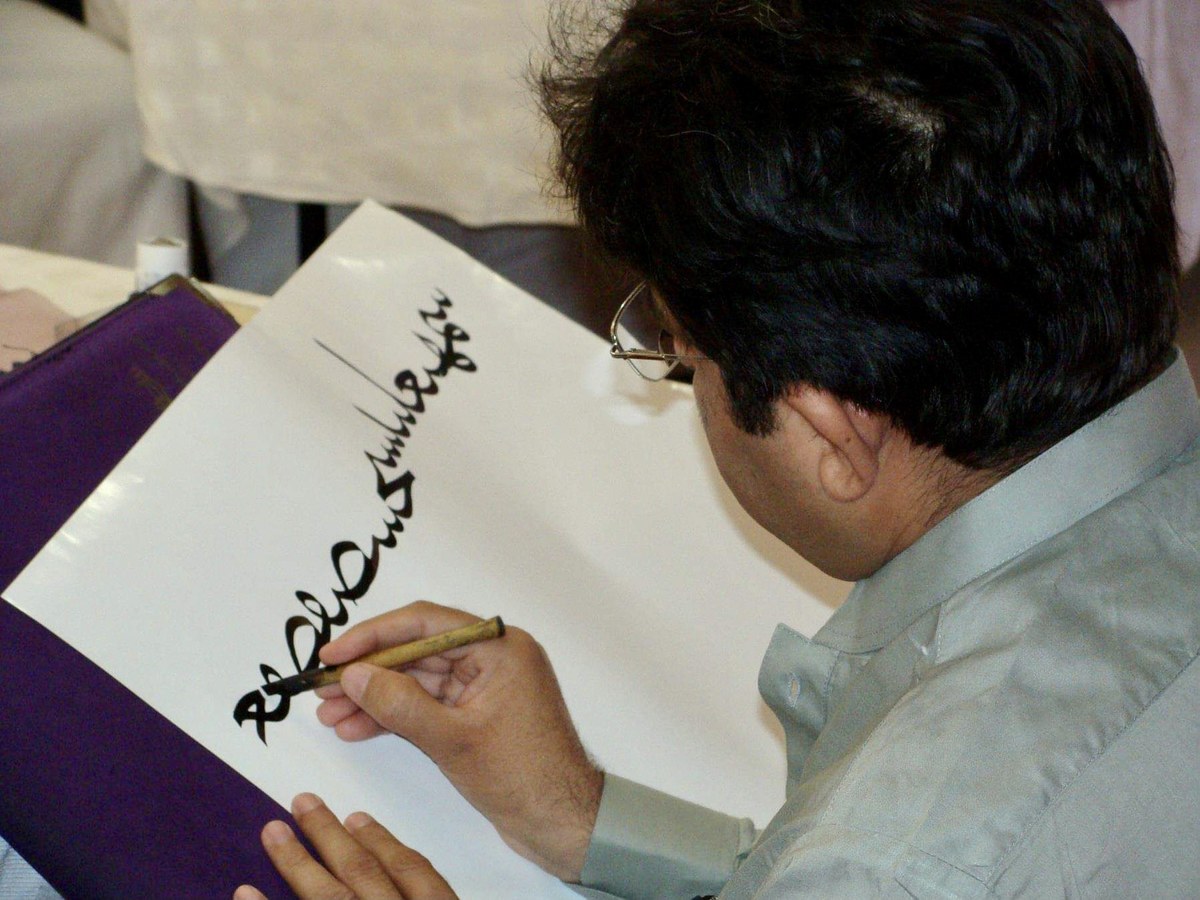
Pakistani calligrapher Muhammad Ali Zahid is working during a live exhibition in Algeria on June 15, 2014. (Photo courtesy: Muhammad Ali Zahid)
All previous editions of the competition were, however, won by artists from Turkey and other countries, and it was the first time its jury rewarded a Pakistani for the artistic finesse of his work.
“Winning this award was like a dream come true for me,” Zahid told Arab News in an exclusive interview.
“It was a moment of pride not only for me but also for my country,” he continued. “It was the first time they recognized the work of a Pakistani artist.”
Calligraphy has remained a leading form of artistic expression among Muslims since the beginning of the Islamic civilization.
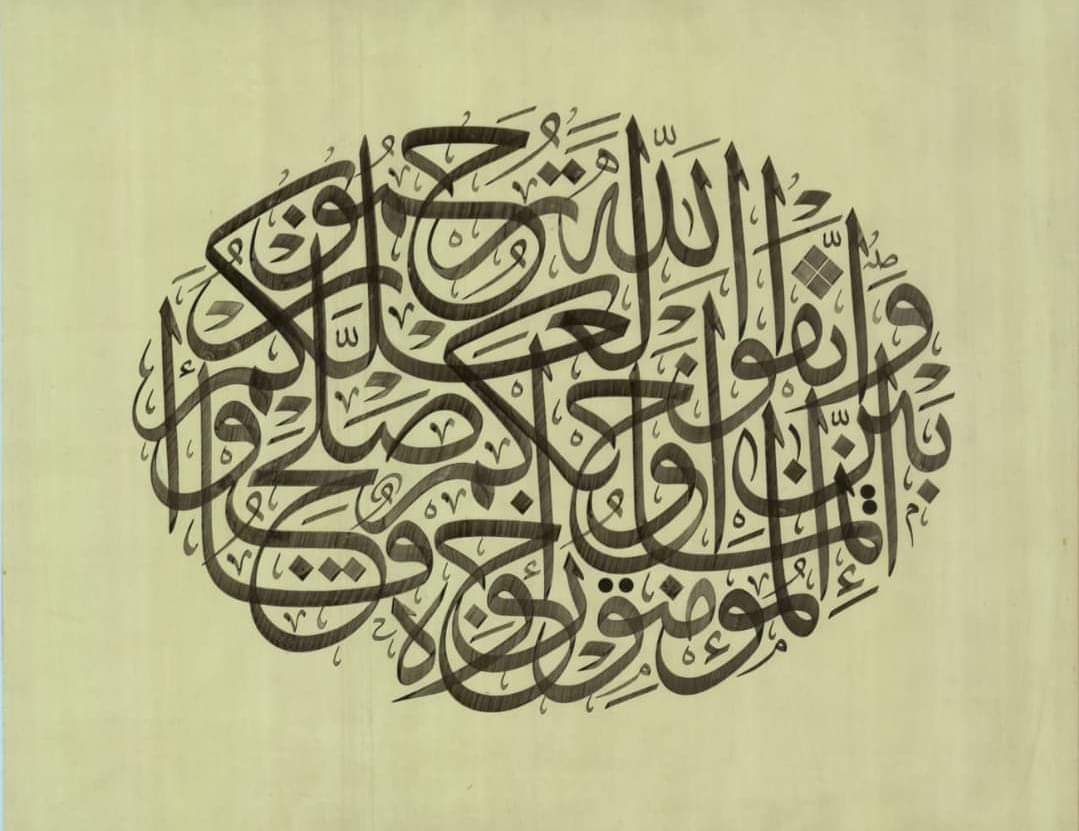
This undated image shows the art work of Pakistani calligrapher Muhammad Ali Zahid which won the first prize in the 6th edition of Albaraka Türk International Calligraphy Competition 2021. (Photo courtesy: Muhammad Ali Zahid)
A highly stylized form of writing, it has been used to adorn mosques and other places in cultural contexts where other types of images are not always appreciated.
Zahid said the theme of this year’s competition in Turkey was “society and good morality,” adding that it took him more than six months to conceptualize and complete his work within the given parameters.
“I prepared more then 10 different compositions before selecting one of them which ultimately won the first prize,” he continued.
The Pakistani artist has also participated in over 17 international competitions in Saudi Arabia, the United Arab Emirates, Egypt, Iraq and Malaysia in which he won several prizes.
“The most important thing for an artist is a favorable opinion of other members of his professional community,” he said. “My work has been admired by some of the leading Arab and Turk artists which makes me extremely happy.”
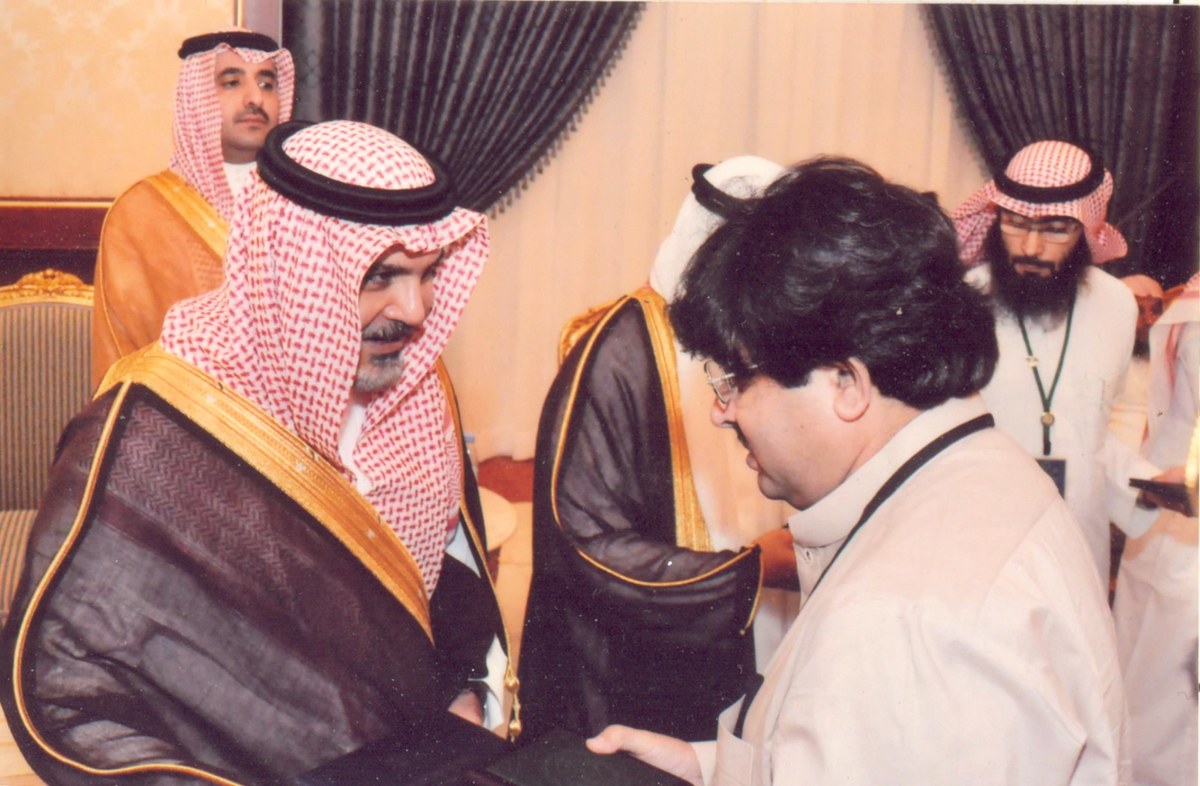
Pakistani calligrapher Muhammad Ali Zahid is participating in the calligraphy exhibition organized by the King Fahad Quran Complex in Medina on April 21, 2011. (Photo courtesy: Muhammad Ali Zahid)
Zahid noted that Islamic calligraphy had its own rules, and each one of its styles required a great deal of practice and focus.
“I learned through a lot of practice and consulted old books of Turk calligraphy artists,” he informed.
“I have also prepared about 600 visual depictions of Allama Muhammad Iqbal’s poetry,” he added, “but they did not get much recognition locally.”
Asked about the future of calligraphy in Pakistan, Zahid said that many young artists found it difficult to excel at it due to lack of financial resources and absence of any state patronage.
“I have passed on this skill to many young students to promote Islamic calligraphy in my country,” he continued. “Many of them have done a magnificent job and their work has attracted tremendous international attention. About eight to ten of my students have also won international competitions.”


