ISLAMABAD: The government may consider amnesty for Pakistani Taliban if its members lay down their arms, abandon the group’s ideology and adhere to the country’s constitution, said President Arif Alvi during an interview to a local media organization on Friday.
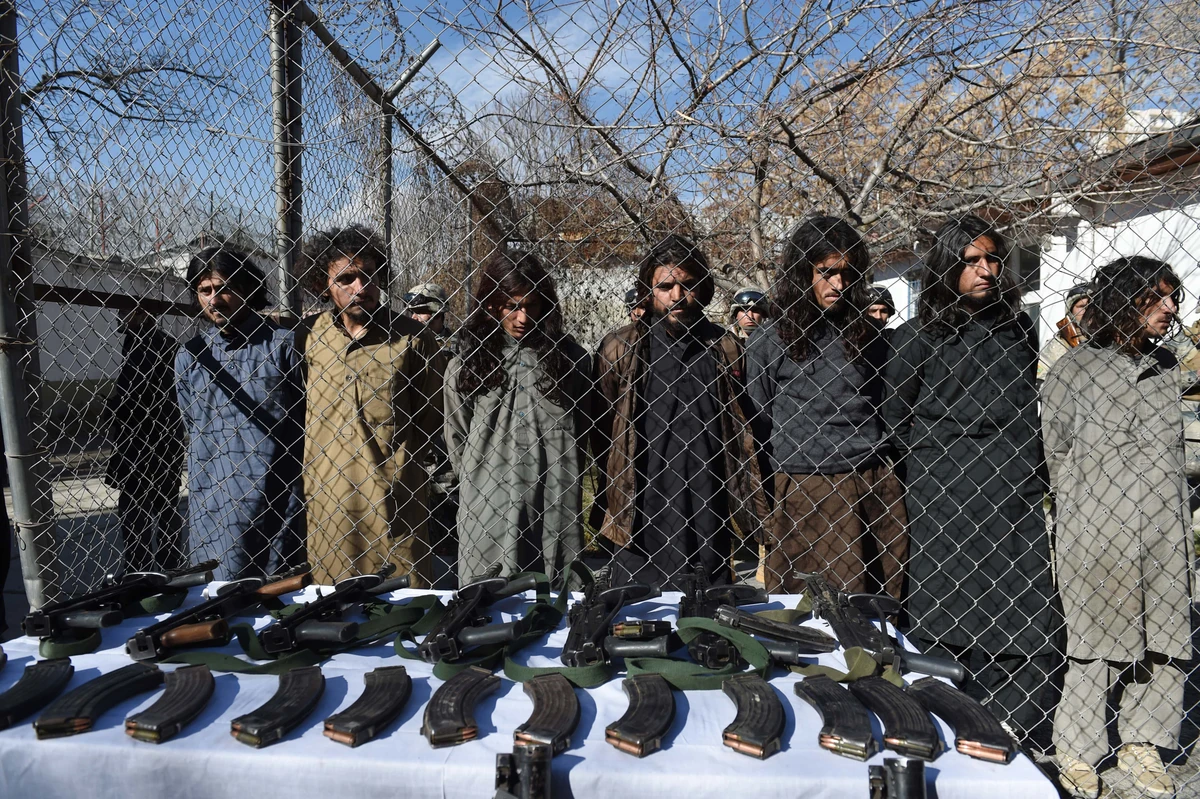
Tehreek-e-Taliban Pakistan, an umbrella organization of militant factions, emerged in Pakistan’s tribal territories in 2007 and proscribed within a year since it was killing Pakistani civilians and security forces with impunity.
Inspired by Al Qaeda ideology, the group attacked the Pakistan Army’s General Headquarters in October 2009 and massacred more than 150 people, mostly children, at a school in Peshawar in December 2014.
More recently, it claimed responsibility for a suicide attack against the Frontier Corps in the country’s southwestern Balochistan province in which four soldiers were killed and 21 others injured.
“The Pakistani government said it would think whether or not it wanted to offer amnesty to those [TTP elements] who were willing to lay down their down arms, return to the country and accept its constitution,” the president told Dawn News television while answering a question about his country’s negotiations with the Afghan Taliban over the issue.
Alvi acknowledged that Pakistani Taliban still constituted a threat to his country.
However, he added that the government had received messages from “second- or third-tier leadership” of the Afghan Taliban that TTP militants could stay in their country but would not be allowed to continue their anti-Pakistan activities.
Asked if the government was actually willing to pardon hardcore militants, he said he was referring to people who had “not remained involved in criminal activities.”
“It can’t happen that we fully disown several thousands Pakistanis abroad,” he added. “So, we will have to adopt one way or another [to address this issue].”
The proscribed Pakistani militant network was frequently described as an Indian proxy by officials in the past.
Pakistan also accused previous Afghan administrations of harboring its members and allowing them to launch attacks in its cities.
The administration in Islamabad tried to mount pressure on the Afghan Taliban to deal with the militant network after the fall of Kabul on August 15, but the Afghan faction only offered guarantees that the anti-Pakistan conglomerate would not be allowed to operate from Afghanistan.
President says government may offer amnesty to Pakistani Taliban who lay down arms
https://arab.news/rx9x3
President says government may offer amnesty to Pakistani Taliban who lay down arms
- Alvi tells a local news channel Pakistan can make the offer to militants who are willing to lay down arms and adhere to its constitution
- The Pakistani president says it is not possible for the country to disown thousands of its nationals abroad
Afghans rally against Pakistan and civilian casualties
- UN says a week of border fighting killed dozens of Afghan civilians, displaced over thousands
- Fighting broke out along the Afghan border after Pakistan launched air strikes targeting militants
GARDEZ, Afghanistan: Decorating their soldiers with colorful garlands, hundreds of Afghans rallied in border provinces to decry Pakistan killing civilians and to show support for their troops battling at the frontier.
A week of border fighting between the two neighbors has killed dozens of Afghan civilians and displaced tens of thousands, according to UN figures.
In Gardez, the capital of eastern Paktia province, residents gathered while some waved the white flag of the Taliban government.
“Today we’re out in central Paktia, Gardez, against the cruel attacks of Pakistan on Afghan civilians,” said Ghamay, a demonstrator who only gave one name.
“We’re out here to defend our land,” he added.
At least 42 civilians have been killed and 104 wounded since February 26, including children, the UN mission in Afghanistan reported.
Islamabad is yet to comment on civilian casualties and said its troops have killed more than 430 Afghan soldiers.
Afghanistan estimated Pakistani fatalities among troops at around 150. Casualty claims from both sides are difficult to verify independently.
Fighting erupted with an Afghan border offensive in retaliation for earlier Pakistani air strikes, which Islamabad said were targeting militants.
A rally was also held in the Gurbuz district of Khost province, which has been hit by fighting.
“Today’s protest is not just for a show, we’re out for those 17 martyrs in Kunar including women, children and old people,” said protester Obaidullah Gurbaz.
“You can see the soldiers standing behind us for the past seven, eight days. They are hungry and thirsty but defending the country strongly,” the 70-year-old added.
Afghanistan’s defense ministry said more than 25 soldiers have been killed.
FIGHTING HITS FOOD AID
Clashes at the border have also displaced nearly 66,000 Afghans, the International Organization for Migration (IOM) said.
At least one of the UN agency’s centers in Nangarhar province “sustained significant collateral damage,” the IOM said.
As well as putting a halt to humanitarian support for Afghans returning from Pakistan, the fighting has also suspended emergency food aid.
About 160,000 people have been affected by the stoppage, the World Food Programme said, in a country already facing a hunger crisis.
One resident in Nangarhar said the UN agency “used to help us a lot,” but now he has cut the amount of bread he eats.
“We search around, sometimes with a full stomach and sometimes with half,” said Farhad, who only gave one name.
“Last night I went to my neighbors and relatives to borrow 1,000 Afghanis ($16) but nobody gave it to me.”