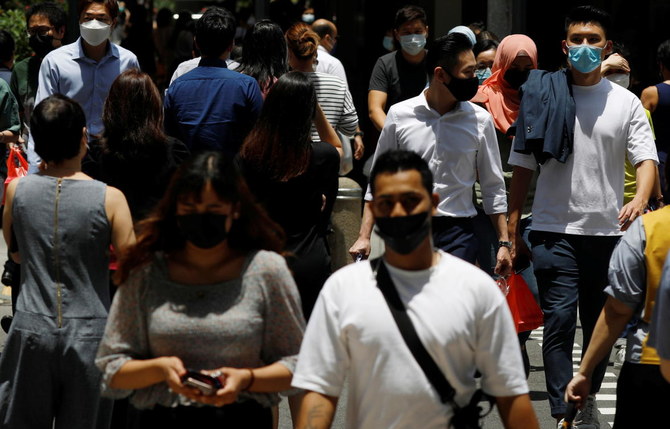
SINGAPORE: Singapore sees no need to tighten COVID-19 curbs for now despite a spike in infections over recent weeks, a top official said on Friday, but will not press ahead with more reopening moves as it monitors for severe cases.
The country will take a pause and monitor the situation in hospitals and intensive care units over the next 2-4 weeks, said Lawrence Wong, finance minister and co-head of the coronavirus taskforce. If manageable, the country will return to its reopening plans, he added.

Singapore maintains current COVID-19 rules, monitors for severe cases
https://arab.news/ckvqy
Singapore maintains current COVID-19 rules, monitors for severe cases
EU looks to soften energy bill pressures for industry, document shows
- Brussels is looking for quick fixes after companies warned they cannot compete with rivals in China and the US
- The paper said the Commission would look at network charges
BRUSSELS: The European Union is examining energy taxes, network charges and carbon costs as possible areas for short-term measures to ease pressure on industries hit by high energy prices, a document seen by Reuters showed.
Brussels is looking for quick fixes after companies warned they cannot compete with rivals in China and the US — even before this week’s surge in oil and gas prices sparked by the US-Israeli war on Iran. European Commission President Ursula von der Leyen has pledged to present options for EU leaders to consider at a summit on 19 March.
A Commission paper prepared for a meeting of EU Commissioners on Friday showed the bloc is exploring short-term measures to help the hardest-hit regions and sectors, without undermining longer-term climate laws meant to shift Europe to a cheaper, low-carbon energy system.
“Any proposal for legislative change will not deliver immediately and a bridge solution may be needed to reduce energy prices in the next 2-5 years until the clean transition eases pressure on power prices as already seen in some regions,” said the document, seen by Reuters.
The paper said the Commission would look at network charges — which make up about 18 percent of industrial power bills — and national taxes and levies, as well as carbon costs, which account for around 11 percent of bills.
It noted that governments are underusing existing tools to cut companies’ energy bills, including state aid to offset carbon costs and contracts for difference that guarantee industrial consumers a stable power price. The document said that if energy supplies are disrupted further, Brussels must be ready to introduce measures to encourage consumers to use less energy, as it did in 2022 when Russia slashed gas deliveries.
A Commission spokesperson did not immediately respond to a request for comment.


