




JEDDAH: A group of Saudi students banded together to help Riyadh’s stray and feral cat and dog populations in a bid to improve their lives.
Formed in 2018, the Karbasha team grew to become the city’s first nonprofit organization in the field of animal welfare, and the first social facility approved by the Ministry of Human Resources and Social Development.
“We are united by a passion for the love of animals, and we live in a reality that makes it difficult for us to help them … including the presence of more than 2 million homeless cats in the city of Riyadh, (with) 100 of them needing veterinary treatment every day,” Muhanad Al-Juaidi, one of the founding members of Karbasha team, told Arab News.
Their ultimate goal, beyond helping animals directly, is to raise awareness and educate people that animals have feelings like humans.
“We do our rescue work on top of our day jobs and other personal commitments,” said Al-Juaidi who majors in chemical engineering. “There are no paid employees in our team and we ensure that every single riyal we raise in donations goes directly to saving animals.”
The group includes Noura Aqaili, a computer science student; Amaar Ali, a student pilot; Dania Al-Rubaian, who specializes in medicine; Amaal Al-Otaibi, a business administration student; Ghada Al-Zahrani who majors in programming; Aya Al-Hajj, a law student; artist Majed Al-Qarni; Ghada Al-Subai, an architecture student, and 33 other volunteers.
The team was motivated to launch their initiative after the two founders, Aqaili and Al-Rubaian, met through a mutual friend and talked about animal welfare in Saudi Arabia.
This small nonprofit has a diverse group of dedicated volunteers who rescue injured, sick or abandoned animals and provide full medical rehabilitation, vaccinations and preventatives, they foster cats and dogs.
They also raise awareness about the plight of voiceless animals by encouraging adults and children to interact with them through lectures and videos.
“We roam around streets searching for those in need, and also respond to calls made by people through the various social media platforms,” Al-Juaidi said.
The team has saved around 200 abandoned animals, adopted more than 500 cats, organized 36 awareness campaigns with partner charities and visited a large number of universities and schools to spread their message.
“We have sold more than 1,500 food and water tubes to feed stray cats, and we also have more than half a million monthly interactions on our social media platforms,” Al-Juaidi added.
The Karbasha team calls on individuals to join hands by either being a volunteer or provide financial assistance.
One can also donate household items, furniture, clothing, accessories, or anything else, Al-Juaidi said, which can go towards raising funds for the organization, or provide a foster home or adopt an abandoned pet.
During the nationwide lockdown due to the coronavirus disease pandemic, the situation for animals was dire, with many pets in the Kingdom abandoned. “The effect on stray animals was devastating as most were finding it increasingly difficult to find food.”
Al-Juaidi noted that a high number of pets were also abandoned over fears the animals could spread COVID-19. “Hundreds of companion animals have been added to the streets of Riyadh, looking totally betrayed by their owners, because of some ridiculous rumour going around.
“We paid a lot of effort to make people understand that such rumors are not correct, through videos with high production to show the step of abandoning pets on the street and how to deal with it in such a hard time,” he noted.
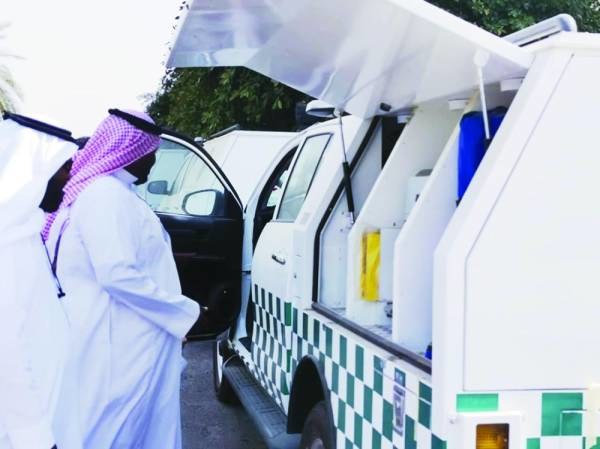
Looking to the future, members of the team hope to establish mobile veterinary clinics, hotels for pets, pet taxis, cat lounges, animal-friendly sanctuaries and parks.
Dr. Abdullah Safar, director of the livestock department and veterinary clinic at the Ministry of Environment, Water and Agriculture in Asir, told Arab News that animal welfare is a high priority for the government of Saudi Arabia.
“The government is continuing to improve the welfare of animals across the country, by establishing clinics in every region to provide additional funding to support medication shelters, facilities and programs for animals,” he said.
He added: “The ministry’s veterinary polyclinic in Asir benefits animals of all sorts, all under one roof, which increases the quality of veterinary services; it also helps for admission of critically ill animals to have an in-patient unit.”
The ministry has prohibited several practices that are considered cruelty toward animals in the Kingdom, in accordance with the Gulf Cooperation Council Animal Welfare Act and Livestock Law, which was approved by royal decree, imposing penalties on the perpetrators of such harmful practices.
The list of proscribed practices that are prohibited except for medical necessity includes tail docking and ear cropping, declawing, debarking, dehorning and chemical castration.
Meanwhile, the other list of all practices that are forbidden for any reason whatsoever involves dyeing animals, using injectable cosmetic fillers (such as fillers, Botox, etc.) on animals, especially camels, and using animal-growth stimulants or stimulant drugs.
The ministry urged people to call the hotline on 8002470000 to report any suspected violation.


