

UK intelligence deterred Daesh from Bataclan-style attack on London: Attacker

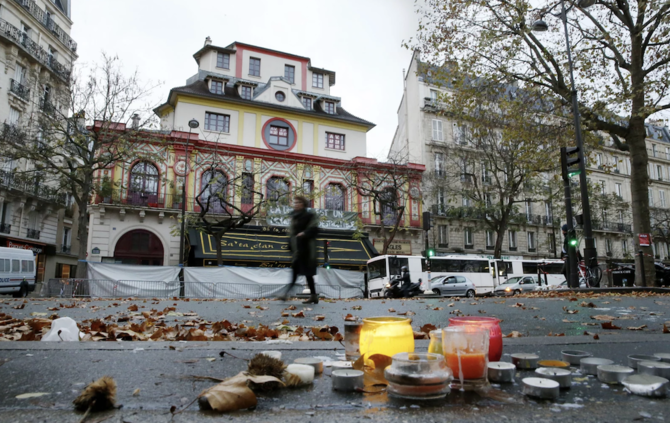
Abrini is among 20 people who are due to go on trial on Wednesday for their alleged membership of a terrorist cell responsible for the attack on the Bataclan music venue and other sites across Paris in November 2015. (AFP/File Photo)
Short Url
Updated 06 September 2021
Follow

UK intelligence deterred Daesh from Bataclan-style attack on London: Attacker

  • Cell members appear to have scoped out potential sites for attacks in Britain
  • France set to begin trial of 20 men accused of involvement in 2015 attacks that killed 130

LONDON: Daesh terrorists responsible for the 2015 attacks in Paris that killed 130 people have said they abandoned plans for a similar attack in London because of Britain’s “more advanced secret service” and “better surveillance.”

One man currently on trial in France over his role in the Bataclan attacks admitted to traveling to Britain to carry out reconnaissance on potential sites for massacres.

Mohamed Abrini, a 36-year-old Belgian who is also said to have been involved in attacks in Brussels in March 2016, admitted in pre-trial interviews that he had scoped out Old Trafford, soccer team Manchester United’s home stadium, and the Arndale shopping center in Manchester.

Abrini is among 20 people who are due to go on trial on Wednesday for their alleged membership of a terrorist cell responsible for the attack on the Bataclan music venue and other sites across Paris in November 2015. If found guilty, they are likely to face jail terms of multiple life sentences.

Abrini also visited Birmingham and toured the Bull Ring & Grand Central, the largest shopping center in the UK.

However, he said there were “no plans for an attack in London, Birmingham or Manchester” because Britain has a “more advanced secret service” than France.

“Better surveillance,” he added, meant that a “commando operation” as seen in Paris was far less likely to succeed, according to prosecution papers.

The trial of the 20 men suspected of involvement in the 2015 attacks will be the biggest criminal trial ever held in France, and is expected to last at least nine months.

Salah Abdeslam, 31, is also being tried and is the last surviving member of the suspected 10-man suicide squad that carried out the attacks.

Abdeslam was meant to detonate a bomb on his person outside the French national soccer stadium, where the team had been playing Germany, but he instead threw his suicide belt in a bin as the other members of the groups were attacking cafes across Paris and the Bataclan concert hall with guns and bombs.

Abdeslam was found in Brussels after a four-month manhunt that ended in a shootout between him and police.

Just days after his arrest, suicide bombers attacked Brussels airport and the city’s underground rail network, killing 32 people. 

Of the 20 believed to be involved in the Paris attacks, six will be tried in their absence because five are presumed dead in Iraq or Syria, and one is in prison in Turkey.


Indonesia sets rules limiting use of AI for schoolchildren

Updated 4 sec ago
Follow

Indonesia sets rules limiting use of AI for schoolchildren

  • Indonesian children spend about 7.5 hours daily on tablets, smartphones
  • Gen Zs make up the majority of AI users in the country of 280m people

JAKARTA: The Indonesian government introduced on Thursday a new policy regulating the use of digital technology in education, limiting access to artificial intelligence for students.

Generation Alphas and Gen Zs make up almost half of Indonesia’s online population, which reached nearly 230 million people in 2025, according to a survey conducted by the Association of Indonesian Internet Service Providers.

As Indonesian children clock around 7.5 hours of daily screen time, the joint ministerial decree seeks to boost the benefits of digital technology and AI in formal and informal educational institutions, while also protecting the youth from risks in digital spaces.

“There are a lot of factors but the number of teenagers with mental health issues are high and continue to increase, and one of the suspected triggers — that have been proven academically — is the uncontrolled, unmitigated use of digital technology,” said Pratikno, Indonesia’s Coordinating Minister for Human Development and Cultural Affairs.

“The effects on education are also concerning, such as how it weakens brain activity due to dependence on digital technology tools and reduces critical thinking and cognitive and reflective abilities. This is what we have to regulate.”

Among Indonesia’s 280 million population, around a quarter of internet users are already using AI, with Gen Zs making up about 43 percent of that segment.

The joint decree, which Pratikno described as “comprehensive” and encompasses early childhood education to higher education, was signed in Jakarta by seven ministers, including Higher Education, Science and Technology Minister Brian Yuliarto and Primary and Secondary Education Minister Abdul Mu’ti.

“This decree seeks to ensure that our children are not controlled by technology but become the masters of technology for good, that is our goal. (It prioritizes) digital wellness, (for tech to be used) wisely and intelligently,” Pratikno said.

The policy is important to support young Indonesians, many of whom are internet users from adolescence, said Communication and Digital Affairs Minister Meutya Hafid, who also signed the ministerial decree.

“Indonesia has a significant number of children using the internet. Therefore, we must ensure that they are not only a target market for the technology industry, but also able to utilize technology according to their readiness,” she said.

“Every kind of technological advance has to consider the readiness of its users, especially children.”