

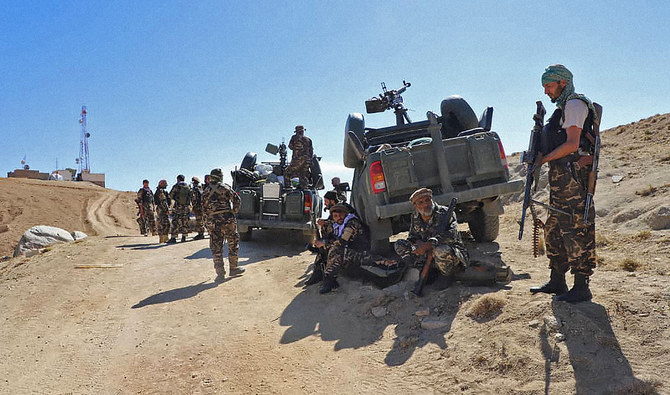

KABUL: Fighting continued between Taliban fighters and the National Resistance Front of Afghanistan (NRFA) in Panjshir Valley on Saturday, both sides confirmed, despite earlier announcements that Afghanistan's last major holdout against Taliban rule had fallen.
After sporadic fighting that started in mid-August, intense warfare in Panjshir began last week, as US forces officially completed their withdrawal and two-decade presence on Afghan soil.
Various Taliban sources told the media on Friday night they had seized the mountainous northern region following a multi-pronged attack that started a day earlier. But as deafening noise of celebratory gunfire resounded all over Kabul around midnight, leaders of Panjshir opposition denied the claim of their region's fall.
NRFA leaders Ahmad Massoud and Amrullah Saleh, who until the Taliban takeover of Kabul and collapse of the government two weeks ago served as Afghanistan's first vice president, took to social media to confirm they were still in Panjshir.
The Taliban also confirmed fighting was ongoing. Enamullah Samangani, member of the group's cultural commission, told Arab News that Taliban fighters were making territorial advances in the region.
"Still the war is on, our Mujahideen are in Panjshir and they are gaining ground, in recent clashes the enemy has suffered massive casualties," he said. "Soon we will have good news for the nation: Panjshir will be conquered and we will have a massive victory."
However, sources within the NRFA — which consists of thousands of fighters from regional militias and Afghanistan's former security forces — say it was the Taliban who suffered losses as they entered the Khawak Pass — one of the two gateways the mountainous region of Panjshir has to the outside world.
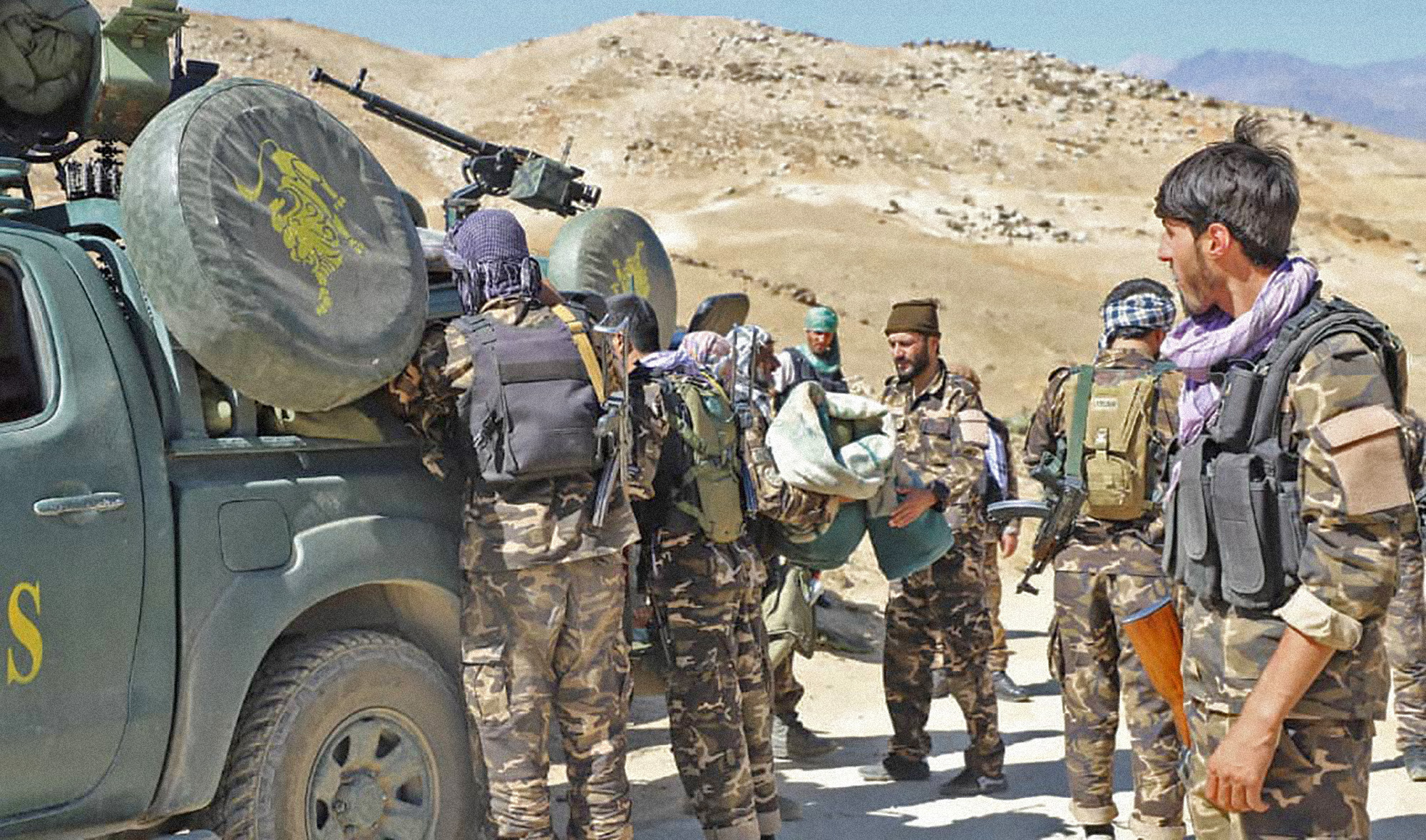
National Resistance Front of Afghanistan (NRFA) forces in Panjshir Valley, northern Afghanistan, on September 3, 2021. (Photo courtesy: NRFA)
An NRFA commander told Arab News Friday night's offensive on the valley was by the Red Unit — Taliban special forces.
"Taliban Red Unit, took the charge of last night's attack on Panjshir, but they were defeated," he said, citing heavy casualties among the Taliban and saying that 200 of their fighters had been captured.
Arab News could not independently verify the claims.
Panjshir Valley has reportedly been cut off by the Taliban who stopped movement to and from the region.
Abdul Rahman, a 54-year-old resident of Panjshir told Arab News he was trying to return home but was sent back to Charikar, the capital of neighboring Parwan province.
"Today we were looking to travel to Panjshir, but we were forced to return from Charikar, the center of Parwan, as the Taliban heard that we are traveling to Panjshir," he said.
Tucked into the Hindu Kush mountain range, some 150 kilometers north of Kabul, and accessible only through a narrow gorge, Panjshir has a long history of resistance. In the 1980s, the late commander Ahmad Shah Massoud — the father of the current resistance leader Massoud — defended the region from Soviet forces, which managed to seize many other parts of the country. In the 1990s, he led an offensive against the first Taliban regime. He was assassinated in 2001, weeks before the Taliban were ousted by a US-led invasion.
Seizing Panjshir, would give the Taliban complete control of Afghanistan, something they did not achieve when they first ruled the country between 1996 and 2001.


