


QUETTA: Dressed in white trousers and a green T-shirt, 26-year-old Khairun Nisa Baloch entered Quetta city’s Nawab Akbar Khan Bugti Cricket Stadium this week as a group of young women cricketers quickly gathered around her.
It was 3pm, time for Baloch, the first woman cricket coach in the history of Pakistan’s southwestern Balochistan province, to start a practice session at Quetta’s only first-class cricket stadium.
Baloch was appointed to the position in January. In an interview with Arab News this week, she said she became a professional coach in 2019 after taking classes organized by the Pakistan Cricket Board (PCB). Before that, she played first class cricket for over seven years but decided that being a coach would allow her to “fight” for women players in the conservative province and give them a chance to access the facilities and opportunities that had not been available to her.
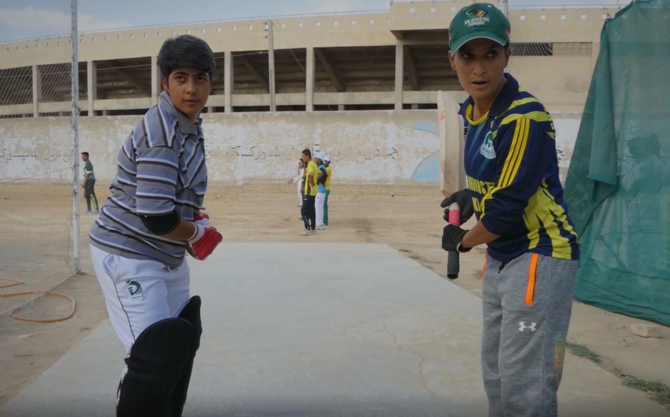
Balochistan province’s first female cricket coach Khairun Nisa Baloch shows batting techniques to students in Quetta, Pakistan, on September 1, 2021. (AN Photo)
“Young women in Balochistan’s tribal society were reluctant to join any sport due to cultural barriers ... but now cricket is flourishing among women in many parts of Balochistan,” Baloch told Arab News in an interview this week.
“Since I have been appointed as the province’s first woman coach by the Balochistan Sports Board, the number of woman cricket players has increased,” Baloch said. “When I joined back in January 2021, I had only three students, but now more than 40 girls have been playing cricket under my coaching.”
To encourage more girls to join her squad, Baloch visited many schools to raise awareness that there was now an opportunity for girls to train with a woman coach, an encouraging development for parents in the impoverished, conservative province.
Jannat Rasheed, 19, said she had a passion for cricket since her childhood, but her parents did not allow her to play outside of school.
“I used to play cricket in my school and college, but my parents were reluctant to send me to Quetta’s first-class cricket academy, which was being supervised by male coaches,” Rasheed told Arab News, saying she had finally been training at the academy for seven months now since her parents learnt that a woman coach was available. “I started practicing cricket under Khairun Nisa after we came to know that a woman coach had finally been appointed in Balochistan.”
“Here I have obtained major skills and techniques that I wanted to learn to become a good cricketer,” the young woman, who said she dreams of representing Pakistan, said.

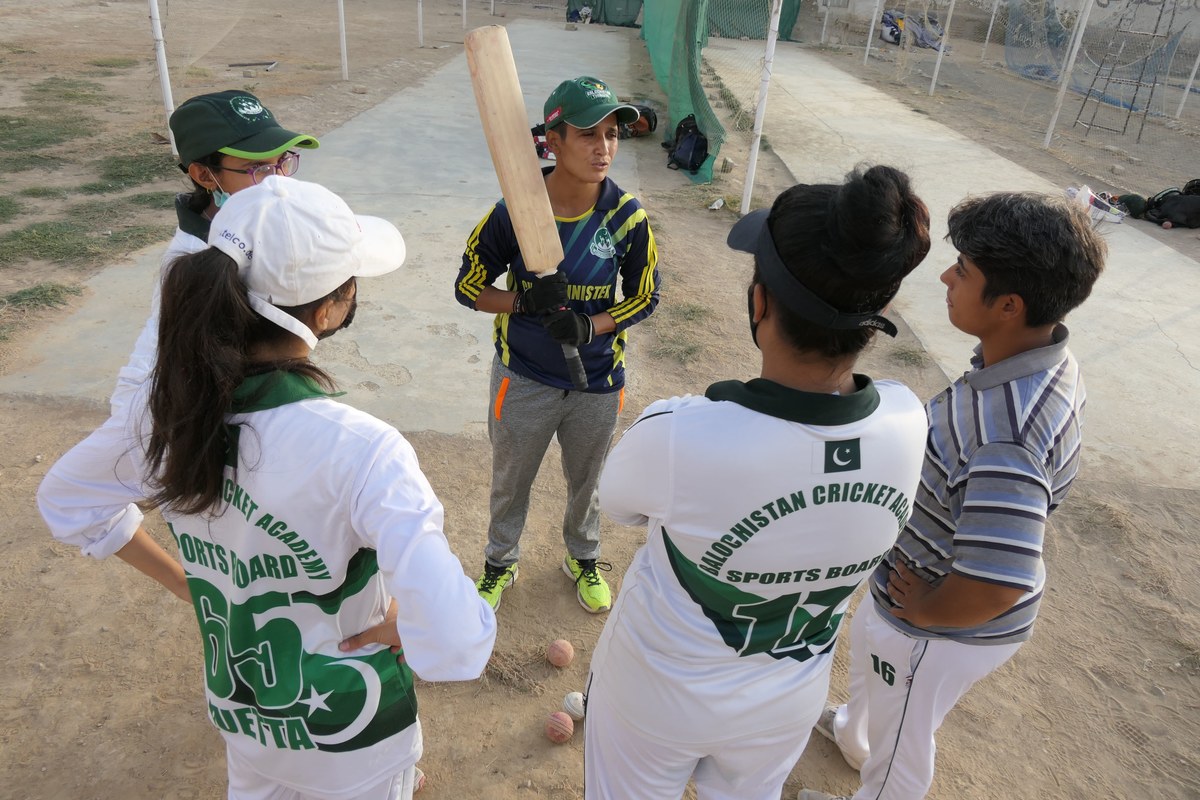
Balochistan province’s first female cricket coach Khairun Nisa Baloch can be seen with young players at a cricket ground in Quetta, Pakistan, on September 1, 2021. (AN Photo)
Prior to Baloch’s appointment, the province didn’t have a registered woman cricket team and the Balochistan Sports Board would summon women cricketers from other provinces to represent it at national events.
But in July 2021, the Balochistan government, with the support of the Pakistan Super League (PSL) franchise, the Quetta Gladiators, hosted a national women’s cricket tournament to help local players play first class cricket with some of the country’s leading names.
The event was a good start, Balochistan Sports and Youth Affairs Secretary Imran Gichki said, adding that women’s cricket could flourish in the province “but we need Pakistan Cricket Board’s attention: “Because while sportswomen from Balochistan have represented the country in many international events, we are far behind other provinces in cricket.”
Though Gichki agreed that the number of woman cricketers had increased since Baloch’s appointment, he said the PCB needed to do more to help encourage and train women players from Balochistan.
A Pakistan Cricket Board (PCB) official who requested not be named refuted allegations that the body had not been paying attention to Balochistan’s women cricket players.
“The Pakistan Cricket Board has been utilizing all available resources to develop a quality cricket structure in Balochistan,” he said. “PCB has allowed Quetta to host Quaid-e-Azam Trophy matches in Akbar Bugti Stadium in 2019 in order to allow local players to play with national players which has increased their confidence.”
“Nahida Khan who belongs to Quetta has been playing in the women national team which proves that a developed cricket structure exists in Balochistan which has been producing national level players for the country.”
PCB support was key, Baloch also agreed. In the history of women’s cricket in Pakistan, Balochistan has only had one representative, Nahida Bibi Khan, who is currently on Pakistan’s national team, but there were many young girls who “want to dress in green” and represent Pakistan at international fixtures, Baloch said.
“There are many talented women cricket players practicing under my supervision, who have potential and are paying keen attention to their physical fitness as well,” the coach said. “I am very much optimistic that they can play for the national team in the future, which would be a proud moment for me.”
She was confident, Baloch said, that what she couldn’t achieve, her students surely would be able to.


