

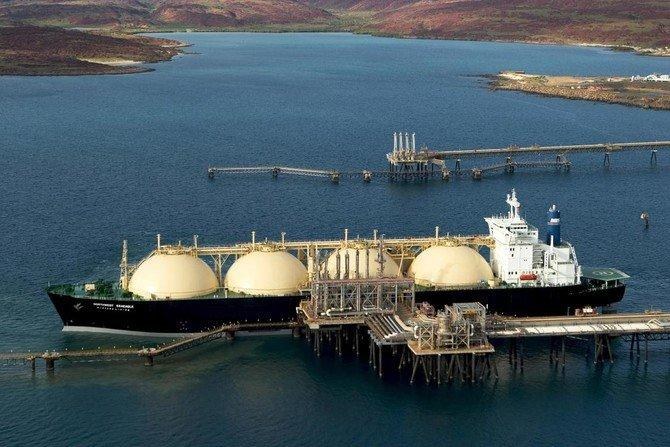

SINGAPORE: Surging liquefied natural gas (LNG) prices are prompting utilities across Asia and the Middle East to burn more high-sulfur fuel oil (HSFO) than usual to meet increased power demand during summer, analysts and traders said.
The move toward the cheaper but more polluting HSFO highlights the problems faced by developing countries which have to grapple with the economics of lower costs versus meeting emission-cutting standards.
The strong demand for the residual fuel oil could last beyond the summer as the global economic recovery from the coronavirus gathers momentum and global LNG prices hold firm at more than twice where they averaged in 2020, the analysts said.
“With (spot) LNG prices surpassing HSFO, power generation plants are switching from gas to oil where possible,” said Serena Huang, Vortexa’s Asia lead analyst, highlighting strong power demand in the Middle East, Pakistan and Bangladesh.
“Fuel oil imports are likely to rise further as LNG prices continue to head north amid tight supply-demand fundamentals,” said Huang.
Asian spot liquefied natural gas (LNG) prices
They are expected to climb further during the northern hemisphere winter when demand for LNG for heating typically surges.
“LNG (imported) into Pakistan is now equivalent to about $250 per ton more expensive than 180-cst (centistoke) HSFO,” a senior Singapore-based fuel oil trader said.
He added that on a forward price basis, spot LNG cargoes are trading above fuel oil prices through the first-quarter of 2022.
“We will see unprecedented switching into first quarter of next year at current prices,” the trader said, noting that fuel switching is already occurring across Asia and the Middle East.
OIL BURNERS BACK ON
Utilities are able to idle gas-fired power plants and restart oil-fired units if the price difference is wide enough and local emissions rules allow.
In South Asia, Pakistan’s fuel oil imports this year are already about 65 percent above 2020’s total, while Bangladesh is considering increasing fuel oil imports by nearly 10 percent in the financial year starting July 1.
“For Bangladesh’s peak electricity demand, HSFO is an economically better option,” a source with a utility in Bangladesh said.
In the Middle East, Saudi Arabia and Kuwait have also stepped up seasonal fuel oil imports amid soaring temperatures and recovering economic activity, trade sources said.
“Scorching temperatures in the Middle East are prolonging cooling demand,” consultancy Energy Aspects said in a report to clients this week, adding that the region’s strong demand has improved the economics of exporting HSFO from Europe to the Middle East lately.
LOW STOCKS
Fuel oil supplies have already been constrained after Middle East producers cut heavy sour crude oil production to meet supply targets set by the Organization of the Petroleum Exporting Countries, and as refineries reduced crude throughput.
A fire at a heavy crude Mexican offshore platform in late-August is also expected to curtail fuel oil output, Energy Aspects said.
Global fuel oil inventories across key storage and trading hubs are at, or near, multi-month lows as a result.
Combined with the brisk demand, the tight inventories helped propel the 180-cst HSFO cash premium
Tighter residual fuel oil supplies and strong demand from Chinese refineries for the cheaper feedstock following a fuel tax overhaul in June are also boosting prices of 0.5 percent very low-sulfur fuel oil (VLSFO).
“The time for VLSFO to shine may come later in the winter if cold weather increases demand for liquid fuels in power generation in countries such as Japan and South Korea where LSFO is required,” Energy Aspects said in a note to clients.


