

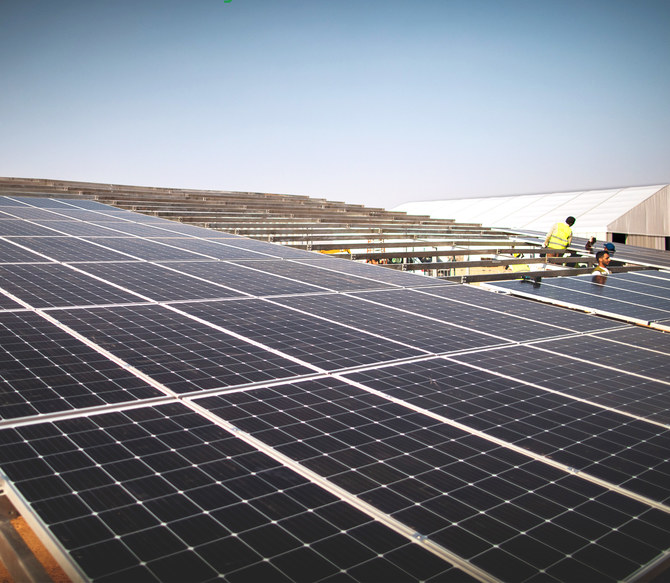
Desert Technologies hosts workshop on renewable energy

Solar-powered generators are competing with diesel generators in terms of ease of installation, and investing in the former is considered to be profitable.
Short Url
Updated 01 September 2021
Follow

Desert Technologies hosts workshop on renewable energy

Desert Technologies, a Saudi provider of renewable energy solutions, recently held a workshop on “Renewable Energy and Smart Infrastructure in the MEA and Africa,” at its headquarters in Jeddah. The workshop was attended by a small number of professionals and interested persons, and was broadcasted live on the internet through the company’s social networking channels on Instagram and YouTube.
The workshop was hosted by Desert Technologies’ CIO and partner Khaled Ahmed Sharbatly. He said that through the goals and plans of Vision 2030, the Kingdom is focused on investing in solar energy, which is seen as a promising opportunity to comply with the increasing demand for energy. One of the most optimistic energy programs in the region, the National Renewable Energy Program, is a strategic initiative under Vision 2030, and is run by two main bodies, the Ministry of Energy’s Renewable Energy Project Development Office and the Public Investment Fund.
Sharbatly explained that the plan is to invest $200 billion in the renewables sector in Saudi Arabia by 2030. He said that so far, $7 billion worth of investment has been made, and that this number is expected to rise annually. Following this framework, a study for renewable energy sources sites was created, which acted as a basis for companies to make their investments. Desert Technologies won the bid for solar plants in Madinah and Rafha, which are currently under construction.

The plan is to invest $200 billion in the renewables sector in Saudi Arabia by 2030, and so far, $7 billion worth of investment has been made, and this number is expected to rise annually.

Khaled Sharbatly CIO and Partner, Desert Technologies

According to Sharbatly, there are many renewable energy programs in the MENA region due to an increase in demand for solar energy, driven by two forces: The mass production of solar panels led by China, and the increase in supplies and demand due to mass production resulting in a lesser price, making solar energy more feasible.
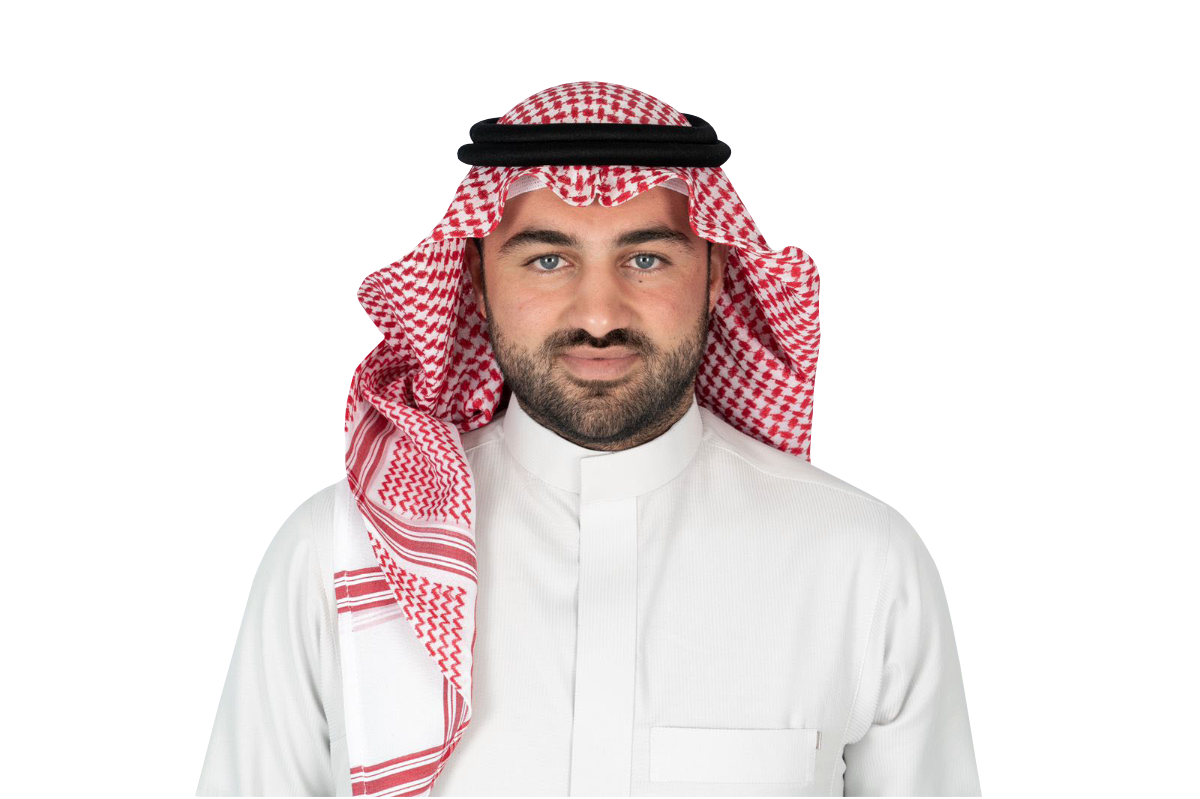


Khaled Sharbatly

The global solar installed capacity and investments were estimated at $180 billion in 2019 and are on the rise, despite COVID-19. Solar-powered generators are competing with diesel generators in terms of ease of installation, and investing in the former is considered to be profitable. With diesel generators, there is an ongoing cost for energy; however with solar-powered generators, enough energy is bought upfront to last up to 20 years.
At the end of the workshop, Sharbatly described the Sahara solar containers produced by Desert Technologies in its factories in Jeddah as the best solution for the issue of energy poverty in Africa, as they proved their effectiveness when launched in Africa as an ideal product for generating energy in small communities and villages that do not have electricity or are located off-grid. One container is sufficient to meet the basic needs of approximately 70 small homes and provide instant sustainable energy in remote areas. It represents the ideal alternative to traditional energy that is costly to implement and maintain.


Kuwait Fund for Development: Six decades of humanitarian and developmental impact across globe

Updated 22 January 2026
Follow

Kuwait Fund for Development: Six decades of humanitarian and developmental impact across globe

On Dec. 31, the Kuwait Fund for Development marks the anniversary of its establishment, opening a new chapter of success and ambition as one of the most prominent pioneers of development on both regional and global levels. Founded in 1961, the fund became the first and oldest development institution to operate in Arab countries and other developing nations.

Today, after more than six decades of continuous work, the Kuwait Fund for Development remains steadfast in its mission and has never ceased its efforts to support development causes in developing countries. As it celebrates its 64th anniversary, the fund has drawn a national portrait under the theme “Partners in Development,” reflected through its projects spread across the globe, all of which aim to build brighter and more sustainable future.

An external development arm

The establishment of the Kuwait Fund for Development embodied a wise and visionary decision by the leadership of Kuwait at the time. Kuwait was the only developing country that chose to share the challenges of development with other developing nations, cooperating with them through the provision of concessional loans, grants, financial assistance, and technical support tailored to their development priorities.

Since its inception, the Kuwait Fund for Development has served as Kuwait’s external development arm, sparing no effort in supporting development causes and extending assistance to developing countries worldwide.

Vision and early beginnings

In the early 1960s, the late Amir Sheikh Jaber Al-Ahmad Al-Sabah, then head of the financial department, proposed the idea of establishing a development entity that would serve Kuwait’s foreign policy and assist Arab and other developing countries in achieving development across various sectors. The idea received strong support from the late Amir Sheikh Abdullah Al-Salem Al-Sabah, as it aligned with Kuwait’s vision at the time to build a modern state.

Consequently, an Amiri decree was issued on Dec. 31, 1961, establishing the Kuwait Fund for Development with an initial capital of 50 million Kuwaiti dinars ($162.6 million).

Global reach and development impact

The fund’s activities have extended to all corners of the world, contributing to the financing of projects in 106 countries, including 16 Arab countries, 41 African countries, 19 in East and South Asia and the Pacific, 17 in Central Asia and Europe, and 12 in Latin America and the Caribbean.

This support was delivered through 1,037 concessional loans provided to the governments of these countries, with a total value of approximately 7 billion Kuwaiti dinars. In addition, the fund has provided grants and technical assistance to support a wide range of development services, helping beneficiary countries implement their development programs. A total of 420 grants and technical assistance operations were extended, amounting to approximately 401 million Kuwaiti dinars.

Loan agreements

During the past year, the Kuwait Fund for Development signed several loan agreements supporting development across different regions of the world. Among these were two loan agreements with the government of Bahrain. The first loan, valued at 31.25 million Kuwaiti dinars, contributed to financing the Electricity Transmission Networks Development Project. The second loan, valued at 10 million Kuwaiti dinars, supported the Sheikh Jaber Al-Ahmad Al-Sabah Highway Development Project (Phase II).

On the sidelines of the World Bank Group meetings held in Washington, D.C., the fund has also signed a 4 million Kuwaiti dinar-worth loan agreement with Saint Lucia to help finance the Sir Julian R. Hunte Highway Project, as well as another 4 million Kuwaiti dinar-worth loan agreement with Belize to support the George Price Highway Project.

Supporting and assisting refugees

The Kuwait Fund for Development’s contributions to humanitarian action stand out at both regional and international levels. Since its establishment, the fund has represented a unique model in supporting and assisting refugees in countries affected by disasters, conflicts, and wars, in line with Kuwait’s moderate and balanced policy.

These efforts have helped strengthen Kuwait’s relations with Arab and international partners. The fund has played a significant role in the reconstruction of Lebanon and Iraq following periods of crisis, and its assistance to the Palestinian people has never ceased.

International Participation

Over the past year, the Kuwait Fund for Development recorded notable participations in major international forums. These included taking part in the 2025 annual meetings of the World Bank Group and the International Monetary Fund in Washington, D.C., with a delegation headed by the fund’s Acting Director General Walid Shamlan Al-Bahar. The fund also took part in the Tokyo International Conference on African Development, held in Tokyo, Japan.

Additional international engagements included participation in the Third UN Conference on Landlocked Developing Countries, held in Awaza, Turkmenistan, and the Fourth International Conference on Financing for Development, organized by the UN in Seville, Spain.