JERUSALEM: Israel allowed dozens of truckloads of construction materials into the Gaza Strip on Tuesday, easing a tight blockade it has maintained on the Hamas-ruled territory since an 11-day war last May.
The imports came during a tense period in which Hamas activists have launched incendiary balloons into Israel, sparking a number of wildfires across the border, and staged a series of sometimes violent demonstrations along the separation fence with Israel.
An Israeli soldier who was shot by a protester on Aug. 21 died of his wounds on Monday. Two Palestinians, including a 12-year-old boy and a Hamas militant, have also been killed from Israeli gunfire.
Despite the tensions, Israeli officials this week allowed the entry of the badly needed building materials for Gaza’s private sector in a step that may help calm the situation.
Bassam Ghabin, director of the Palestinian side of the Kerem Shalom cargo crossing, said that 30 truckloads of cement, 120 trucks of gravel and 15 trucks of steel entered Gaza on Tuesday. He said the materials began entering on Monday, and that the crossing was operating almost at the same capacity as before the war.
An Israeli security official, speaking on condition of anonymity under policy guidelines, confirmed that building materials had entered Gaza. He had no specific details, but said they came under previously announced government decisions.
In recent weeks, COGAT, the Israeli defense body responsible for Palestinian civilian issues, said it was planning to allow more goods into Gaza if the security situation stabilized. Last week, it said it would “expand the entry of goods and equipment for international civilian projects in the Gaza Strip.”
Israel, with Egyptian help, has maintained a tight blockade over Gaza since Hamas seized control of the territory in 2007, a year after winning a Palestinian election. Israel says the blockade is needed to keep Hamas, an Islamic militant group sworn to Israel’s destruction, from rearming, while critics say the closure amounts to collective punishment. The blockade, which restricts the movement of goods and people in and out of Gaza, has devastated Gaza’s economy.
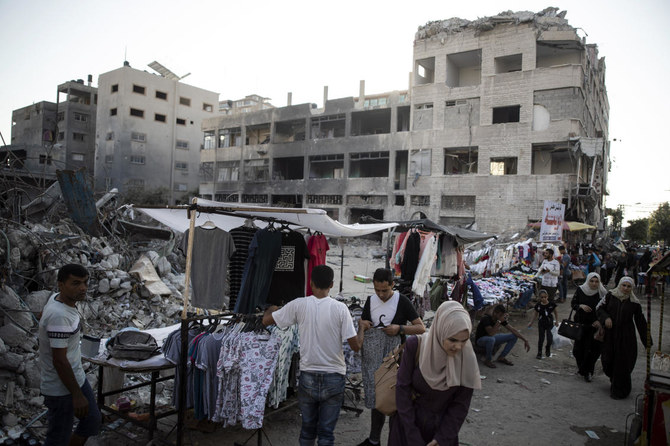
Israel and Hamas have fought four wars since 2008, and Israel has tightened the blockade since the latest fighting in May. Thousands of homes were damaged or destroyed, and construction goods are badly needed.
Later on Tuesday, Hamas activists held another nighttime demonstration along the Israeli border to call for a lifting of the blockade. Gaza health officials said three Palestinians were lightly wounded by Israeli gunfire.
Egyptian mediators have been trying to broker a longer-term cease-fire. But Israel has demanded the return of the remains of two dead Israeli soldiers and freedom of two Israeli civilians in Hamas captivity.
Gisha, an Israeli human rights group that has pushed for an end to the closure, called Tuesday’s move “crucial but insufficient, especially given the scope of the damage in Gaza, as well as Israel’s legal and moral obligations toward residents of the strip.”
“The situation in Gaza is not simply a humanitarian crisis that can be managed via narrow humanitarian gestures,” Gisha said. “Any meaningful attempt at resolving this dire situation requires much more expansive opening of the strip, underpinned by a broader political process.”


![]()

Postwar closure eased up on Gazans as Israel allows building goods in
Short Url
https://arab.news/mezrg
Postwar closure eased up on Gazans as Israel allows building goods in
- Imports came during a tense period in which Hamas activists have launched incendiary balloons into Israel
- Around 30 truckloads of cement, 120 trucks of gravel and 15 trucks of steel entered Gaza on Tuesday


Latest updates


© 2026 SAUDI RESEARCH & PUBLISHING COMPANY, All Rights Reserved And subject to Terms of Use Agreement.