

Saudi investment in Sudan could rise to $10 billion, prime minister says

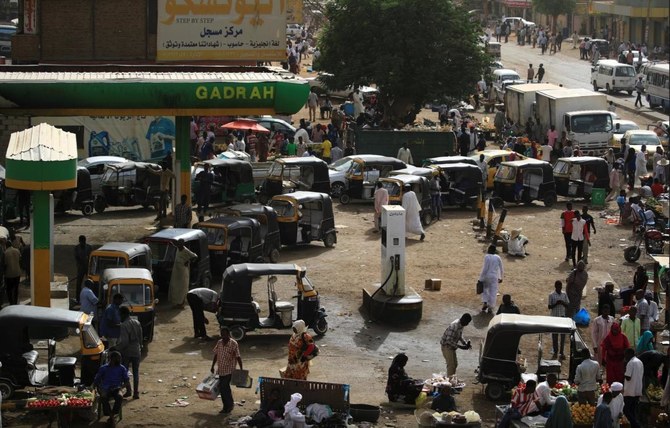
Sudan has ended subsidies on gasoline as part of tough reforms mandated by the IMF. (Reuters)
Short Url
Updated 28 August 2021
Follow

Saudi investment in Sudan could rise to $10 billion, prime minister says

  • Saudi pledge of $3 billion in March could rise to $10 billion, Sudan's prime minister says

RIYADH: Sudan’s Prime Minister Abdullah Hamdok said a Saudi pledge to invest $3 billion in his country could rise to $10 billion as the country looks to rebound from an economic crisis.

“In our last visit to Saudi Arabia, we met the crown prince and agreed on an investment of $3 billion, and it can exceed up to $10 billion,” Hamdok told Asharq in an interview.

Saudi Arabia has committed to investing $3 billion in a joint fund for investments in Sudan, and to encouraging other parties to participate, Sudanese minister of Cabinet affairs Khalid Omer Yousif said in March.

Also in March, Sudan secured a recommitment from Saudi Arabia to a $1.5 billion grant it had first announced in April 2019.

Sudan has been struggling with economic woes that deepened after the April 2019 ouster of president Omar Al-Bashir following mass protests triggered by economic hardship.
The transitional government installed in August 2019 has vowed to fix the economy which was battered by decades of US sanctions and mismanagement under Bashir.

The coronavirus pandemic has further compounded the country’s economic crisis.

In recent months, Sudan has embarked on tough reforms including scrapping diesel and petrol subsidies and declaring a managed float of the Sudanese pound to stem a rampant black market.

The measures, seen by many Sudanese as harsh, were part of reforms backed by the IMF to enable the country to qualify for debt relief.

Sudan received more than $857 million as part of a global allocation by the International Monetary Fund to help vulnerable countries, the central bank said on Thursday.

It said the funding will allow it to “press ahead with implementing flexible managed float policies, stabilising the exchange rate, and the overall economy.”

Financially, the government views the banking sector in Sudan as a fragile and weak sector and that mergers are important to liquidate some banks and raise the capital of other banks, Hamdok told Asharq.

Sudan has started real projects with US energy companies to meet Sudan’s power needs from solar energy, he said.

The United Nations Development Program launched a roadmap for renewable energy in Sudan last September as it seeks to bring electricity to the 60 percent of the population who don’t currently have access to it. It noted that Sudan has high potential for wind energy in Northern State, River Nile and Red Sea, and high levels of solar irradiance throughout the country.

Hamdok expects to reach an agreement on the Renaissance Dam crisis within the framework of international law. Sudan is exposed to more risks than Egypt if the Grand Ethiopian Renaissance Dam is damaged, he said, pointing out that Sudan can benefit from the dam for electricity.


Gulf-EU value chain integration signals shift toward long-term economic partnership: GCC secretary general

Updated 03 February 2026
Follow

Gulf-EU value chain integration signals shift toward long-term economic partnership: GCC secretary general

RIYADH: Value chains between the Gulf and Europe are poised to become deeper and more resilient as economic ties shift beyond traditional trade toward long-term industrial and investment integration, according to the secretary general of the Gulf Cooperation Council.

Speaking on the sidelines of the World Governments Summit 2026 in Dubai, Jasem Al-Budaiwi said Gulf-European economic relations are shifting from simple commodity trade toward the joint development of sustainable value chains, reflecting a more strategic and lasting partnership.

His remarks were made during a dialogue session titled “The next investment and trade race,” held with Luigi Di Maio, the EU’s special representative for external affairs.

Al-Budaiwi said relations between the GCC and the EU are among the bloc’s most established partnerships, built on decades of institutional collaboration that began with the signing of the 1988 cooperation agreement.

He noted that the deal laid a solid foundation for political and economic dialogue and opened broad avenues for collaboration in trade, investment, and energy, as well as development and education.

The secretary general added that the partnership has undergone a qualitative shift in recent years, particularly following the adoption of the joint action program for the 2022–2027 period and the convening of the Gulf–European summit in Brussels.

Subsequent ministerial meetings, he said, have focused on implementing agreed outcomes, enhancing trade and investment cooperation, improving market access, and supporting supply chains and sustainable development.

According to Al-Budaiwi, merchandise trade between the two sides has reached around $197 billion, positioning the EU as one of the GCC’s most important trading partners.

He also pointed to the continued growth of European foreign direct investment into Gulf countries, which he said reflects the depth of economic interdependence and rising confidence in the Gulf business environment.

Looking ahead, Al-Budaiwi emphasized that the economic transformation across GCC states, driven by ambitious national visions, is creating broad opportunities for expanded cooperation with Europe. 

He highlighted clean energy, green hydrogen, and digital transformation, as well as artificial intelligence, smart infrastructure, and cybersecurity, as priority areas for future partnership.

He added that the success of Gulf-European cooperation should not be measured solely by trade volumes or investment flows, but by its ability to evolve into an integrated model based on trust, risk-sharing, and the joint creation of economic value, contributing to stability and growth in the global economy.

GCC–EU plans to build shared value chains look well-timed as trade policy volatility rises.

In recent weeks, Washington’s renewed push over Greenland has been tied to tariff threats against European countries, prompting the EU to keep a €93 billion ($109.7 billion) retaliation package on standby. 

At the same time, tighter US sanctions on Iran are increasing compliance risks for energy and shipping-related finance. Meanwhile, the World Trade Organization and UNCTAD warn that higher tariffs and ongoing uncertainty could weaken trade and investment across both regions in 2026.