RIYADH: Saudi Arabia’s air defenses intercepted and destroyed an explosive-laden drone launched by Yemen’s Houthi militia toward southern Saudi Arabia, state TV reported on Sunday.
The coalition said the drone was targeting the southwestern city of Khamis Mushayt, adding that the Iran-backed group continues its attempts to target civilians.
“We are taking operational measures to protect civilians and civilian objects,” the coalition added in a statement.
The Organization of Islamic Cooperation (OIC) strongly condemned the Houthis’ failed attempt to target innocent civilians in Khamis Mushayt with a booby-trapped drone.
Secretary-General Dr. Yousef Al-Othaimeen said the OIC also condemned the terrorist practices committed by the militia and those who support, finance and provide it with weapons.
Al-Othaimeen reiterated the OIC’s support for all measures taken by the Kingdom to preserve its security and stability and the safety of citizens and residents.
The UAE and Bahrain also strongly denounced the attack and affirmed their full solidarity with Saudi Arabia.

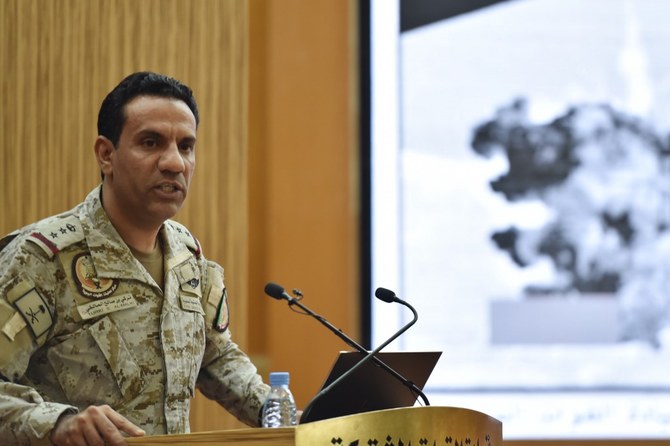
Arab coalition intercepts Houthi drone targeting Saudi Arabia’s Khamis Mushayt
https://arab.news/zj453
Arab coalition intercepts Houthi drone targeting Saudi Arabia’s Khamis Mushayt
- The coalition is taking operational measures to protect civilians and objects from hostile attempts
- The OIC strongly condemned the attempt to target the Kingdom
Red Sea Global unveils scientific model for regenerative tourism worldwide
- The report details the model’s rollout at “The Red Sea” and “AMAALA” destinations, backed by studies covering 8 marine habitats
TABUK: Red Sea Global (RSG) has unveiled a science-based model aimed at achieving a 30% net positive conservation benefit across its tourism destinations by 2040.
The framework is now available for global adoption, according to a statement released by RSG.
Owned by Saudi Arabia’s Public Investment Fund (PIF), Red Sea Global is the multi-project developer behind ambitious regenerative tourism destinations like “The Red Sea” and “AMAALA.”
As a cornerstone of the Kingdom’s Vision 2030, the company aims to diversify the national economy while setting new global benchmarks for sustainable, nature-positive development.
CEO John Pagano stated that openly sharing this detailed approach will help elevate the global tourism sector and secure a healthier environment for future generations.
The cornerstone of this initiative is the proprietary SIIG Model, a four-step framework:
• Survey: Establish biodiversity baselines and monitor long-term changes.
• Identify: Assess risks to priority habitats and species.
• Intervene: Execute evidence-based actions, such as regulating fishing and enhancing natural habitats.
• Gain: Measure and verify biodiversity improvements.
The report details the model’s rollout at “The Red Sea” and “AMAALA” destinations, backed by extensive 2022–2023 environmental baseline studies covering eight marine habitats and priority species groups during 2022 and 2023.

A major intervention is the 5,015-square-kilometer Fishery Management Area in Al-Wajh Lagoon. The plan reserves 38% of the area for priority conservation—protecting 62% of local coral reefs—while allocating 61% for sustainable fishing.
According to scientific modeling, eliminating fishing in high-protection zones could increase reef fish populations by 113%, sharks and rays by 72%, and marine mammals by 24%. These measures are expected to boost coral resilience, support ecosystem recovery, and protect vulnerable species like sea turtles and seabirds.
Ihab Kindi, RSG’s Red Sea Destination Executive Director, called the data-driven model a practical roadmap for large-scale marine recovery. The complete methodology is available in the new report, “The SIIG Model: A Roadmap Toward Achieving Measurable Conservation Gains.”


