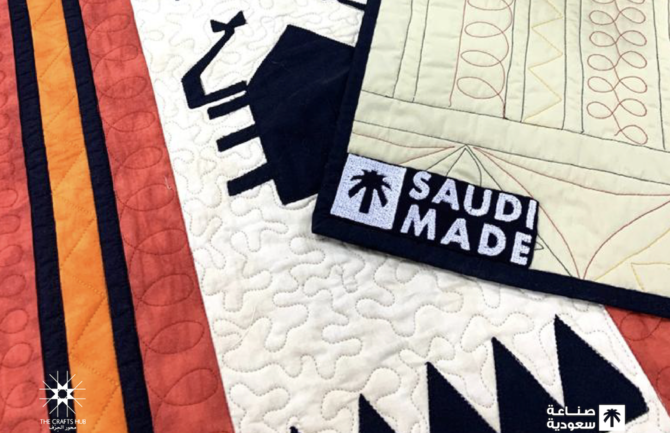

RIYADH: The Saudi Export Development Authority or Saudi Exports on Saturday said more than 900 Saudi companies with over 2,000 locally manufactured products have registered with the Kingdom’s “Made in Saudi” program since its launch, Argaam reported quoting a report carried by Al-Eqtisadiah newspaper.
The “Made in Saudi” initiative aims to support national products and increase their competitiveness both at home and abroad, as well as raising awareness of, and confidence in, their general level of high quality.
It is considered a fundamental driver to achieve the economic goals of the Kingdom’s Vision 2030 program to diversify the nation’s income sources away from oil and oil-based products, and improve and enhance the status of Saudi products.
The program gives top priority to 16 different economic sectors including chemicals and polymers, building materials, electronics, and packaging.
HIGHLIGHTS
The ‘Made in Saudi’ initiative aims to support national products.
The program gives top priority to 16 different economic sectors.
It aims to create more than 1.3 million job opportunities.
It seeks to raise the percentage of non-oil exports to 50 percent.
The authority said it seeks to increase the number of members and registered products.
The program aims to create more than 1.3 million job opportunities in the industrial and mining sector and raise the private sector’s contribution from 40 percent to 65 percent of the gross domestic product (GDP). In addition, it aims to raise the percentage of non-oil exports to 50 percent and foreign direct investment from 3.8 percent to an international average of 5.7 percent.
Saudi Exports is also taking measures to promote Saudi companies to take part in international projects by identifying over 120 international tendering opportunities in a number of target countries, mainly covering construction and industrial supplies and infrastructure projects.
Saudi Exports launched the international tendering service to open new opportunities for national companies to expand in international markets and increase their competitiveness, by allowing them to export services and products via international tenders in several targeted sectors.
The international tendering service is an important step by the authority to support exporters, increase their competitiveness level, boost the export percentage of Saudi services, products, and re-exportation, Saudi Exports Secretary-General, Faisal Al-Bedah said.
The service includes eight targeted sectors and 24 sub-branches, where Saudi Exports will provide periodic reports with data and analyses for the most important projects in targeted countries.
In other efforts to increase non-oil exports, the Saudi Export-Import Bank (EXIM) recently signed a memorandum of understanding with the Federation of Saudi Chambers (FSC) to provide non-oil exporters SR9 billion ($2.3 billion).
The MoU signed with EXIM seeks to support efforts in increasing non-oil exports and provide credit solutions to the business community to improve the competitiveness of Saudi products.