QUETTA: When her husband lost his job in 2001 and Lubna Farooq set up a pushcart selling ice cream churned out from an old-fashioned, hand-cranked machine, little did she know she would one day run one of the most successful ice cream businesses in Pakistan’s Balochistan province.
This is no small achievement in the impoverished region, where less than 10 percent women currently own their own businesses, according to the Balochistan Women Business Association.
“We are competing with Quetta’s top ice cream businesses now, and we are financially strong,” Lubna told Arab News in an interview.
Her journey has not been easy.
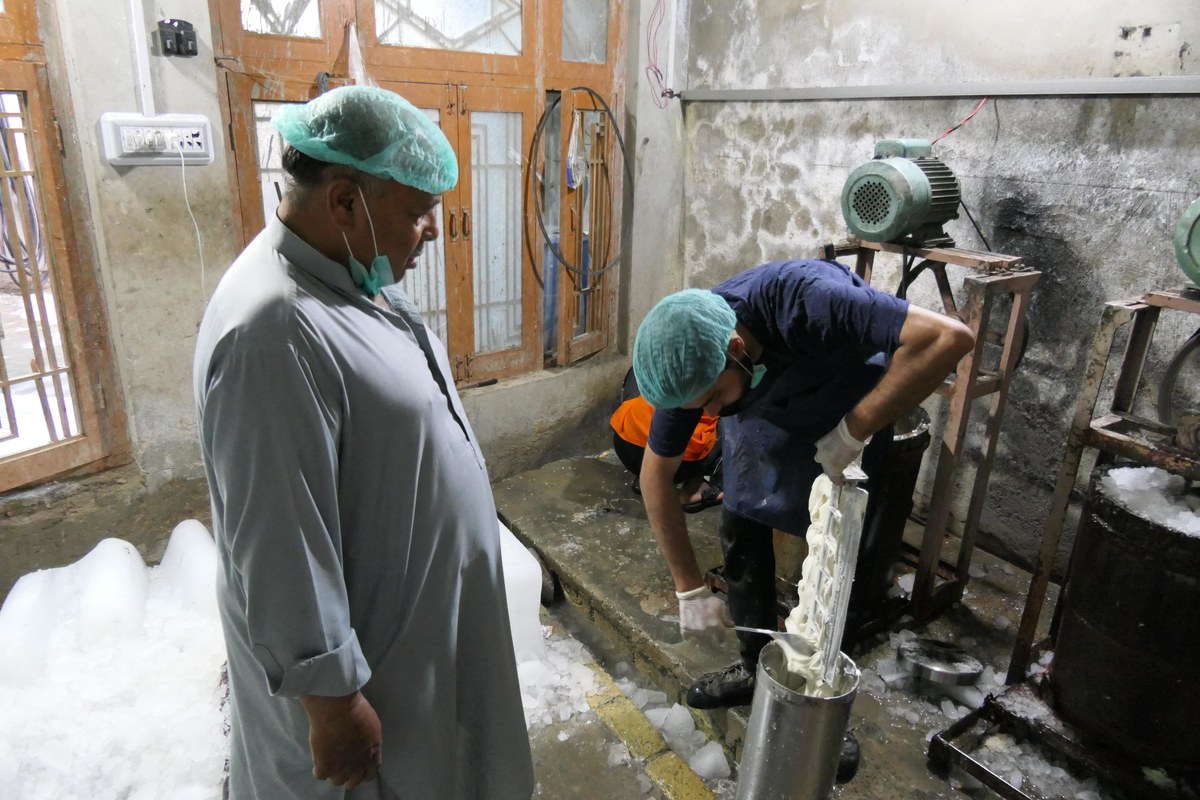
Farooq Ahmed, the husband of ice cream business owner, Lubna Farooq, seen at the couple's ice cream factory in Quetta, Pakistan, on August 13, 2021. (AN Photo)
Two decades ago, Lubna’s husband, a private contractor with state television and the sole breadwinner of the family, lost his job and the “worst financial crisis” befell the family, the businesswoman said. She had few marketable skills — except making ice cream, which she had learnt as a young girl at her mother’s home. Her husband was supportive and encouraged her to start a home-based business.
“So, we took the first step and with the help of Allah Almighty, today we have become a brand across Balochistan,” Lubna’s husband Farooq Ahmed said.
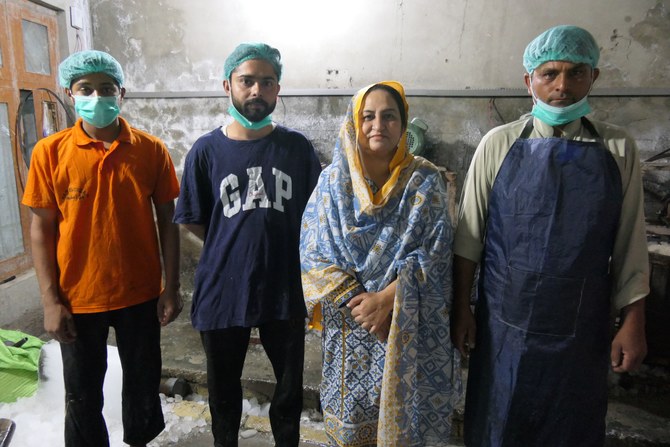
Lubna Farooq poses with her laborers at her ice cream factory in Quetta, Pakistan, on August 13, 2021. (AN Photo)
The couple began by selling ice cream on a pushcart parked on a corner of Quetta’s Toghi Road, a busy thoroughfare famous for its food joints. Soon, Lubna’s husband started selling their brand, Haq Ice Cream, at schools and colleges twice a week.
“I still remember that my first income was 70 rupees,” Lubha said, recalling a time when she earned less than a dollar a day. But once the business slowly expanded and became popular around the city, production and revenue have both steadily increased.
There was a time when Lubna said she made one 10-liter container of ice cream a day at home. Today, at her factory on Quetta’s busiest Alamdar Road where she employs 25 people, up to 85 containers a day can be produced per day. The flavours include mango, chocolate, vanilla, pistachio, blue berry, strawberry, guava, pineapple and fig. A 10-liter container ranges in price between Rs2,000 to Rs4,000, depending on the flavour.
Lubna’s son Hasnain Farooq, 32, who runs her stall said on good days — especially in the summer months and if there were orders for special events like weddings — Haq Ice Cream could earn up to Rs25,000 a day from sales. Three days a week, Hasnain said, the company also delivered to other cities in Balochistan.
“We have started taking wedding and party orders which has helped introduce our taste to thousands of people,” he said, adding that he was proud to be supervising a business “my parents struggled to establish over two decades ago.”
Lubna still sells her ice cream at a mobile stall on Quetta’s busy Alamdar Road, preferring not to rent a proper shop it would push up the price of her ice cream, which she is loath to do. But she does plan to expand her business to other cities like Islamabad, Lahore and Karachi, and hopes she will get government support.
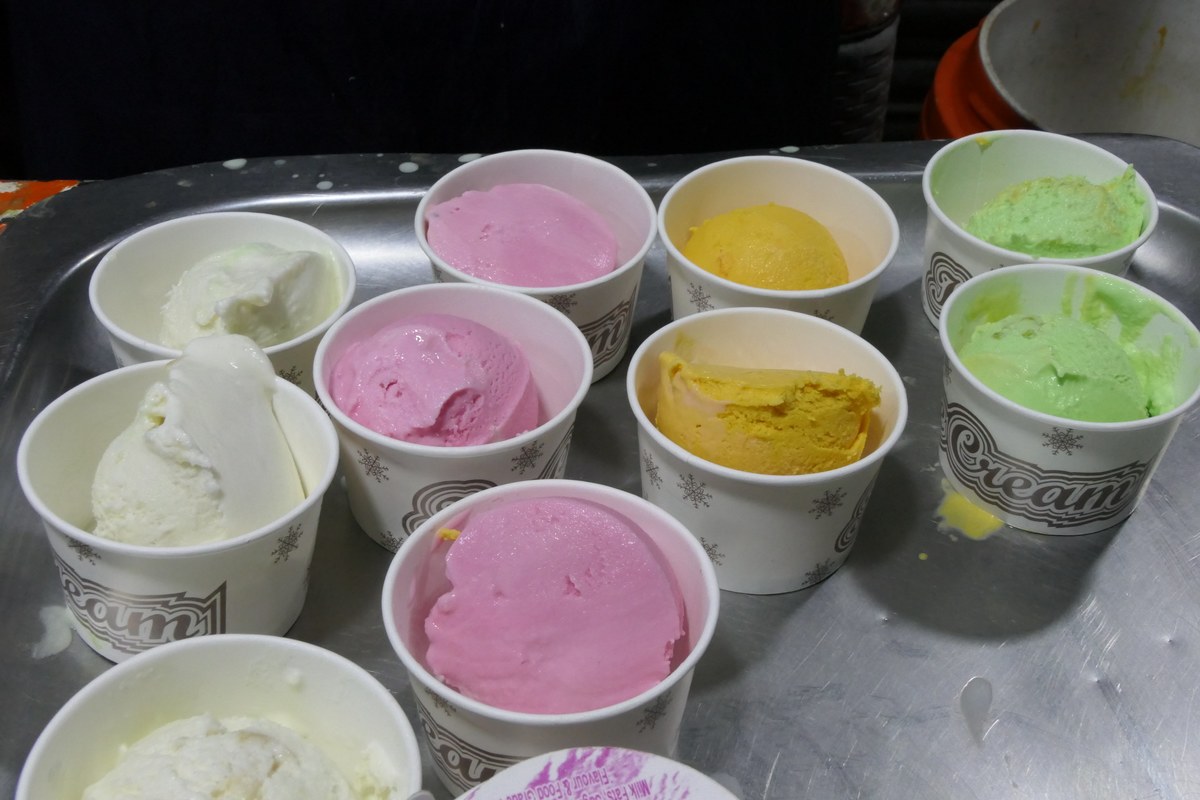
Ice cream flavors ready to be served at business owner Lubna Farooq’s stall in Quetta, Pakistan, on August 13, 2021. (AN Photo)
Sana Durrani, an activist and the chairperson of the Balochistan Women Business Association, said it was “unfortunate” that Balochistan’s women were not encouraged to own financial assets or penetrate business sectors, and that woman like Lubna were a rarity.
“More than 68 percent women in Balochistan are home-based workers and less than 10 percent have their own businesses ... women have to think a thousand time before launching a business in Balochistan,” Durrani said.
“But what is more ironic is that the government in the province has failed to introduce new legislation and policies to embolden women seeking assistance in starting their own business.”
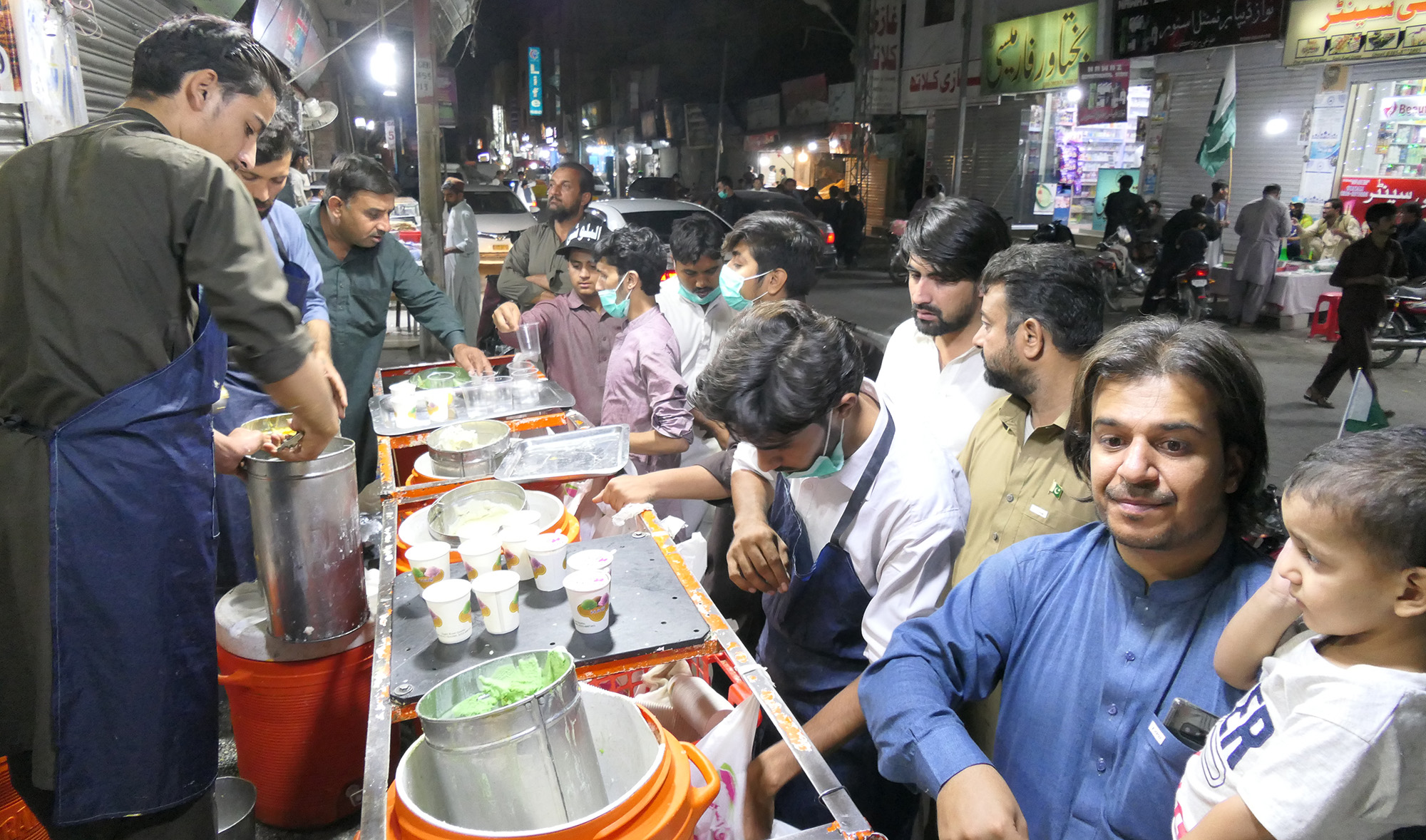
Ice cream business owner Lubna Farooq’s son Hussain Farooq at the family's ice cream stall in Quetta, Pakistan, on August 13, 2021. (AN Photo)
Liaquat Shahwani, a spokesperson for the Balochistan government, disagreed, saying the administration was keen to support businesswomen.
“The current government has been establishing Women Bazaars in four districts of the province, which would be an opportunity for women,” he told Arab News. “Women will be allowed to display their work at these bazaars, and the government has also allocated sufficient funds for women development in the Budget 2021-22 to create more business opportunities.”
Lubna said she wanted to send a message to women across Pakistan “to come out from their home and step into the business sector.”
“There was a time when I had a dozen customers but now, I have thousands due to my hard work and support of my family,” she said. “I hope I can become an inspiration for other women.”