


ISLAMABAD: Pakistani Prime Minister Imran Khan has taken notice of the assault of a young woman by a mob at the Minar-e-Pakistan monument in Lahore city and spoken with the police chief of Punjab province, a senior member of Khan’s party said on Wednesday about a case that has caused a major public outcry.
The assault, which took place on August 14, Pakistan’s independence day, came to the surface after videos were circulated on social media on Tuesday showing a woman being attacked and sexually assaulted by a mob comprising hundreds of men at the Greater Iqbal Park. The woman is reportedly a TikToker and was shooting videos in the park when she was attacked.
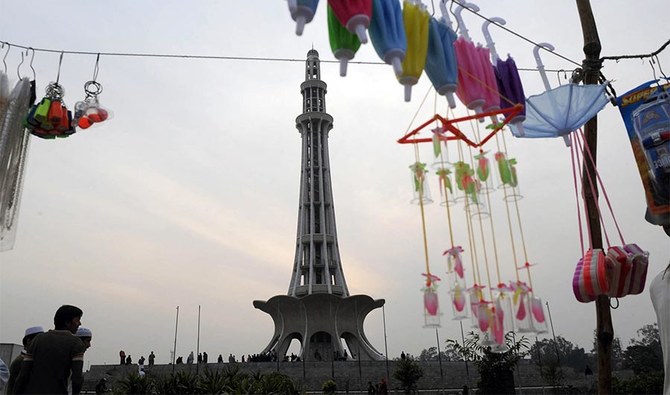
Greater Iqbal Park is home to Minar-e-Pakistan, a national monument built to commemorate where the first official call for a separate and independent homeland for the Muslims of British India was made by the All-India Muslim League Party in 1940. Pakistan became an independent country seven years later, on August 14. Each year, thousands of people flock to the monument to mark independence day.
“PM @ImranKhanPTI personally spoke to IGPunjab, police is catching all culprits involved in manhandling of female tiktoker in Lahore,” Sayed Zulfikar Bukhari, a member of Khan’s ruling Pakistan Tehreek-e-Insaf (PTI) party, said on Twitter. “These are gross violations of laws & social norms, govt won’t spare a single person involved.”
In an interview with Daily Pakistan, the woman, whom the media outlet did not name, said she was filming a video with some friends when a mob of around 400 people attacked the group.
"I wasn't wearing any indecent clothes," the woman said. "I had a new dress stitched for August 14, but I was stripped of everything."
Little is known about the victim, including her name or age.
Punjab Chief Minister Usman Buzdar has also ordered that all culprits involved in the attack be arrested, his focal person Azhar Mashwani said on Twitter.
"Police is analyzing the video clips and available CCTV footages to identify the culprits and arrest them," he said, confirming that non-bailable clauses have been added to the police first information report.
Punjab Police said they are working with the National Database and Registration Authority (NADRA) to identify the suspects.
"The NADRA staff are busy in identification of the suspects even on a holiday," the police said in a statement. "Case has been registered against the suspects under section 354-A that carries life imprisonment or death penalty. All efforts will be made to bring the culprits to justice."
Human Rights Minister Shireen Mazari said her ministry was in touch with authorities in Punjab to ensure that strict action was taken against the perpetrators of the attack, adding that “we need to try and change such violent behavioral patterns in our people.”
"We have awareness programmes, laws etc. Certainly, effective implementation of our laws will have some deterrent effect but mindsets also have to change to stop crimes against all vulnerable members of our society."
Opposition politicians Shehbaz Sharif and Bilawal Bhutto-Zardari also condemned the attack:


