

Saudi aid agency boosts capabilities in Nigeria, Yemen

1 / 3
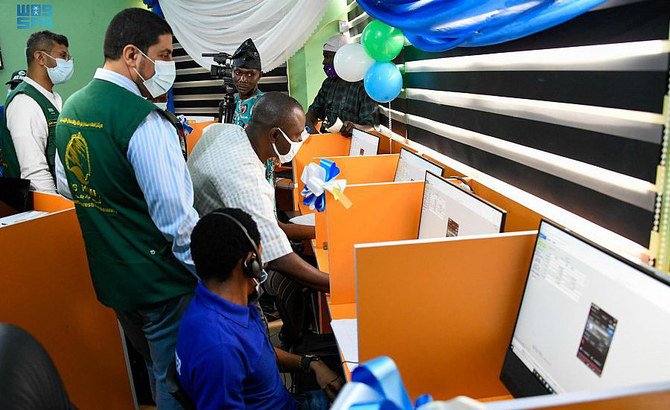
Saudi Arabia’s support will develop the technical infrastructure in the agency’s call and control center. (SPA)
2 / 3
Saudi Arabia’s support will develop the technical infrastructure in the agency’s call and control center. (SPA)
3 / 3
Saudi Arabia’s support will develop the technical infrastructure in the agency’s call and control center. (SPA)
Short Url
Updated 18 August 2021
Follow

Saudi aid agency boosts capabilities in Nigeria, Yemen

  • Elsewhere, KSRelief inspected the implementation of the Vocational Training and Business Skills Support Project in the Tibn and Ras Al-Ara districts in Yemen’s Lahj governorate

ABUJA/LAHJ: The King Salman Humanitarian Aid and Relief Center (KSRelief) has launched a technical assistance project to develop the call and control center at the Nigerian Emergency Management Agency.

The Kingdom’s support will develop the technical infrastructure in the agency’s call and control center, improving its capacity to respond to emergencies and disasters in the region, submit data and provide urgent responses to those affected.

Elsewhere, KSRelief inspected the implementation of the Vocational Training and Business Skills Support Project in the Tibn and Ras Al-Ara districts in Yemen’s Lahj governorate.

For 12 days, 273 volunteers will be trained in the use of maintenance workshops, car mechanics, the maintenance of household appliances, carpentry and mobile phone maintenance for women. They will also develop skills in sewing clothes and the maintenance of fishing nets.

Similar training is being conducted in the governorates of Hadhramaut, Abb and Dhimar, where some 1,035 trainees are being provided with professional, technical and commercial skills.


Economic growth and resilience at heart of 2nd AlUla Emerging Market Economies Conference

Updated 03 February 2026
Follow

Economic growth and resilience at heart of 2nd AlUla Emerging Market Economies Conference

  • Event on Feb. 8 and 9 will bring together ministers, governors of central banks, policymakers, economic experts and international financial institutions
  • Emerging-market economies a ‘pivotal element’ in global economic system due to effect they have on growth and stability, says Saudi Finance Minister Mohammed Al-Jadaan

RIYADH: The second annual AlUla Conference for Emerging Market Economies, which Saudi Arabia will host next week, offers a platform to exchange views on global developments and discuss policies and reforms that support inclusive growth and strengthen economic resilience, the Kingdom’s finance minister said.

The event on Feb. 8 and 9 will bring together finance ministers, governors of central banks and policymakers, alongside economic experts and representatives of international financial institutions.

Organized by the Saudi Ministry of Finance in partnership with the International Monetary Fund, it takes place as emerging-market economies face mounting challenges amid rapid global economic change.

Finance Minister Mohammed Al-Jadaan said the decision to host the conference reflects Saudi Arabia’s ongoing commitment to efforts that support global financial and economic stability, and highlights the growing influence of emerging economies on worldwide growth.

Emerging-market economies represent a “pivotal element” in the global economic system due to the direct impact they have on economic growth and stability, he added.

“The AlUla Conference for Emerging Market Economies provides a unique platform for exchanging views on global economic developments, and discussing policies and reforms that will support inclusive growth and enhance economic resilience, in light of broader international cooperation that contributes to confronting common challenges,” Al-Jadaan said.

Kristalina Georgieva, managing director of the IMF, said the event would help emerging economies deal with growing uncertainty driven by technological change, demographic shifts and geopolitical tensions.

“The AlUla conference provides a vital platform for emerging economies to discuss how they can navigate the risks and embrace the opportunities ahead,” she said.

“In these times of sweeping transformations in the global economy, policymakers face a more challenging and uncertain environment. Countries should work together to strengthen resilience through sound macroeconomic and financial policies.”