

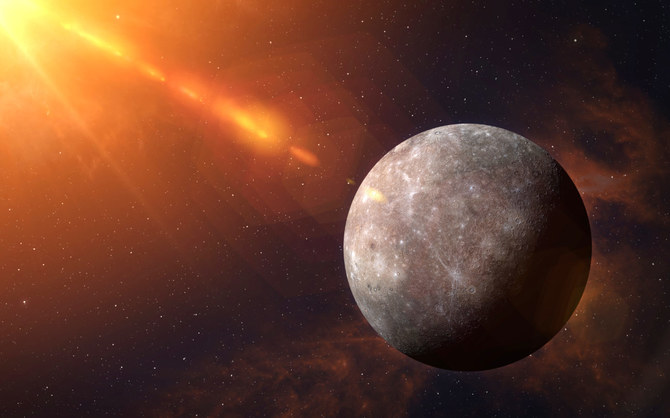

JEDDAH: Space enthusiasts are in for a special show as one of this month’s astronomy events is set to brighten the night sky across the Kingdom’s south.
Those living in the south and southwest will be able to observe one of the closest conjunctions of Mercury and Mars on Aug. 19, visible to the naked eye and a pair of binoculars just after sunset. The closest conjunction was on June 18, 2019.
There has been a growing interest in astronomical events thanks to the COVID-19 pandemic, with people finding new interests while living under lockdown.
Astronomical societies, astronomers, and astrophotographers have also used the power of social media to show videos and images of astronomical objects and events such as planetary systems, star clusters, meteor showers, close-ups of the moon, and other astronomical bodies.
“The pandemic isolation inspired me to go beyond my comfort zone and my scope and just look into new topics of interest while under lockdown,” said Fahda Al-Taweeli, a private sector worker in Riyadh. “With my family in Jeddah during the lockdown, I had a lot of time on my hands, but my eldest son and I were able to bond and found a shared interest in astronomy.”
She grew up in the US and had fond memories of being at the library, scrolling through astronomy books and wondering about the stars, a curiosity that has stayed with her.
SPEEDREAD
Those living in the south and southwest will be able to observe one of the closest conjunctions of Mercury and Mars on Aug. 19.
"My nine-year-old son Khalid is also a curious one and he'd always ask why can't we see the dark side of the moon, something that piqued his interest while watching one of the ‘Transformers’ films and we went on a search for answers right away, and we bonded over that.”
She said given the conjunction was not visible from Riyadh, according to one of her many space-related apps, she would ensure that she headed to the beach with her son while in Jeddah this week to witness the event.
Zahra Jameel, a government worker in Jeddah, was planning on doing the same with her nieces and nephews.
She said their interest grew when their parents introduced them to NASA’s Kids’ Club this summer as their travel plans were delayed until the COVID-19 situation improved.
“I grew more interested through the kids,” she told Arab News. “We watched documentaries, they drew pictures of planets, and the eldest even drew Pluto and the other planetoids.”
She signed up for several newsletters and magazines and found that she could view the conjunction in her city.
“I now know which planets can be seen in the night sky and, though I don't have binoculars to see the conjunction, I’m sure it'll be cool to see even with the naked eye.”


