DUBAI: Saudi Aramco is looking to raise at least $17 billion from the sale of a significant minority stake in its gas pipelines, higher than the $12.4 billion raised from its oil pipeline deal, Reuters reported on Monday quoting unnamed sources.
Potential bidders including North American private equity and infrastructure funds, as well as state-backed funds in China and South Korea have been approached by Aramco through its advisers before a formal sale process kicks off in the next few weeks, Reuters said.
The deal size may include $3.5 billion of equity and the remainder will be funded by bank debt, one of the anonymous sources said, while another source said the transaction size could top $20 billion.
“The gas deal is about the long-term view of gas utilization and consumption in Saudi Arabia,” said one source familiar with the deal, explaining why the gas deal may generate higher proceeds.
According to Reuters, the companies tapped include the ones who took part in the stake sale process for Abu Dhabi National Oil Co.’s gas pipelines, which was bought by a consortium of investors including Global Infrastructure Partners (GIP), Brookfield, Singapore sovereign wealth fund GIC and European gas infrastructure owner and operator SNAM.
Aramco did not immediately respond to a Reuters request for comment, while JPMorgan and Goldman declined to comment. Brookfield and SNAM declined to comment. GIP did not immediately respond to a request for comment.
Aramco, similar to Abu Dhabi National Oil Co. (ADNOC), used a lease and lease-back agreement to sell a 49 percent stake of newly formed Aramco Oil Pipelines Co. to the buyer and rights to 25 years of tariff payments for oil carried on its pipelines.

Saudi Aramco seeks to raise at least $17 billion from gas pipeline: Reuters
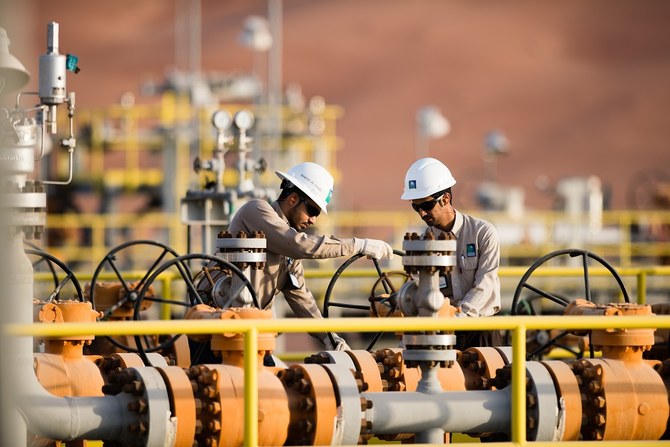
https://arab.news/6gmpa
Saudi Aramco seeks to raise at least $17 billion from gas pipeline: Reuters
- Potential bidders have been approached by Aramco through its advisers before a formal sale process kicks off in the next few weeks
Saudi Aramco bolsters global oil market stability amid rising regional tensions
RIYADH: Amid growing logistical challenges facing the energy sector, operational moves by Saudi Aramco are emerging as a stabilizing factor in global oil supply.
The company has offered additional crude shipments on the spot market, a step analysts see as aimed at absorbing supply shocks and ensuring the continued flow of oil through key energy corridors.
The move aligns with Saudi Arabia’s long-standing role as a leading global producer and is intended to limit price volatility and maintain balance between supply and demand at a time of heightened geopolitical uncertainty.
Reuters reported that Aramco has offered more than 4 million barrels of Saudi crude through rare spot tenders, as tensions between the US and Iran disrupt Middle Eastern exports.
Mohammad Al-Sabban, former senior adviser to the Saudi energy minister, said the current surge in oil prices does not necessarily reflect an immediate shortage of supply. Instead, it is largely driven by what energy markets call a “geopolitical risk premium.”
Speaking to Asharq Al-Awsat, Al-Sabban said prices remaining above $100 per barrel reflect global anxiety that the conflict could expand and threaten future supply security.
He noted that higher prices, while boosting short-term revenues and fiscal surpluses for oil-exporting countries, also bring hidden costs. These include increased spending on security measures to protect oil infrastructure — costs that rise in a volatile regional environment where Gulf states face mounting security pressures.
Al-Sabban also pointed out that spot market sales are currently generating greater returns than long-term futures contracts. The uncertainty surrounding the conflict has led buyers to pay premiums for immediate deliveries, making spot transactions more attractive during the current crisis.
Strategic chokepoint
Shipping through the Strait of Hormuz, which carries roughly 20 percent of global oil supply, remains central to the crisis.
Al-Sabban warned that even a temporary closure of the waterway would inevitably reduce available supplies, potentially triggering panic in markets and forcing countries to draw from strategic reserves.
He recalled historical precedents, noting that during the Iran-Iraq war, energy markets became a hub for speculation, with negative economic consequences emerging later.
Asked whether the conflict represents a short-term economic opportunity or a broader risk for regional economies, Al-Sabban said the reality is a mix of both. High prices may offer temporary gains as long as oil remains above $100 a barrel, but a prolonged conflict could ultimately impose heavier economic burdens through rising logistical and security costs.
Flexible response
Financial and economic adviser Hussein Al-Attas said Aramco’s decision to release additional cargoes on the spot market reflects significant flexibility in managing supply and responding quickly to market shifts amid rising demand and concerns about potential shortages.
He told Asharq Al-Awsat that the move sends an important signal to global markets that Saudi Arabia continues to play the role of a swing producer, capable of intervening to maintain market balance and ease fears about supply security.
Al-Attas added that the recent surge in oil prices is largely tied to geopolitical tensions in a region that represents the heart of global energy supply.
While Brent crude could remain above $100 in the short term if supply concerns persist, he noted that history shows price spikes driven by political tensions are often temporary unless they lead to a prolonged disruption in supply.
Higher oil prices naturally increase revenues for exporting countries, potentially strengthening fiscal balances and enabling governments to finance spending and development projects, Al-Attas remarked.
Gulf states, particularly Saudi Arabia and the United Arab Emirates, may therefore benefit financially in the short term.
However, he cautioned that such gains are usually temporary rather than structural. Prolonged high energy prices can slow global economic growth by fueling inflation, which may eventually reduce demand for oil. As a result, the current price surge may represent a temporary financial opportunity rather than a lasting shift in oil revenues.
Ultimately, Al-Attas said the crisis carries two opposing dynamics: Gulf countries may benefit financially in the short term, but any wider regional conflict could pose greater risks to economic and commercial stability.
For that reason, he added, the region’s strategic interest ultimately lies in stable energy markets and uninterrupted oil flows, which are essential for sustaining global demand and supporting long-term economic growth.


