



KARACHI: An ancient form of therapy called Hijama, or wet cupping, needs regulation in Pakistan, experienced practitioners say, urging the government to crackdown on ‘unqualified’ doctors putting patients' health at risk.
Though many doctors say there isn’t enough evidence that cupping therapy works, it is widely practised in Muslim countries, with its first reported usages found in Islamic hadith, sayings attributed to or describing the actions of the Prophet Muhammad (peace be upon him).
The therapy, which involves cutting the skin and drawing blood with suction cups, is used to treat a wide range of conditions including migraines and hay fever.
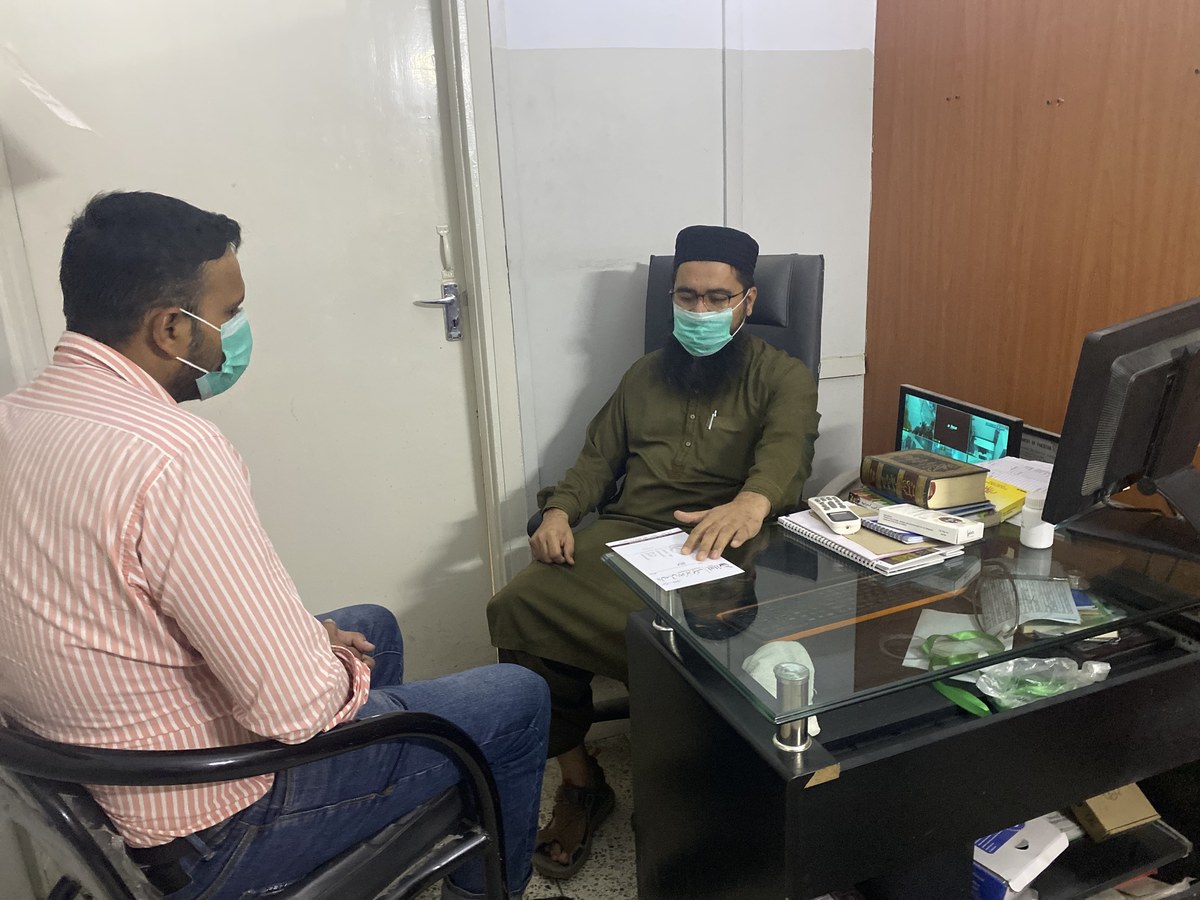
Dr. Bilal Ahmed, a practitioner of Hijama therapy, examines a patient at his clinic in Karachi, Pakistan, on August 9, 2021. (AN photo)
“Hijama has become popular with people,” Hakeem Syed Zahoorul Hasan, who has run a Hijama clinic in Karachi’s North Nazimabad area for 14 years, told Arab News this week. “The lack of government regulation, however, has not been helpful since it confuses our potential clients about the authenticity of this important form of medical treatment.”
“On the one hand, a large number of people, who have been skeptical about this treatment in the absence of government regulation, remain deprived of a good treatment,” Hasan, who got his Hijama certification from Hamdard University, said. “On the other hand, several unqualified people have also opened Hijama centers without knowing how to use this treatment.”
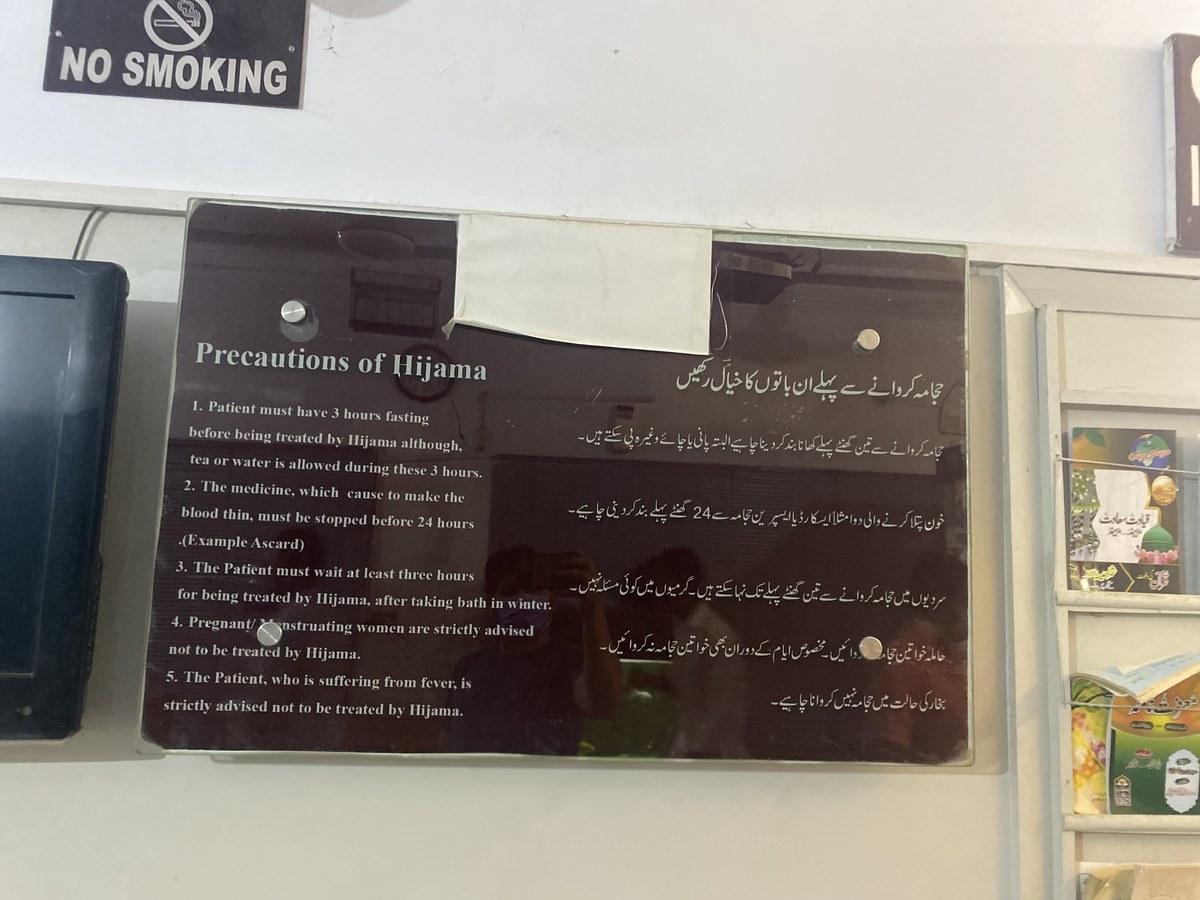
A noticeboard at a Hijama clinic outlines precautions in English and Urdu for patients seeking the cupping treatment in Karachi, Pakistan, on August 9, 2021. (AN photo)
Secretary general of the Pakistan Medical Association, Dr. Qaiser Sajjad, said it was the job of the Sindh Healthcare Commission, a regulatory body, to ascertain if the practice of Hijama was “right or wrong,” but warned that untreated open wounds of the type caused by cupping could lead to infections. He also said the use of non-sterilized equipment could cause infectious diseases such as HIV and Hepatitis C.
In November 2019, the Sindh Health Commission cracked down on several Hijama clinics across the province, though it also allowed many practitioners to continue offering the treatment after they presented certificates in eastern medicine.
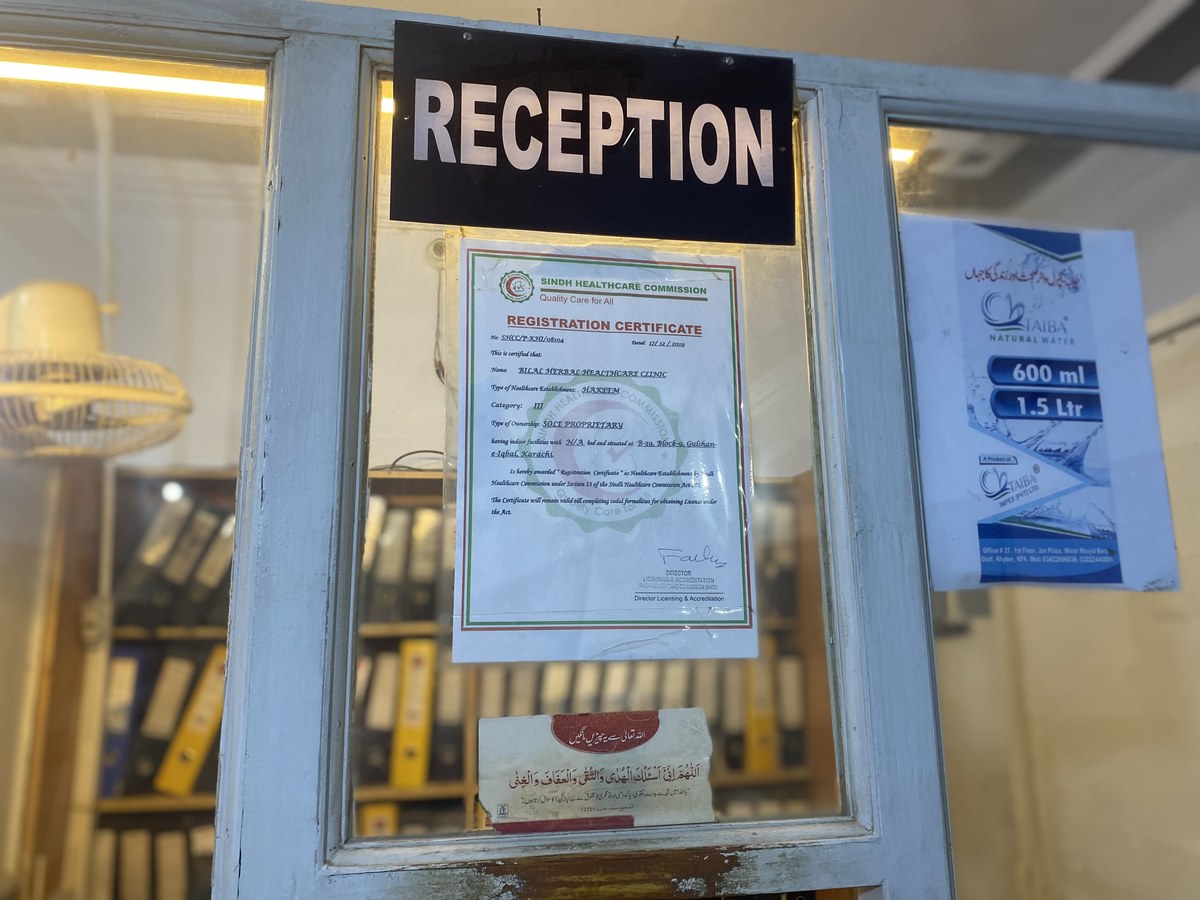
A certificate issued by the Sindh Healthcare Commission can be seen at the reception of a Hijama clinic in Karachi, Pakistan, on August 9, 2021. (AN photo)
“This is a treatment for sure, but we are deliberating how to regulate it,” Syed Baqar Raza Rizvi, the commission’s chief executive officer, told Arab News. “Many factors will have to be taken into account, including the qualification of those performing the therapy.”
Rizvi could not provide an exact number of Hijama clinics in the city, saying official figures were not available since the medical centers were not registered with the commission.
But Dr. Muhammad Bilal, who runs his own herbal clinic and has a doctorate in Hijama therapy, told Arab News hundreds of clinics were now offering the treatment, which was fast growing in popularity.
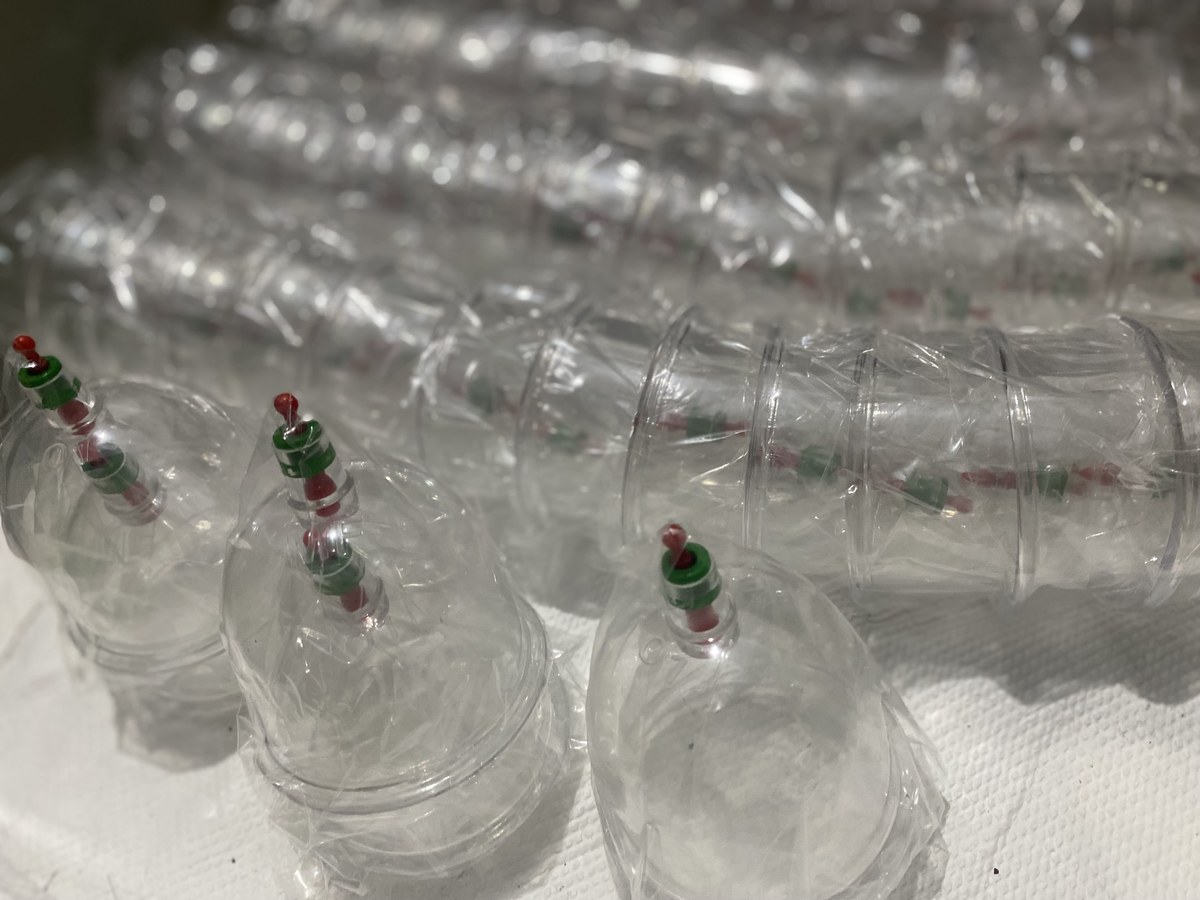
This photo shows suction cups at a Hijama clinic in Karachi, Pakistan, on August 9, 2021. (AN photo)
“When I was doing my research in 2008,” he said, “it took me six months to find 25 Hijama treatments to witness since very few people opted for it.”
Things were different now, with more and more people turning to the alternative treatment, Bilal said.
“Most new patients we receive are referrals,” he said. “During the last week, I got at least five clients who said they had seen Olympians getting it done.”
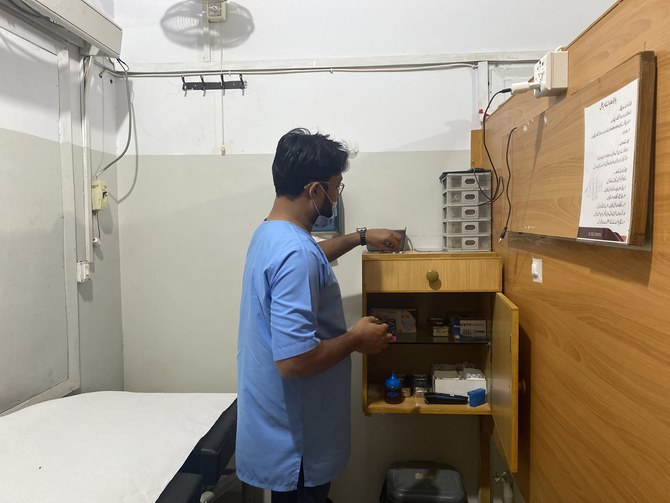
A staff member at the Bilal Herbal Clinic prepares a room before a Hijama therapy session in Karachi, Pakistan, on August 9, 2021. (AN photo)
He urged the government to regulate the Hijama industry and help authentic practitioners who were providing quality treatment.
“There are qualified practitioners providing best treatment in a highly hygienic environment," Bilal said. "They deserve help, which government should extend by patronising Hijama.”


