

OIC urges India to let human rights investigators enter Kashmir

Organization of Islamic Cooperation representatives visit refugees from Indian-controlled Kashmir at a camp in Muzaffarabad, Pakistan's Azad Jammu and Kashmir on August 6, 2021. (Photo courtesy: AJK government)
Short Url
Updated 08 August 2021
Follow

OIC urges India to let human rights investigators enter Kashmir

  • OIC’s rights commission members say they receive many complaints of ‘grave violations’ in Indian-controlled Kashmir 
  • They visited Pakistan on Aug. 4-8 to assess the situation through the border as India denies entry to fact-finding missions

ISLAMABAD: The rights commission of the Organization of Islamic Cooperation (OIC) called on India on Sunday to let international investigators enter Kashmir and assess the humanitarian situation in the disputed region.
The OIC’s Independent Permanent Human Rights Commission (IPHRC) made the appeal as its 12-member delegation completed a five-day visit to Pakistan to monitor the situation in Kashmir through the border as India denies entry to international fact-finding missions.
Kashmir has been divided between India and Pakistan since the end of British colonial rule in 1947 with both claiming the territory in full. The portion of the disputed region ruled by India has been plagued by violence, leaving tens of thousands, mostly civilians, dead.
IPHRC chairman Dr. Saeed Mohamed Abdulla Al-Ghufli of the United Arab Emirates told Arab News the OIC is receiving many complaints over rights violations in the part of Kashmir controlled by India.
“We urge the Indian government to open the door for us and for all the international organizations to visit and see the situation of Jammu and Kashmir,” Al-Ghufli said.
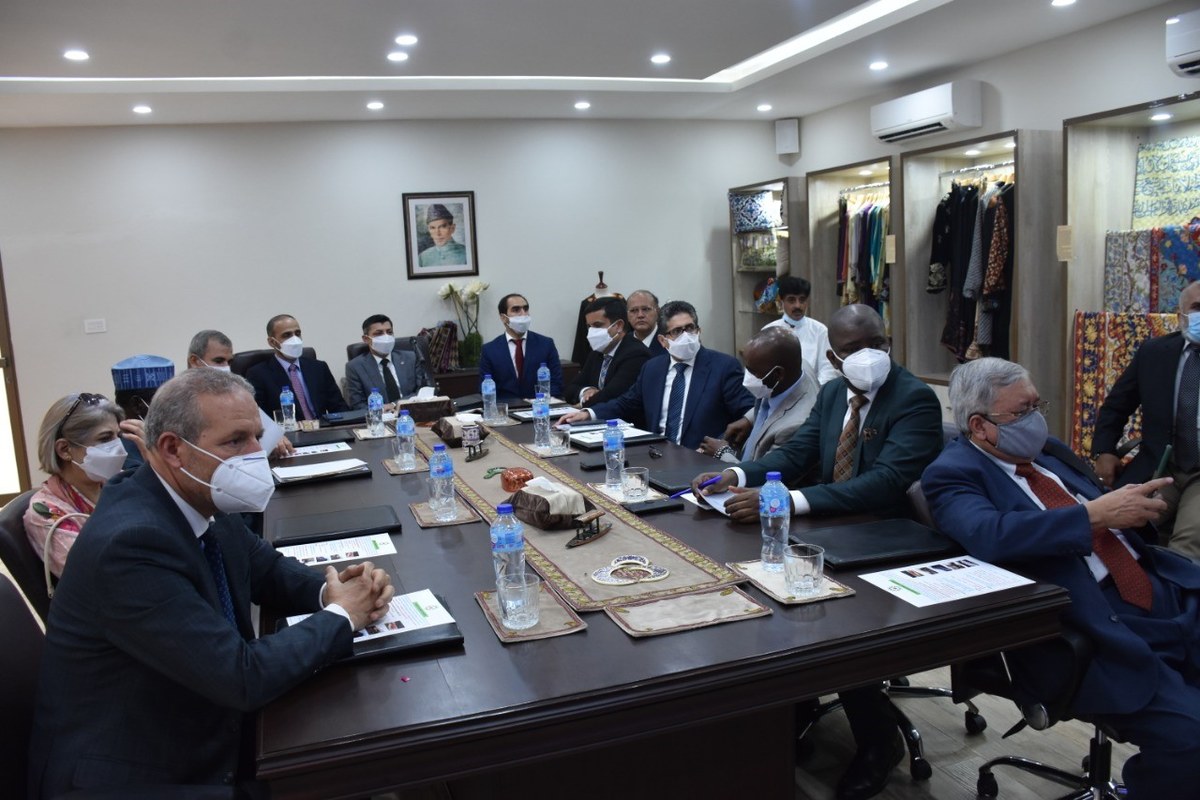


A delegation of the OIC’s Independent Permanent Human Rights Commission (IPHRC) is visiting a refugee camp at Thotha, Muzaffarabad on August 6, 2021. (Photo courtesy: AJK government)

“Our purpose is to monitor the human rights (situation) and write our report and show the international community the violations of human rights which people of Jammu and Kashmir have been suffering for more than 70 years.”
During the visit the IPHRC has interviewed many Kashmiris who crossed over to Pakistan from the Indian side of the region. On Saturday, the delegation visited the Line of Control, the de facto border that divides Pakistan’s Azad Jammu and Kashmir (AJK) and India’s Jammu and Kashmir.
During the AJK visit, the region’s president, Sardar Masood Khan, briefed members of the delegation about the presence of 42,000 refugees from across the divide in AJK. He also requested that the OIC establish a humanitarian corridor to aid the people on the Indian side of the border.
“We met many victims, many injured people,” Al-Ghufli said. “Jammu and Kashmir is one of these places where human rights have been violated. We will write all our observations in our report.”
Another member of the team, Fahad bin Abdullah Al-Ajlan representing Saudi Arabia, said they had found “grave violations” during meetings with refugees from Indian-controlled Kashmir.
“They expressed their suffering, and we will bring hardships faced by these people before the international community in our report,” he told Arab News.
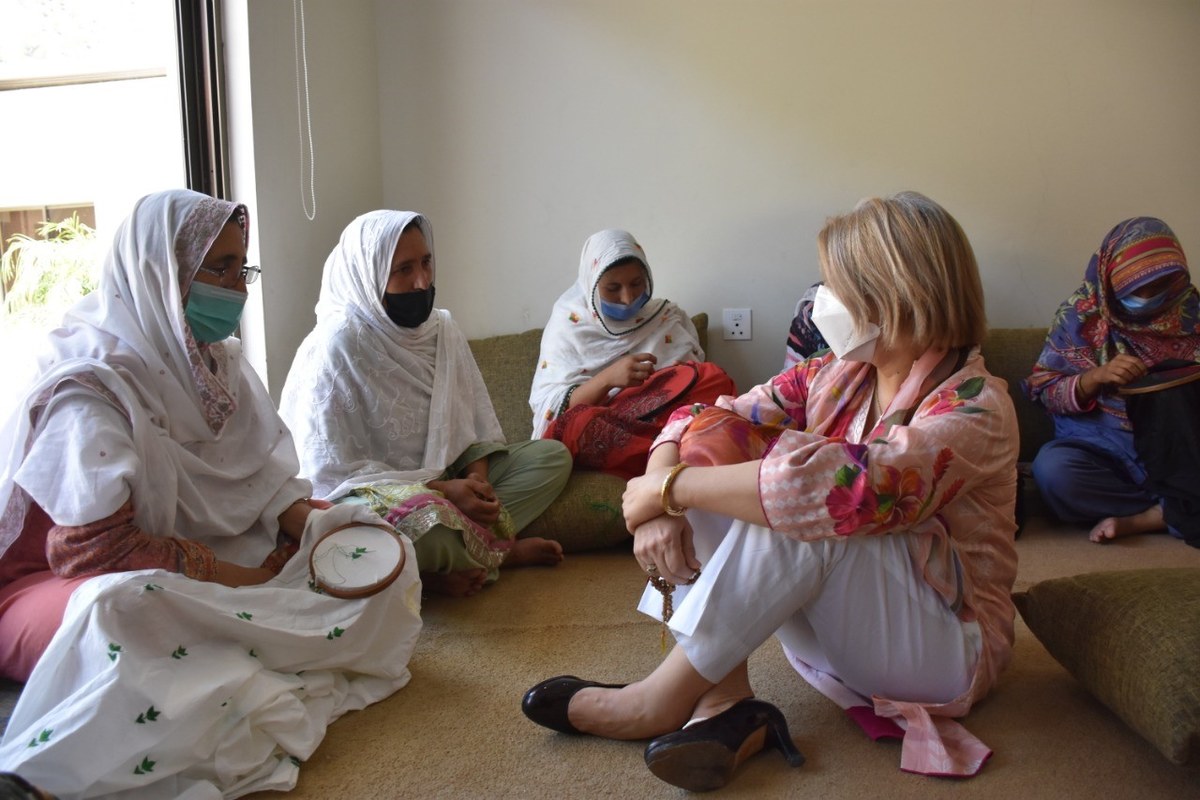


A member of the OIC’s Independent Permanent Human Rights Commission (IPHRC) delegation meets local residents near Line of Control in Azad Kashmir, Pakistan, on August 7, 2021. (Photo courtesy: ISPR)

The OIC-IPHRC delegation included diplomats and representatives from the UAE, Uganda, Nigeria, Malaysia, Saudi Arabia, Azerbaijan, Gabon, Tunisia, Turkey and Morocco.
As they arrived in Islamabad last week, the Pakistani foreign office said the visit would be “significant in drawing international attention toward the urgent need to address the egregious human rights situation” in Indian-controlled Kashmir and to resolve the dispute in accordance with the relevant UN Security Council resolutions and the will of the Kashmiri people.
The Security Council has adopted several resolutions on the dispute, including one which says a plebiscite should be held to determine the region’s future.


Peace can only prevail if Afghanistan renounces support for ‘terrorism’— Pakistan defense chief

Updated 04 March 2026
Follow

Peace can only prevail if Afghanistan renounces support for ‘terrorism’— Pakistan defense chief

  • Pakistan’s chief of defense forces visits South Waziristan district bordering Afghanistan
  • Pakistan says has killed 481 Afghan Taliban operatives since clashes began last Thursday

ISLAMABAD: Pakistan’s Chief of Defense Forces Field Marshal Syed Asim Munir said on Wednesday that peace with Afghanistan can only prevail if Kabul renounces support for “terrorism” and “terrorist” organizations, the military’s media wing said as the two countries remain locked in conflict. 

Fighting between the two neighbors, the worst in decades, broke out last Thursday night after Afghan forces attacked Pakistan’s military installations along their shared border. Afghanistan said its attacks were in response to earlier airstrikes by Pakistan against alleged militant hideouts in its country. 

Pakistan accuses Afghanistan of sheltering militant outfits such as the Tehreek-e-Taliban Pakistan (TTP) on its soil who have launched attacks against Pakistani civilians and security forces in recent years. Kabul denies the allegations. 

Munir visited Wana town in Pakistan’s South Waziristan district to review the security situation and troops’ operational preparedness at the Afghan border, the Pakistani military’s media wing said in a statement. 

“The Field Marshal reiterated that peace could only prevail between both sides if the Afghan Taliban renounced their support for terrorism and terrorist organizations,” the Inter-Services Public Relations (ISPR) said. 

The military chief said the use of Afghan soil by militant outfits to launch attacks against Pakistan was unacceptable, vowing that “all necessary measures” would be taken to neutralize cross-border threats. 

During the visit, Munir was briefed by military commanders about ongoing intelligence-based operations and measures being taken by the military to manage the border with Afghanistan.

He was also briefed about “Operation Ghazab Lil Haq” or “Wrath for the Truth,” the name Pakistan has given to its military operation against Afghan forces, the ISPR said. 

The Pakistani military chief spoke to troops deployed in the area, praising their vigilance, professional conduct and high morale, the ISPR said. 

Pakistan’s Information Minister Attaullah Tarar said on Wednesday that the military has killed 481 Taliban operatives, injured more than 690 and destroyed 226 Afghan checkposts since clashes began. 

Arab News has been unable to verify claims by both sides about the damages they claim to have inflicted on each other.

Afghanistan has signaled it is open for dialogue but Pakistan rejected the offer, saying it would continue its military operations till its objectives were achieved. 

Since the conflict began, diplomatic efforts have intensified with several countries, including global bodies such as the European Union and United Nations, urging restraint and calling for talks.

Turkish President Recep Tayyip Erdogan told Pakistani Prime Minister Shehbaz Sharif that ⁠Ankara would help ⁠reinstate a ceasefire, the Turkish Presidency said on Tuesday, as other countries that had offered to mediate have since been hit by the conflict in the Gulf.