

OIC urges India to let human rights investigators enter Kashmir

Organization of Islamic Cooperation representatives visit refugees from Indian-controlled Kashmir at a camp in Muzaffarabad, Pakistan's Azad Jammu and Kashmir on August 6, 2021. (Photo courtesy: AJK government)
Short Url
Updated 08 August 2021
Follow

OIC urges India to let human rights investigators enter Kashmir

  • OIC’s rights commission members say they receive many complaints of ‘grave violations’ in Indian-controlled Kashmir 
  • They visited Pakistan on Aug. 4-8 to assess the situation through the border as India denies entry to fact-finding missions

ISLAMABAD: The rights commission of the Organization of Islamic Cooperation (OIC) called on India on Sunday to let international investigators enter Kashmir and assess the humanitarian situation in the disputed region.
The OIC’s Independent Permanent Human Rights Commission (IPHRC) made the appeal as its 12-member delegation completed a five-day visit to Pakistan to monitor the situation in Kashmir through the border as India denies entry to international fact-finding missions.
Kashmir has been divided between India and Pakistan since the end of British colonial rule in 1947 with both claiming the territory in full. The portion of the disputed region ruled by India has been plagued by violence, leaving tens of thousands, mostly civilians, dead.
IPHRC chairman Dr. Saeed Mohamed Abdulla Al-Ghufli of the United Arab Emirates told Arab News the OIC is receiving many complaints over rights violations in the part of Kashmir controlled by India.
“We urge the Indian government to open the door for us and for all the international organizations to visit and see the situation of Jammu and Kashmir,” Al-Ghufli said.
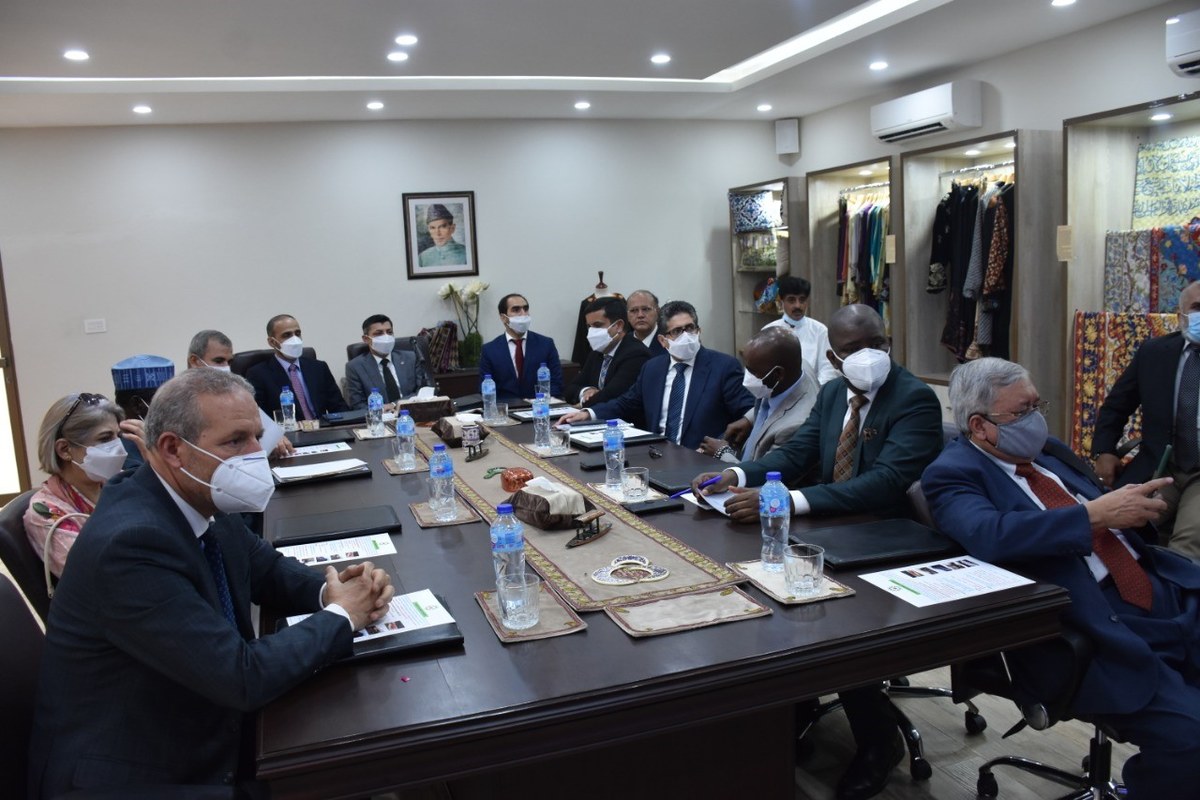


A delegation of the OIC’s Independent Permanent Human Rights Commission (IPHRC) is visiting a refugee camp at Thotha, Muzaffarabad on August 6, 2021. (Photo courtesy: AJK government)

“Our purpose is to monitor the human rights (situation) and write our report and show the international community the violations of human rights which people of Jammu and Kashmir have been suffering for more than 70 years.”
During the visit the IPHRC has interviewed many Kashmiris who crossed over to Pakistan from the Indian side of the region. On Saturday, the delegation visited the Line of Control, the de facto border that divides Pakistan’s Azad Jammu and Kashmir (AJK) and India’s Jammu and Kashmir.
During the AJK visit, the region’s president, Sardar Masood Khan, briefed members of the delegation about the presence of 42,000 refugees from across the divide in AJK. He also requested that the OIC establish a humanitarian corridor to aid the people on the Indian side of the border.
“We met many victims, many injured people,” Al-Ghufli said. “Jammu and Kashmir is one of these places where human rights have been violated. We will write all our observations in our report.”
Another member of the team, Fahad bin Abdullah Al-Ajlan representing Saudi Arabia, said they had found “grave violations” during meetings with refugees from Indian-controlled Kashmir.
“They expressed their suffering, and we will bring hardships faced by these people before the international community in our report,” he told Arab News.
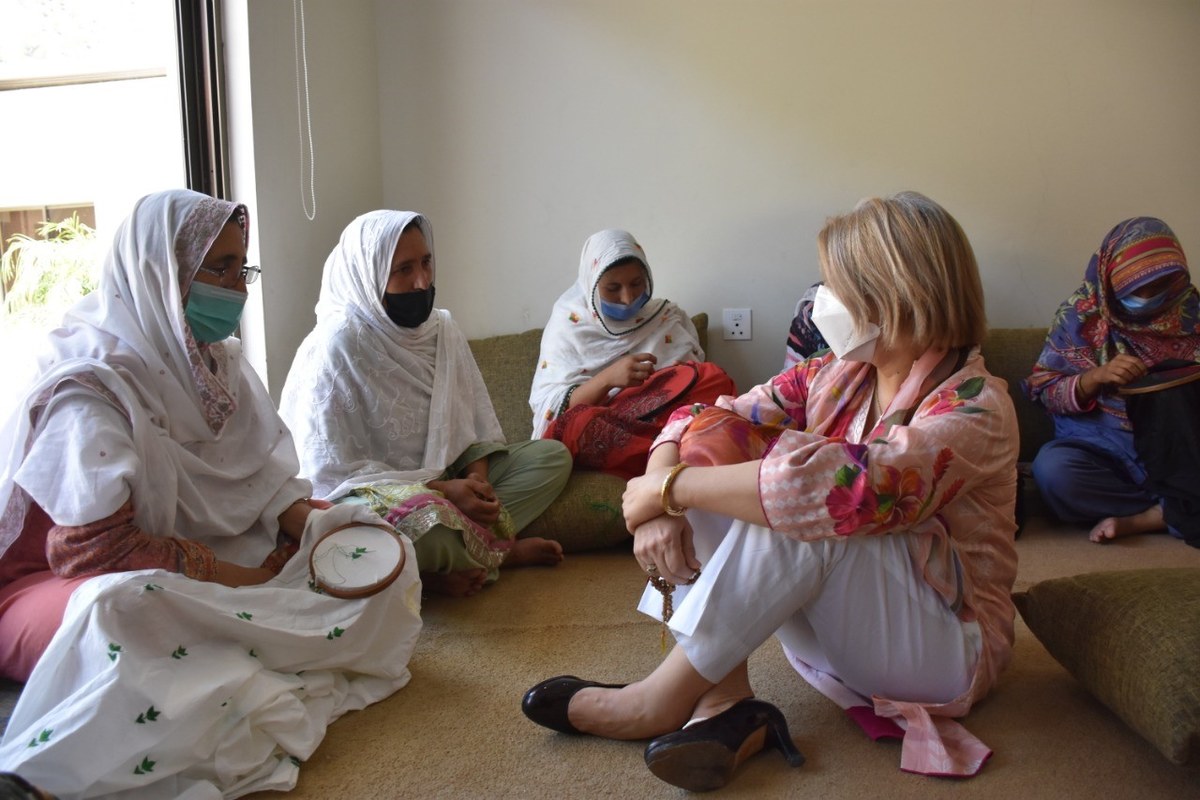


A member of the OIC’s Independent Permanent Human Rights Commission (IPHRC) delegation meets local residents near Line of Control in Azad Kashmir, Pakistan, on August 7, 2021. (Photo courtesy: ISPR)

The OIC-IPHRC delegation included diplomats and representatives from the UAE, Uganda, Nigeria, Malaysia, Saudi Arabia, Azerbaijan, Gabon, Tunisia, Turkey and Morocco.
As they arrived in Islamabad last week, the Pakistani foreign office said the visit would be “significant in drawing international attention toward the urgent need to address the egregious human rights situation” in Indian-controlled Kashmir and to resolve the dispute in accordance with the relevant UN Security Council resolutions and the will of the Kashmiri people.
The Security Council has adopted several resolutions on the dispute, including one which says a plebiscite should be held to determine the region’s future.


Curfew extended in Gilgit-Baltistan, probe ordered after deadly Khamenei protests

Updated 03 March 2026
Follow

Curfew extended in Gilgit-Baltistan, probe ordered after deadly Khamenei protests

  • At least 15 people were killed in clashes with law enforcement agencies over the weekend in Gilgit-Baltistan
  • Government also announces a de-weaponization campaign, crackdown on hate speech and cybercrime in region

ISLAMABAD: The government in Pakistan’s Gilgit-Baltistan (GB) region on Tuesday extended a curfew in Gilgit district and ordered a judicial probe into violent protests over the killing of Iranian Supreme Leader Ali Khamenei in US-Israeli strikes last week, an official said.

At least 15 people were killed in clashes with law enforcement agencies over the weekend in GB, where protesters torched and vandalized several buildings, including United Nations regional offices, an army-run school, software technology park and a local charity building.

The violence prompted regional authorities to impose curfew in Gilgit and Skardu districts on March 2-4 as officials urged people to stay indoors and cooperate with law enforcers, amid widespread anger in Pakistan, particularly among members of the Shiite minority, over Khamenei’s killing.

On Tuesday, the GB government convened to review the situation and announced the extension of curfew in Gilgit among a number of security measures as well as ordered the establishment of a judicial commission to investigate the weekend violence in the region.

“The government has made it clear that the law will strictly take its course against elements involved in vandalism at government institutions, private properties and incidents of vandalism in Gilgit and Skardu and no kind of mischief will be tolerated,” Shabbir Mir, a GB government spokesperson, said in a statement.

“In view of the security situation, curfew will remain in force in Gilgit, while the decision to extend the curfew in Skardu will be taken keeping the ground realities and the changing situation in view.”

The statement did not specify how long the curfew will remain in place in Gilgit.

Besides the formation of the judicial commission to investigate the violent clashes, the government also decided to launch a large-scale de-weaponization campaign in the entire Gilgit district, for which relevant institutions have been directed to immediately complete all necessary arrangements, according to Mir.

In addition, a crackdown has been ordered on hate speech, spread of fake news and cybercrime.

“The aim of these decisions is to ensure the rule of law, protect the lives and property of citizens and crack down on miscreants,” he said. “Approval has also been given to immediately survey the affected infrastructure and start their restoration work on priority basis.”

Demonstrators in Pakistan’s southern port city of Karachi also stormed the US Consulate on Sunday, smashing windows and attempting to burn the building. Police responded with batons, tear gas, and gunfire, leaving 10 people dead and more than 50 injured.

Pakistani authorities have since beefed up security at US diplomatic missions across the country, including around the US consulate building in Peshawar, to avoid any further violence.