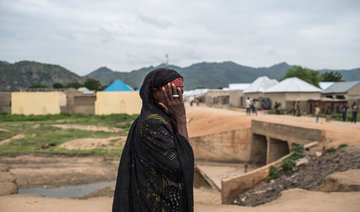
LAGOS: One of the Nigerian schoolgirls kidnapped by Boko Haram militants more than seven years ago is free and has been reunited with her family, a state governor’s office said on Saturday.
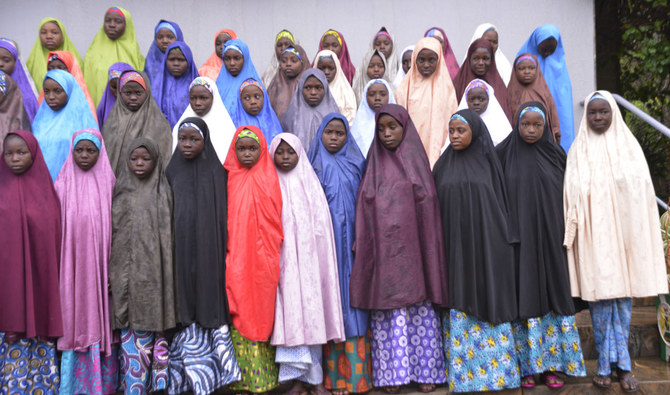
Nearly 300 schoolgirls, most aged between 12 and 17, were abducted by Boko Haram in April 2014 from Chibok in northeast Nigeria, sparking an international outcry and the #BringBackOurGirls campaign for their release.
Over the years, many of the girls were released or found by the military, but more than 100 are still missing, Amnesty International said in April to mark the seven year anniversary of the abduction.
Borno State Governor Babagana Umara Zulum said in a statement that Ruth Ngladar Pogu surrendered to the military last month along with a person she said she had married.
“I am extremely excited both as Borno’s Governor and father of all sons and daughters of the state, and also as a father to daughters,” the statement said.
“I know the feeling of families of those still under captivity but we have to remain hopeful especially with today’s development.”
The governor’s office said she had surrendered to the military on July 28. But officials had not announced the development earlier to give them time to contact her parents and other Chibok families.
Nigeria’s armed forces are still fighting to end the 12-year jihadist insurgency in the country’s northeast, a conflict that has left 40,000 people dead and displaced more than two million others.
Mass kidnappings in Nigeria have again made international headlines this year as heavily armed criminal gangs have targeted schools and colleges to abduct students for ransom.
Nearly 1,000 pupils have been snatched in mass abductions since December, mostly in the country’s northwestern and central states.
Most have been released but some are still being held after months in captivity.

Kidnapped Nigeria Chibok girl free after seven years: governor
Short Url
https://arab.news/vw4yy
Kidnapped Nigeria Chibok girl free after seven years: governor
- Nigeria’s armed forces are still fighting to end the 12-year jihadist insurgency in the country’s northeast, a conflict that has left 40,000 people dead and displaced more than two million others

Trump to decide ‘soon’ on sending weapons to Taiwan
ABOARD AIR FORCE ONE: US President Donald Trump said Monday he would decide soon on whether to send more weapons to Taiwan, after Chinese President Xi Jinping warned him not to do so.
“I’m talking to him about it. We had a good conversation, and we’ll make a determination pretty soon,” Trump said, adding that he has a “good relationship” with the Chinese leader, whose country claims the self-ruled island of Taiwan as its territory.
In a phone call with Trump on February 4, Xi called for “mutual respect” in relations with the United States, while warning Washington about arms sales to the democratically run island.
“The Taiwan question is the most important issue in China-US relations... The US must handle arms sales to Taiwan with caution,” Xi said, according to China’s state broadcaster.
Trump and Xi are due to meet in Beijing in April.
China’s Communist Party has never ruled Taiwan, but Beijing claims the island of 23 million people is part of its territory and has not ruled out the use of force to annex it.
Washington does not officially recognize Taiwan, but is the island territory’s main military backer — although the tone of that support has softened slightly under Trump.
The United States approved $11-billion worth of arms to Taiwan in December, Taipei said.
Shortly thereafter, China launched major live-fire drills to simulate a blockade around Taiwan’s key ports.
While Trump has adopted a softer tone on support for Taiwan in his second term, the issue remains a thorn in US-China relations.
On Saturday, Beijing’s top diplomat Wang Yi warned the United States against “plotting” on Taiwan, saying it could lead to a “confrontation” with China.
Speaking at the Munich Security Conference in Germany, Foreign Minister Wang said that in the future, the United States could adopt a China policy that involves “instigating and plotting to split China through Taiwan, crossing China’s red line.”
Taiwan has spent many billions of dollars upgrading its military in the past decade, but faces growing US pressure to do more to protect itself against China.
Taiwan’s President Lai Ching-te has proposed $40 billion in extra defense spending by his government over eight years, but the plan has been blocked by the opposition-controlled parliament 10 times since early December.
On Thursday, dozens of US lawmakers urged Taiwan’s opposition political parties to end their blocking of the move.
In an exclusive interview with AFP last week, President Lai said he was confident the defense budget would be passed.
“I’m talking to him about it. We had a good conversation, and we’ll make a determination pretty soon,” Trump said, adding that he has a “good relationship” with the Chinese leader, whose country claims the self-ruled island of Taiwan as its territory.
In a phone call with Trump on February 4, Xi called for “mutual respect” in relations with the United States, while warning Washington about arms sales to the democratically run island.
“The Taiwan question is the most important issue in China-US relations... The US must handle arms sales to Taiwan with caution,” Xi said, according to China’s state broadcaster.
Trump and Xi are due to meet in Beijing in April.
China’s Communist Party has never ruled Taiwan, but Beijing claims the island of 23 million people is part of its territory and has not ruled out the use of force to annex it.
Washington does not officially recognize Taiwan, but is the island territory’s main military backer — although the tone of that support has softened slightly under Trump.
The United States approved $11-billion worth of arms to Taiwan in December, Taipei said.
Shortly thereafter, China launched major live-fire drills to simulate a blockade around Taiwan’s key ports.
While Trump has adopted a softer tone on support for Taiwan in his second term, the issue remains a thorn in US-China relations.
On Saturday, Beijing’s top diplomat Wang Yi warned the United States against “plotting” on Taiwan, saying it could lead to a “confrontation” with China.
Speaking at the Munich Security Conference in Germany, Foreign Minister Wang said that in the future, the United States could adopt a China policy that involves “instigating and plotting to split China through Taiwan, crossing China’s red line.”
Taiwan has spent many billions of dollars upgrading its military in the past decade, but faces growing US pressure to do more to protect itself against China.
Taiwan’s President Lai Ching-te has proposed $40 billion in extra defense spending by his government over eight years, but the plan has been blocked by the opposition-controlled parliament 10 times since early December.
On Thursday, dozens of US lawmakers urged Taiwan’s opposition political parties to end their blocking of the move.
In an exclusive interview with AFP last week, President Lai said he was confident the defense budget would be passed.
© 2026 SAUDI RESEARCH & PUBLISHING COMPANY, All Rights Reserved And subject to Terms of Use Agreement.