

Saudi Arabia leads in global digital economy, minister says

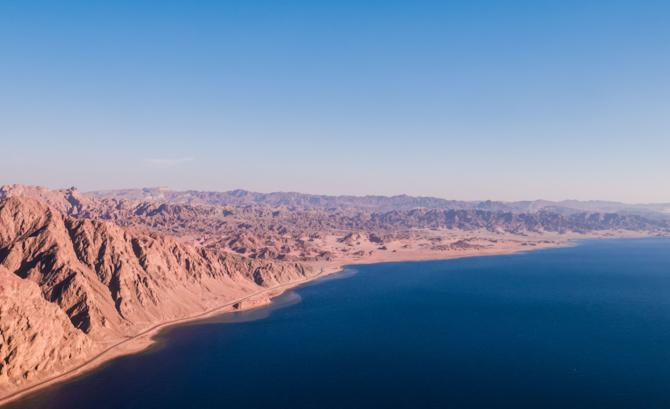
NEOM City is the largest global platform for innovators, Alswaha said. (Supplied)
Short Url
Updated 06 August 2021
Follow

Saudi Arabia leads in global digital economy, minister says

  • Minister of Communications and Information Technology Abdullah Alswaha spoke at the G20 digital economy ministers' meeting

RIYADH: Saudi Arabia topped the list of leading countries in the digital economy, SPA reported, citing Minister of Communications and Information Technology, Abdullah Alswaha, during his speech to the G20 digital economy ministers’ meeting.

Bridging the digital gap globally is the way to achieve inclusiveness and prosperity of societies, Alswaha said.

Regulations in the field of innovation should be flexible enough to stimulate creativity and keep pace with the rapid pace of change that is driven by digital transformation, he said.

The Green Saudi Arabia and Green Middle East initiatives, launched by Crown Prince Mohammed bin Salman, are an addition to investment in new environment-friendly industries and markets.

NEOM City, the largest global platform for innovators, is an ideal example of harmonizing regulation and innovation, to achieve well-being and preserve the environment through the adaptation of technology and innovation, Alswaha said.

Saudi Arabia took part in a G20 digital economy event on Aug. 5, where ministers discussed key issues related to digital transformation ahead of a final communique that will be endorsed by heads of states and governments at the Rome Summit.

The Kingdom has already realized qualitative achievements in this regard, mainly the unanimous approval of countries on a roadmap to measure and define the digital economy, in addition to adopting artificial intelligence principles.


Kuwait to boost Islamic finance with sukuk regulation

Updated 05 February 2026
Follow

Kuwait to boost Islamic finance with sukuk regulation

  • The move supports sustainable financing and is part of Kuwait’s efforts to diversify its oil-dependent economy

RIYADH: Kuwait is planning to introduce legislation to regulate the issuance of sukuk, or Islamic bonds, both domestically and internationally, as part of efforts to support more sustainable financing for the oil-rich Gulf nation, Prime Minister Sheikh Ahmad Abdullah Al-Ahmad Al-Sabah said on Wednesday.

Speaking at the World Governments Summit in Dubai, Al-Sabah highlighted that Kuwait is exploring a variety of debt instruments to diversify its economy. The country has been implementing fiscal reforms aimed at stimulating growth and controlling its budget deficit amid persistently low oil prices. Hydrocarbons continue to dominate Kuwait’s revenue stream, accounting for nearly 90 percent of government income in 2024.

The Gulf Cooperation Council’s debt capital market is projected to exceed $1.25 trillion by 2026, driven by project funding and government initiatives, representing a 13.6 percent expansion, according to Fitch Ratings.

The region is expected to remain one of the largest sources of US dollar-denominated debt and sukuk issuance among emerging markets. Fitch also noted that cross-sector economic diversification, refinancing needs, and deficit funding are key factors behind this growth.

“We are about to approve the first legislation regulating issuance of government sukuk locally and internationally, in accordance with Islamic laws,” Al-Sabah said.

“This enables us to deal with financial challenges flexibly and responsibly, and to plan for medium and long-term finances.”

Kuwait returned to global debt markets last year with strong results, raising $11.25 billion through a three-part bond sale — the country’s first US dollar issuance since 2017 — drawing substantial investor demand. In March, a new public debt law raised the borrowing ceiling to 30 billion dinars ($98 billion) from 10 billion dinars, enabling longer-term borrowing.

The Gulf’s debt capital markets, which totaled $1.1 trillion at the end of the third quarter of 2025, have evolved from primarily sovereign funding tools into increasingly sophisticated instruments serving governments, banks, and corporates alike. As diversification efforts accelerate and refinancing cycles intensify, regional issuers have become regular participants in global debt markets, reinforcing the GCC’s role in emerging-market capital flows.

In 2025, GCC countries accounted for 35 percent of all emerging-market US dollar debt issuance, excluding China, with growth in US dollar sukuk issuance notably outpacing conventional bonds. The region’s total outstanding debt capital markets grew more than 14 percent year on year, reaching $1.1 trillion.