

Iranian ex-deputy vice president slams regime over water crisis

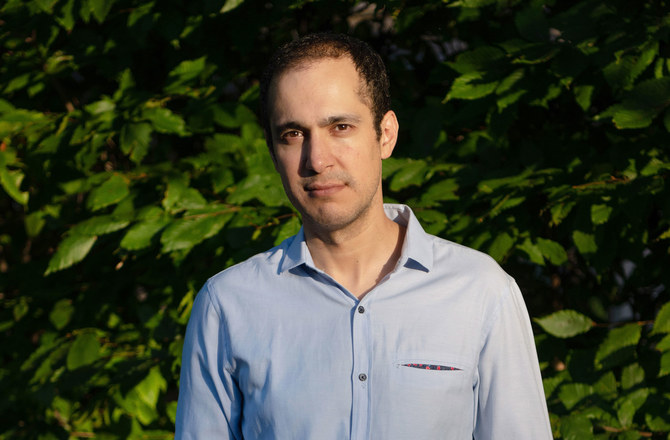
Madani said attempts by authorities to shift the blame toward climate change as the sole cause of water shortages let those in authority off the hook. (File/Reuters)
Short Url
Updated 05 August 2021
Follow

Iranian ex-deputy vice president slams regime over water crisis

  • Kaveh Madani: “Local decision-makers are liable for avoidable failures of environmental management”
  • In July, Iran was convulsed by protests in Arab-majority Khuzestan province sparked by lack of clean water

LONDON: The former deputy vice-president of Iran criticized Tehran over its mismanagement of natural resources in the country’s Khuzestan province, blaming “excessive manipulation of the natural environment” for the country’s water bankruptcy.

In an op-ed published in The Guardian newspaper, Kaveh Madani said attempts by authorities to shift the blame toward climate change as the “sole cause of terrible (water) shortages let those in authority off the hook.”

Late last month, Iran’s Khuzestan province became the focal point for weeks of violent unrest spurred by a drought that left people without clean and safe drinking water. Those protests quickly spread across the country, including to the capital Tehran, morphing into anti-regime demonstrations.

Madani explained that water-rich Khuzestan should never have been subject to drought, but the construction of huge dams and the transfer of the province’s water to other parts of the country have left it in a state of water bankruptcy. 

“Once you drain your checking account (surface water) and exhaust your savings account (groundwater), you are left with a lot of creditors (water rights-holders) whose demands cannot be satisfied,” Madani said. “Then you are water bankrupt and the dissatisfaction of the claimants can trigger major conflicts.”

He also said that this may be related to the institutional racism in Iran that excludes ethnic Ahwazi Arabs from the majority Persian state.

“The Khuzestan protests also have an important social justice element. Ethnic Arab populations are expressing their serious frustration with what they consider a ‘systematic’ or ‘intentional’ discrimination that has resulted in underdevelopment in their rich province,” Madani said.

“Khuzestanis are also questioning why ‘their’ water must be transferred to other regions while they are suffering from thirst.”

Madani warned about the potential consequences of water mismanagement for years, but rather than being listened to he was spied upon and detained.

“What Khuzestan and the rest of Iran are experiencing today is not unexpected,” Madani said. “Lots of experts, including me, have been warning about the national security risks of this situation for years.”

While he served in his role as deputy vice president, Madani was regularly detained by the Islamic Revolutionary Guard Corps (IRGC) and after he fled the country, he said he felt “lucky” not to have been imprisoned for a longer stretch. 

Now, he is trying to prevent the regime from deflecting responsibility for its actions by invoking global climate change.

Well-intentioned environmental campaigners are correct about the devastating consequences of climate change, Madani said.

But the way that Iran has managed its natural resources means that “even if climate change stopped and Iran cut its carbon emissions by 100 percent right now, its water bankruptcy and many other environmental problems would not be solved immediately.” 

He concluded: “We must remember that local decision-makers are liable for avoidable failures of environmental management that result in the degradation and suffering we are now seeing in Iran.”


Lebanese government imposes immediate ban on Hezbollah’s military activities

Updated 5 sec ago
Follow

Lebanese government imposes immediate ban on Hezbollah’s military activities


BERUIT: Lebanon's government said Hezbollah’s overnight attack against Israel were “illegal” and imposed an immediate ban on the group’s military activities, while also demanding its hand over its weapons.

Lebanese Prime Minister Nawaf Salam said only the state could decide whether to go to war and called on the Lebanese military to prevent the firing of projectiles and detain anyone involved.

The move comes after Iran-backed Hezbollah launched rockets at Israel, provoking retaliatory Israeli strikes. The government convened for five hours and 15 minutes in an early morning meeting on Monday before reaching its decision.

The Lebanese cabinet meeting, chaired by President Joseph Aoun, started at 8am with ministers discussing the repercussions Hezbollah's launching of missiles from southern Lebanon into Israel and the Israeli attacks on Lebanon.

Sources initially told Arab News that ministers were “pushing for a decisive response to Hezbollah’s recklessness, regardless of the consequences.”

Lebanese MP Melhem Khalaf said the priority was to “shelter people that are evacuating their homes in relatively safe places. What happened at dawn on Monday has taken us from one stage to another, and we don't know where they've taken us.”

As US-Israeli attacks on Iran continued, Hezbollah said it fired missiles from Lebanon into Israel early Monday in response to the killing of Iranian Supreme Leader Ali Khamenei and “repeated Israeli aggressions.”

There were no reports of injuries or damage, and Israel said it had intercepted one projectile, while several fell in open areas.

Israel retaliated with strikes on Lebanon, killing at least 31 people and wounding 149 others, according to Lebanon's Health Ministry. Around two thirds of the dead were in the south of the country.

Lebanon’s government said it was holding an emergency meeting after Hezbollah’s attack triggered the Israeli airstrikes.

Iran has been firing missiles at Israel and Arab states in a counter-offensive since the joint America-Israeli attack Saturday that killed Khamenei and other top Iranian officials. The war has quickly expanded to proxy forces, including Hezbollah firing out of Lebanon.

MP Bilal Abdullah told Arab News: “All the appeals issued by officials in Lebanon not to embroil us in this destructive war seem to have been in vain. We were supposed to protect Lebanon.

“Whoever launched the missiles and drones from Lebanon has slaughtered Lebanon. Displacing people is a major tragedy. We are in the winter season, and the cold is severe.”