

South London terrorist claimed he had changed days before knife rampage

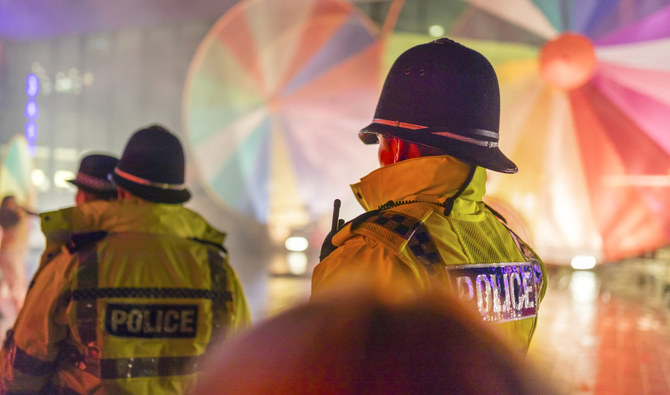
Sudesh Amman was fatally shot by police. (Shutterstock)
Short Url
Updated 05 August 2021
Follow

South London terrorist claimed he had changed days before knife rampage

  • Sri Lankan-born Sudesh Amman was offered support from two different mentors following his release from jail but before the attack
  • Mentors said there was no behavior of concern to report, but were ‘shocked’ when they saw details of the 2020 incident in Streatham

LONDON: A convicted terrorist told his mentor that he had changed, days before carrying out a knife rampage in south London which ended when he was shot dead by police, an inquest has heard.

Sudesh Amman, 20, told his allocated mentor that he had “now realized” that terrorists were “pushing people away” from Islam.

Amman made the comments on Jan. 30, 2020, seven days after his early release from prison and just three days before he suddenly stole a knife from a shop in Streatham and stabbed two unsuspecting members of the public. He was fatally shot by covert police officers who were tasked with keeping him under surveillance. Both of his victims survived.

An inquest into his death at the Royal Courts of Justice in central London heard yesterday that Amman pledged his allegiance to Daesh in prison and that he told prisoners he “wanted to kill the Queen.”

The inquest was told that the Sri Lankan-born terrorist was offered support from a theological mentor to deal with his extreme brand of Islam and a practical mentor to help him adapt to life beyond prison.

He had met both of them following his release from prison.

His mentors told the court that they were “shocked” and “gobsmacked” when they recognized Amman as the perpetrator of the shocking attack on Feb. 2, 2020.

One of his mentors had a testimony following a meeting with Amman read out in court: “He (Amman) said he now realized that people who hurt other people through things like acts of terror were pushing people away from the faith and causing hatred.”

The witness said Amman had been “the most relaxed that I have seen him” in the last of their four meetings in person, which took place in HMP Belmarsh and after his release.

The mentor, who was known as “Witness M” to retain their anonymity, said: “He was happy to talk, he had no moments where he held back from saying anything and he seemed happy and relieved at being released.

“I took him at his word. He seemed sincere the way he was saying it.”

The mentor said that he felt there was no behavior of concern to report, but was “shocked” when he saw details of the incident in Streatham unfolding.

Witness M said: “I saw when it said the incident was in Streatham, I knew I visited him, I hoped it was not (him). I kept watching the news and I had a little bit of disbelief, to be honest.”

The other mentor, referred to as “Witness T,” told the inquest that he discussed religious matters with Amman during their only meeting on Jan. 29.

Witness T said Amman showed that he was “ignorant” of Islam during their meeting. Amman told Witness T that he was keeping to himself in the week after his release at a Streatham probation hostel out of fear that people believed he was radicalizing others.

Witness T said he found out about the attack on Streatham high street on the same day it occurred.

“I was gobsmacked, I was shocked, I was surprised,” he said.


Another construction crane collapse in Thailand kills 2 people a day after deadly train derailment

Updated 5 sec ago
Follow

Another construction crane collapse in Thailand kills 2 people a day after deadly train derailment

  • A construction crane has collapsed onto an elevated road near Bangkok, a day after another construction accident in northeastern Thailand killed 32 people
NAKHON RATCHASIMA, Thailand: A construction crane collapsed onto an elevated road near Bangkok, killing two people on Thursday, a day after another crane fell on a moving passenger train in northeastern Thailand and killed 32 people.
The work on an extension of the Rama 2 Road expressway — a major artery leading from Bangkok — has become notorious for construction accidents, some of them fatal.
The crane collapsed at part of the road project in Samut Sakhon province, trapping two vehicles in the wreckage, according to the government’s Public Relations Department.
Transport Minister Phiphat Ratchakitprakarn said on Thai TV Channel 7 that two people had died. It was unclear if anyone else had been trapped in the wreckage.
There was uncertainty about the number of victims because the site is still considered too dangerous for search teams to enter, said Suchart Tongteng, a rescue worker with the Ruamkatanyu Foundation.
“At this moment, we still can’t say whether another collapse could happen,” he said, citing dangling steel plates. “That’s why there are no rescue personnel inside the scene, only teams conducting on-site safety assessments.”
At the site of Wednesday’s train derailment, the search for survivors ended, Nakhon Ratchasima Gov. Anuphong Suksomnit said. Three passengers listed as missing were presumed to have gotten off the train earlier, but that was still being investigated.
Officials believed 171 people had been aboard the train’s three carriages, which were being removed from the scene Thursday.
The crane that fell, crushing part of the train, was a launching gantry crane, a mobile piece of equipment often used in building elevated roadways.
Police were still collecting evidence and interviewing witnesses and have not pressed charges, provincial Police Chief Narongsak Promta told reporters.
South Korea’s Foreign Ministry reported a South Korean man in his late 30s, was among the dead.
The high-speed rail project where the accident occurred is associated with the plan to connect China with Southeast Asia under Beijing’s Belt and Road Initiative.
In August 2024, a railway tunnel on the planned route, also in Nakhon Ratchasima, collapsed, killing three workers.
Anan Phonimdaeng, acting governor of the State Railway of Thailand, said the project’s contractor is Italian-Thai Development, with a Chinese company responsible for design and construction supervision.
A statement posted on the website of the company, also known as Italthai, expressed condolences to the victims and said the company would pay compensation to the families of the dead and hospitalization expenses for the injured.
Transport Minister Phiphat said Italthai was also the lead contractor on the highway project where Thursday’s accident took place, though several other companies are also involved.
The rail accident had already sparked outrage because Italthai was also the co-lead contractor for the State Audit Building in Bangkok that collapsed during construction last March during a major earthquake centered in Myanmar. The building’s collapse was the worst quake damage in Thailand and about 100 people were killed.
Twenty-three individuals and companies have been indicted, including Italthai’s president and the local director for the company China Railway No. 10, the project’s joint venture partner. The charges in the case include professional negligence and document forgery, and Thailand’s Department of Special Investigation has recommended more indictments.
The involvement of Chinese companies in both projects has also drawn attention, as has Italthai and Chinese companies’ involvement in the construction of several expressway extensions in and around Bangkok where several accidents, some fatal, have occurred.
In Beijing, Chinese Foreign Ministry spokesperson Mao Ning said Wednesday the government was aware of the rail accident and had expressed condolences.