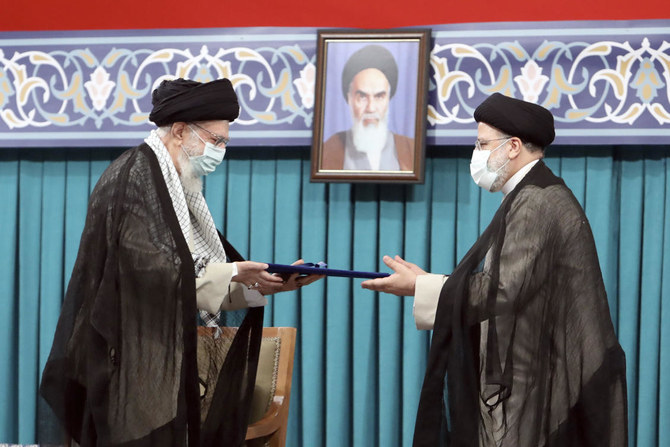
TEHRAN, Iran: Iran’s supreme leader officially endorsed his hard-line protégé as the nation’s next president on Tuesday, just two days ahead of the inauguration of Ebrahim Raisi. The new president’s ascension comes at a sensitive time for Iran and the wider Middle East.
Iran is reeling from crushing US sanctions that have devastated the economy, led to the crash of the Iranian riyal and hit ordinary Iranians hard.
In his speech, Ayatollah Ali Khamenei advised Raisi, a former judiciary chief, to “empower the country’s poor people and improve the national currency.”
Doubts about an imminent return to Tehran’s tattered 2015 nuclear deal, which granted Iran sanctions relief in exchange for limits on its nuclear program, have become a dark cloud dangling over the incoming hard-line administration.
The collapse of the nuclear agreement after former President Donald Trump withdrew the US from the accord three years ago doomed the relatively moderate administration of outgoing President Hassan Rouhani, who has seen his popularity plummet. Rouhani sat stone-faced throughout the endorsement ceremony.
Last week, Khamenei delivered a harsh rebuke of the West, blaming the delay of the nuclear deal’s revival on America’s “stubborn” negotiating stance. While repeating his usual anti-West rhetoric on Tuesday about Iran’s “enemies” seeking to sway public opinion, Khamenei struck a milder tone during the endorsement. He focused on Iran’s mounting domestic issues, praising Raisi’s anti-corruption campaign and asking him to encourage local production.
“The nation needs competent, effective and brave management,” Khamenei said.
Without commenting on the stalled nuclear negotiations in Vienna, Raisi stressed he would “pursue the removal of oppressive sanctions” in order to salvage the crippled economy.
“We will not (tie) the people’s dining tables and the economy to the will of the foreigners,” he said. Raisi won a landslide victory in the June election, which saw the lowest in the Islamic Republic’s history. He will take the oath of office in an inauguration ceremony Thursday before parliament.
President Joe Biden has pledged to rejoin the landmark nuclear accord and lift sanctions if Iran moves back into compliance with the agreement.
But escalating tensions in the Middle East now risk complicating the diplomatic choreography. The West has blamed Iran for a drone attack last week that struck an oil tanker linked to an Israeli billionaire off the coast of Oman, killing two crew members. Iran has denied involvement in the incident, which marks the first-known fatal assault after a yearslong shadow war targeting commercial shipping in the region.


![]()

Iran supreme leader endorses hard-line protégé as president
Short Url
https://arab.news/yr4z4
Iran supreme leader endorses hard-line protégé as president
- New Iran president Ebrahim Raisi: Government would try to improve living conditions which have suffered under the sanctions


Latest updates


© 2026 SAUDI RESEARCH & PUBLISHING COMPANY, All Rights Reserved And subject to Terms of Use Agreement.