Saudi Arabia eyes global tie-ups to tap $20bn in cultural opportunities

1 / 2
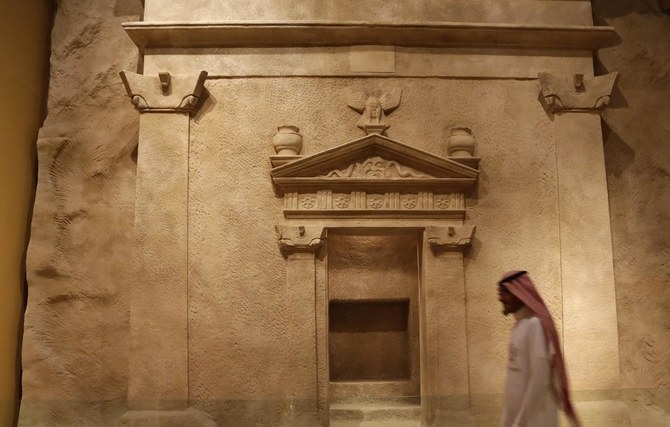
In the wake of the G20 meeting last year, Saudi Arabia added culture to the forefront of its investment agenda. (Social media)
2 / 2
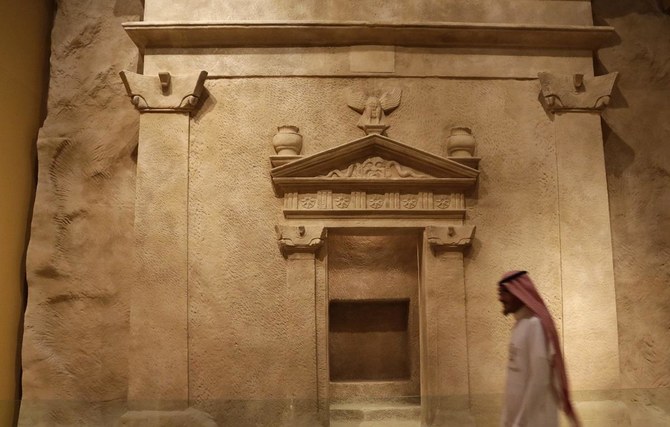
In the wake of the G20 meeting last year, Saudi Arabia added culture to the forefront of its investment agenda. (Social media)
Short Url
Updated 02 August 2021
Follow

Saudi Arabia eyes global tie-ups to tap $20bn in cultural opportunities

  • Public-private partnership seen as a means to increase sector’s contribution to GDP

DUBAI: Saudi Arabia is seeking partnership with global partners including leading international museums as it sees its culture sector generating $20 billion in revenues and creating 100,000 jobs, while contributing 3 percent to its gross domestic product (GDP), a senior official said.

In the wake of the G20 meeting last year, Saudi Arabia added culture to the forefront of its investment agenda. The Ministry of Culture, which was established three years ago in the hopes of promoting cultural growth and supporting Vision 2030, sees that the sector has already attracted the interest and engagement of private companies both locally and abroad, Rakan Altouq, general supervisor for culture affairs and international relations, said in an interview on Sunday.

In addition to the public sector, the private sector is a vital contributor to cultural development and Saudi Arabia will benefit from this new strategy, as it will lead to an increase in its economy. As part of the Ministry of Culture, all 16 sectors with 11 dedicated commissions are engaged now to prepare the groundwork for economic activity. 

The Cultural Development Fund, created by the Ministry of Culture last year, is also a vital tool for bridging the financial gap that exists between public and private sector funding for cultural programs. By using the Cultural Development Fund, a bridge of capital will be provided, he said. Through Invest Saudi and the Shareek program that has been announced across the private sector engagement in Saudi Arabia, all of the targets they have developed cannot be achieved without private capital, and they are contributing to creating the right conditions for capital to invest in the culture sector.

Altouq said that the culture sector should not be evaluated in the same way as other more publicly owned sectors. Nonprofit organizations conduct many private activities, such as the visual arts sector, in the country. Further opportunities exist for establishing infrastructure in digital platforms; such investments have already been initiated by media and other regional companies. 

In the museum sector, the ministry has held numerous discussions with its partners around the world. Soon, the dedicated museum of Saudi Arabia will launch its strategy and seek partnerships with other museums around the world. The Museum Commission will launch its own communication strategy in the coming months to further develop that.

In the national cultural strategy, three main aspirations are outlined: Culture as a way of life, culture as an economic growth tool, and culture as an exchange mechanism among cultures.

As a first step, culture has been developed as a lifestyle in Saudi Arabia through connecting local communities to ensure that all citizens and residents have access to an extraordinary range of diverse cultural offerings in the region while preserving the rich cultural heritage. As for the culture for economic growth, culture will be seen in creative industries, which will allow Saudi Arabia to witness an increase in its GDP by 3 percent by 2030. Lastly, culture for global exchange is engaging the Kingdom and participating in international platforms such as the G20 and UNESCO.     


Acwa signs key terms to develop 5GW of renewable energy capacity in Turkiye

Updated 23 February 2026
Follow

Acwa signs key terms to develop 5GW of renewable energy capacity in Turkiye

JEDDAH: Saudi utility giant Acwa has signed key investment agreements with Turkiye’s Ministry of Energy and Natural Resources to develop up to 5 gigawatts of renewable energy capacity, starting with 2GW of solar power across two plants in Sivas and Taseli.

Under the investment agreement, Acwa will develop, finance, and construct, as well as commission and operate both facilities, according to a press release.

The program builds on the company’s first investment in Turkiye, the 927-megawatt Kirikkale Independent Power Plant, valued at $930 million, which offsets approximately 1.8 million tonnes of carbon dioxide annually, the statement added.

A separate power purchase agreement has been concluded with Elektrik Uretim Anonim Sirketi for the sale of electricity generated by each facility.

Turkiye aims to boost solar and wind capacity to 120GW by 2035, supported by around $80 billion in investment, while recent projects have already helped prevent 12.5 million tonnes of CO2 emissions and reduced reliance on imported natural gas.

Turkiye’s energy sector has undergone a rapid transformation in recent years, with renewable power emerging as a central pillar of its strategy.

Raad Al-Saady, vice chairman and managing director of ACWA, said: “The signing of the IA (implementation agreement) and PPA key terms marks a pivotal moment in Acwa’s partnership with Turkiye, reflecting the country’s strong potential as a clean energy leader and manufacturing powerhouse.”

He added: “Building on our long-standing presence, including the 927MW Kirikkale Power Plant commissioned in 2017, this step elevates our partnership to a new level,” Al-Saady said.

In its statement, Acwa said the 5GW renewable energy program will deliver electricity at fixed prices, enhancing predictability for grid planning and supporting long-term industrial investment.

By replacing imported fossil fuels with domestically generated clean energy, the initiative is expected to reduce Turkiye’s exposure to global energy market volatility, strengthening energy security and lowering long-term power costs.

The company added that the economic impact will extend beyond the anticipated investment of up to $5 billion in foreign direct investment, with thousands of jobs expected during the construction phase and hundreds of high-skilled roles created during operations.

The energy firm concluded that its existing progress in Turkiye reflects a strong appreciation for Turkish engineering, construction, and manufacturing capacity, adding that localization has been a strategic priority, and it has already achieved 100 percent local employment at its developments in the country.