Global interest in clean hydrogen surges as Mideast works to boost supply

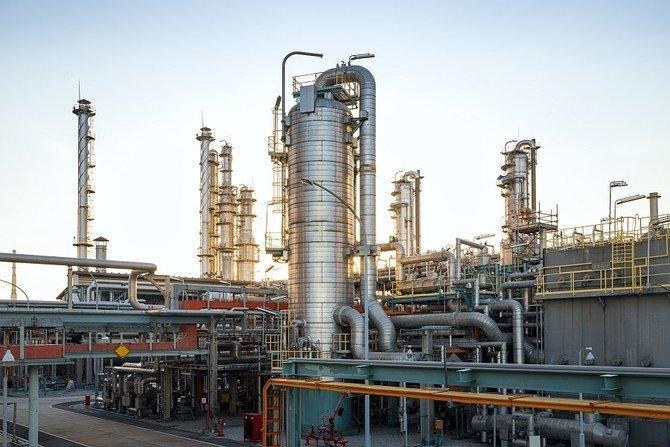
The Middle East is home to some of the world's biggest green hydrogen production projects. (Shutterstock)
Short Url
Updated 27 July 2021
Follow

Global interest in clean hydrogen surges as Mideast works to boost supply

  • Hydrogen could account for 25 percent of global energy consumption by 2050

DUBAI: Interest in clean hydrogen is rising across the globe, as countries explore ways to decarbonize, a new World Energy Council report showed.

Hydrogen could account for between 6 percent and 25 percent of global energy consumption by 2050, according to the publication titled Hydrogen on the Horizon: ready, almost set, go?.

Different regions play a role in the current hydrogen energy transition, the report said, with countries in the Middle East and North Africa focusing on the supply side.

Saudi Arabia, in July, unveiled plans for a $5 billion green hydrogen facility – the world’s largest such project at the time. Other Middle East countries, including the UAE, Oman and Egypt have also announced major projects to exploit the expected demand.

An earlier report by Dii Desert Energy and Roland Berger said the Gulf region alone could create a $200 billion green hydrogen industry by 2050.

The region also benefits from its strategic geographic location being between the European and Asian markets, which the World Energy Council report described as demand-focused markets.

Different countries also have different ideas of how to utilize clean hydrogen, the report said.

Asia shows a greater focus on hydrogen as a liquid fuel in the form of ammonia, and as a fuel for shipping and road transport, while Europe wants to use hydrogen to decarbonize hard-to-abate sectors such as heavy industries and mass transportation.

“How countries want to produce and consume clean energy, and their immediate national priorities, will shape large-scale hydrogen development and end-user uptake,” Angela Wilkinson, Secretary General and CEO of the World Energy Council said.

It is important to identify user priorities to “better understand hydrogen’s real potential,” she said.

Jeroen van Hoof, global energy, utilities, and resources leader at PwC said this decade is crucial to develop hydrogen projects – including infrastructure to produce, import, distribute and use hydrogen at a large scale.

“If we do this successfully over the next few years, it can pave the way for hydrogen demand to grow exponentially beyond 2030,” he added.

But the report identified several challenges in this global endeavor, including concerns on the cost of low-carbon hydrogen, which is still more expensive than other energy sources.

The report said countries need to collaborate to create a global value chain and unlock the potential of hydrogen for the global economy.


India and US release a framework for an interim trade agreement to reduce Trump tariffs

Updated 07 February 2026
Follow

India and US release a framework for an interim trade agreement to reduce Trump tariffs

  • Under the deal, tariffs on goods from India would be lowered to 18 percent, from 25 percent, after Indian Prime Minister Narendra Modi agreed to stop buying Russian oil, Trump had said.

NEW DELHI: India and the United States released a framework for an interim trade agreement to lower tariffs on Indian goods, which Indian opposition accused of favoring Washington.
The joint statement, released Friday, came after US President Donald Trump announced his plan last week to reduce import tariffs on the South Asian country, six months after imposing steep taxes to press New Delhi to cut its reliance on cheap Russian crude.
Under the deal, tariffs on goods from India would be lowered to 18 percent, from 25 percent, after Indian Prime Minister Narendra Modi agreed to stop buying Russian oil, Trump had said.
The two countries called the agreement “reciprocal and mutually beneficial” and expressed commitment to work toward a broader trade deal that “will include additional market access commitments and support more resilient supply chains.” The framework said that more negotiations will be needed to formalize the agreement.
India would also “eliminate or reduce tariffs” on all US industrial goods and a wide range of food and agricultural products, Friday’s statement said.
The US president had said that India would start to reduce its import taxes on US goods to zero and buy $500 billion worth of American products over five years, part of the Trump administration’s bid to seek greater market access and zero tariffs on almost all American exports.
Trump also signed an executive order on Friday to revoke a separate 25 percent tariff on Indian goods he imposed last year.
Indian Prime Minister Narendra Modi thanked Trump “for his personal commitment to robust ties.”
“This framework reflects the growing depth, trust and dynamism of our partnership,” Modi said on social media, adding it will “further deepen investment and technology partnerships between us.”
India’s opposition political parties have largely criticized the deal, saying it heavily favors the US and negatively impacts sensitive sectors such as agriculture. In the past, New Delhi had opposed tariffs on sectors such as agriculture and dairy, which employ the bulk of the country’s population.
Meanwhile, Piyush Goyal, Indian Trade Minister, said the deal protects “sensitive agricultural and dairy products” including maize, wheat, rice, ethanol, tobacco, and some vegetables.
“This (agreement) will open a $30 trillion market for Indian exporters,” Goyal said in a social media post, referring to the US annual GDP. He said the increase in exports was likely to create hundreds of thousands of new job opportunities.
Goyal also said tariffs will go down to zero on a wide range of Indian goods exported to the US, including generic pharmaceuticals, gems and diamonds, and aircraft parts, further enhancing the country’s export competitiveness.
India and the European Union recently reached a free trade agreement that could affect as many as 2 billion people after nearly two decades of negotiations. That deal would enable free trade on almost all goods between the EU’s 27 members and India, covering everything from textiles to medicines, and bringing down high import taxes for European wine and cars.
India also signed a comprehensive economic partnership agreement with Oman in December and concluded talks for a free trade deal with New Zealand.