



QUETTA: During the Eid Al-Adha holiday, Balochi sajji becomes a staple in southwestern Pakistan, with people willing to queue for hours to have large pieces of sacrificial meat traditionally slow-cooked.
After morning prayers and sacrifice, people in Balochistan rush toward sajji shops where cooks will roast lamb and goat meat on big skewers. After several hours, the meat will be ready for Eid dinners.
In its more popular, quicker and cheaper version, sajji can also be made with chicken.
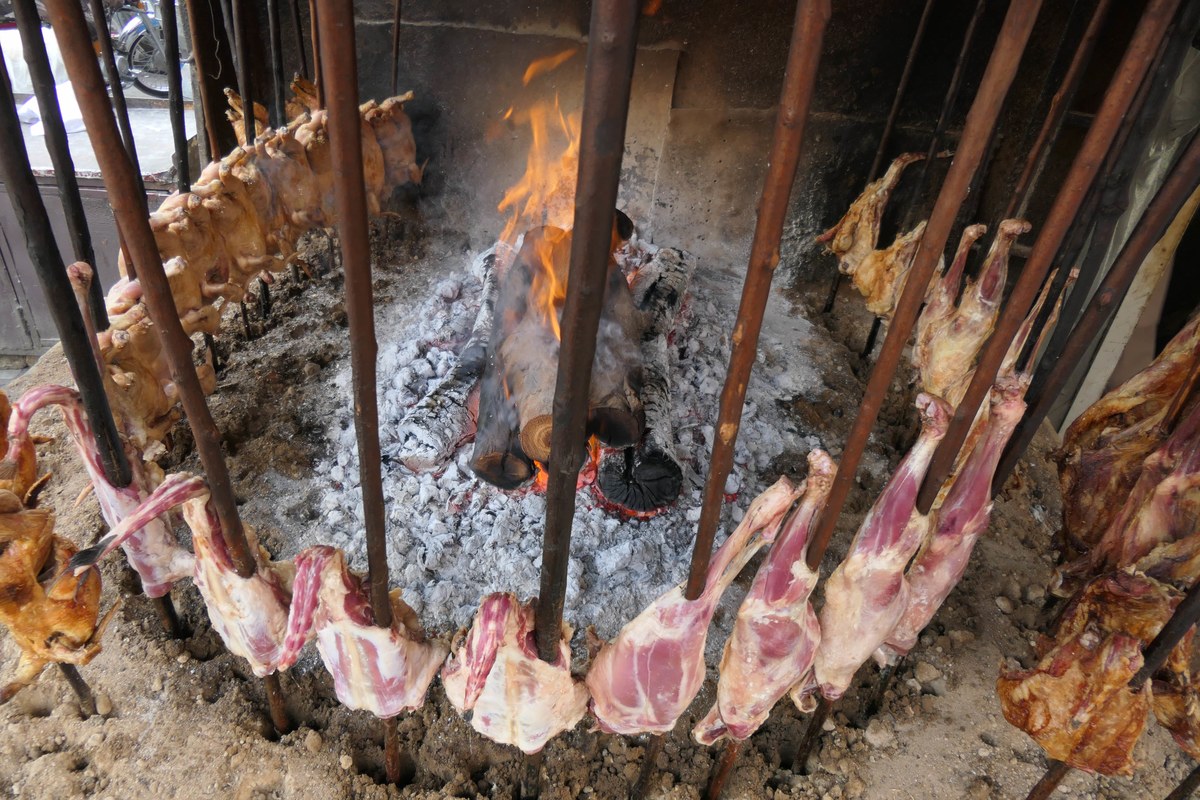
Meat pieces are placed on skewers in a mud stove heated by coal at a shop in Quetta, Balochistan on July 21, 2021. (AN photo by Saadullah Akhter)
“Only one day before Eid Al-Adha, we had 68 orders from our customers who brought thigh and shoulder pieces of their sacrificial animals to be cooked in our shop,” Muhammad Abid, sajji master chef who runs a shop in Jinnah Road in Quetta, told Arab News.
The meaty feast in Balochistan is much longer than in other parts of Pakistan, where the holiday is celebrated for three days. Balochi sajji dinners are held for over a week.
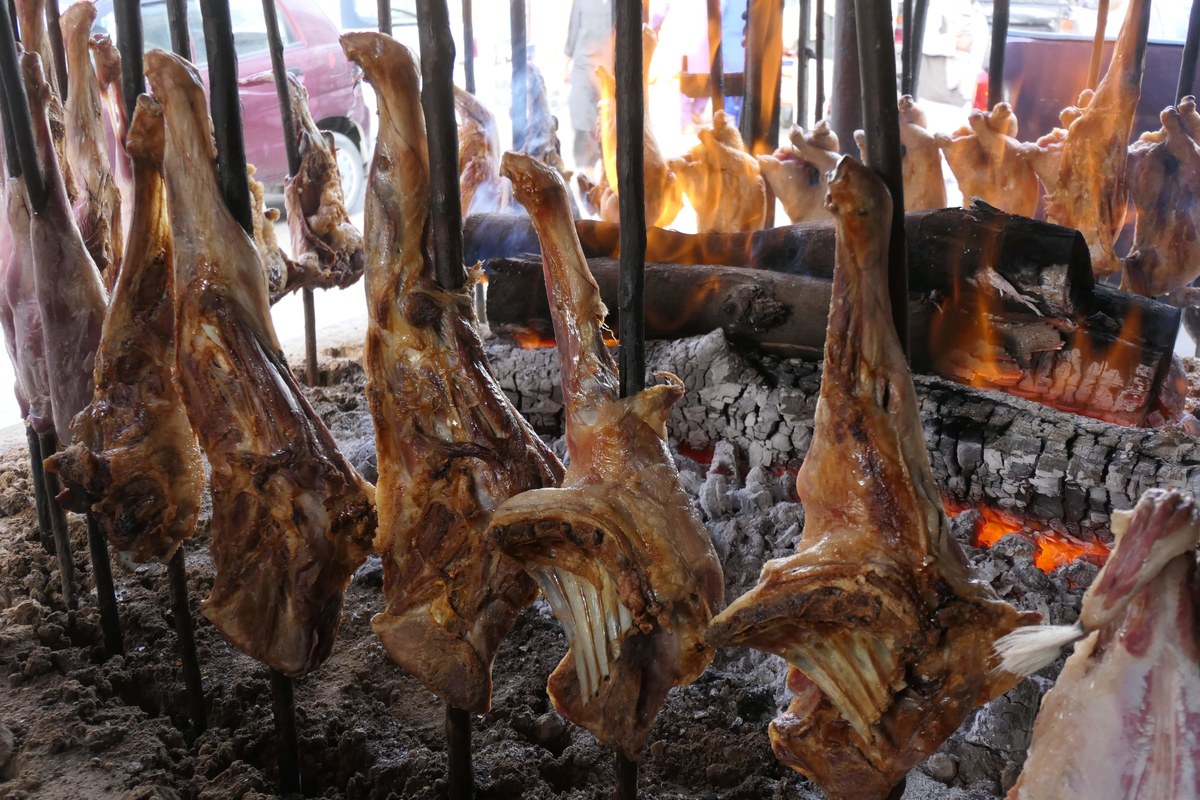
Pieces of meat are roasted at a shop in Quetta, Balochistan on July 21, 2021. (AN photo by Saadullah Akhter)
“Residents of Quetta continue having their Eid dinners and gatherings for more than 10 days,” Abid said. “We consider Eid Al-Adha as the season of booming sales, many customers come here with their friends and family to enjoy the taste of salty Balochi sajji.”
The meat is salty, because it is marinated only in its juice and salt.
“One hour before placing the meat pieces for roasting, we add salt for it to develop the salty Balochi sajji flavor,” Abid described the process. “Later we put it on a wood sticks for slow roasting over coal. After four hours, the crispy and juicy sajji will be ready.”
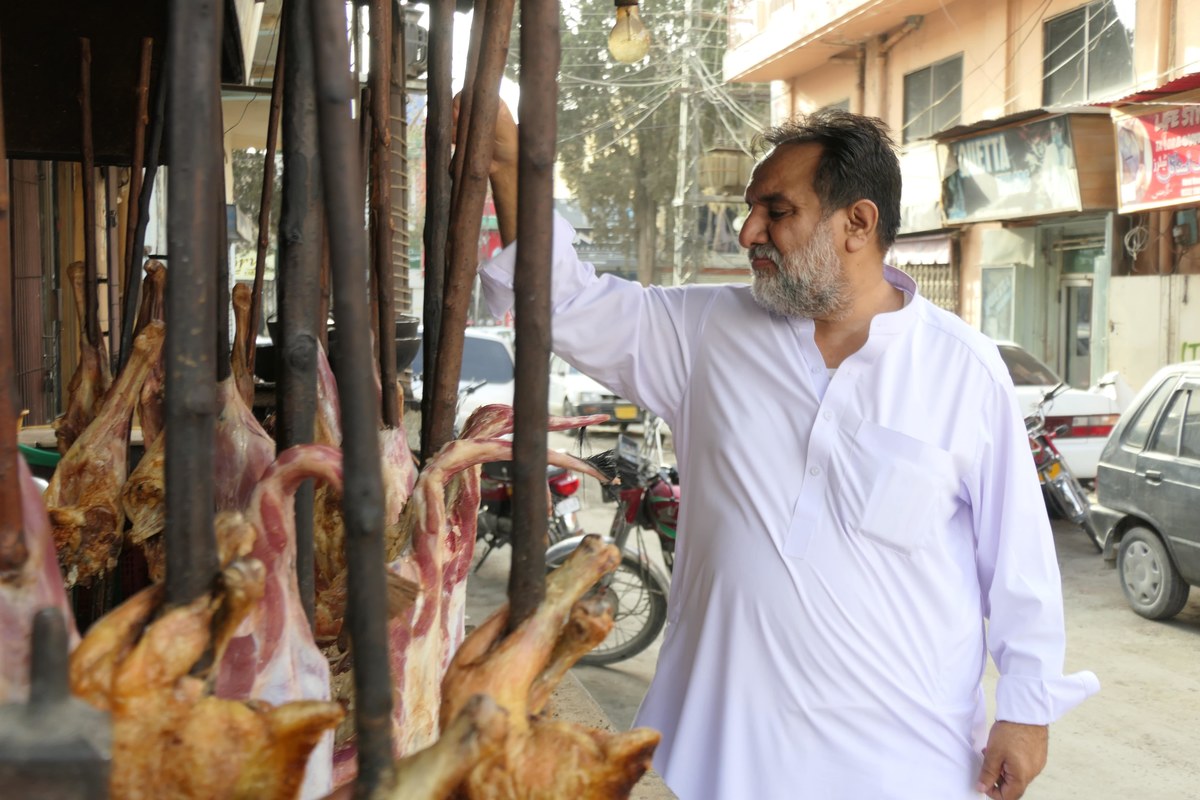
Hafeezullah Lehri, owner of a famous Balochi sajji shop, prepares checks on roasting pieces of meat prepared for the first day of Eid Al-Adha in Quetta, Balochistan on July 21, 2021. (AN photo by Saadullah Akhter)
The tradition of Balochi sajji emerged in the provincial capital in the 1960s. Before, the region’s iconic way of preparing meat was practiced mainly in Dera Bugti and Kohlu regions.
For Hafeezullah Lehri, who runs the famous Balochi sajji restaurant in Quetta, the method harks back to times immemorial, or hundreds of thousands of years ago, when humans started to use fire for cooking food.
“When humans started cooking meat, they started roasting the meat on stones,” he said. “With the passage of time the taste and making of sajji has evolved everywhere around the world.”
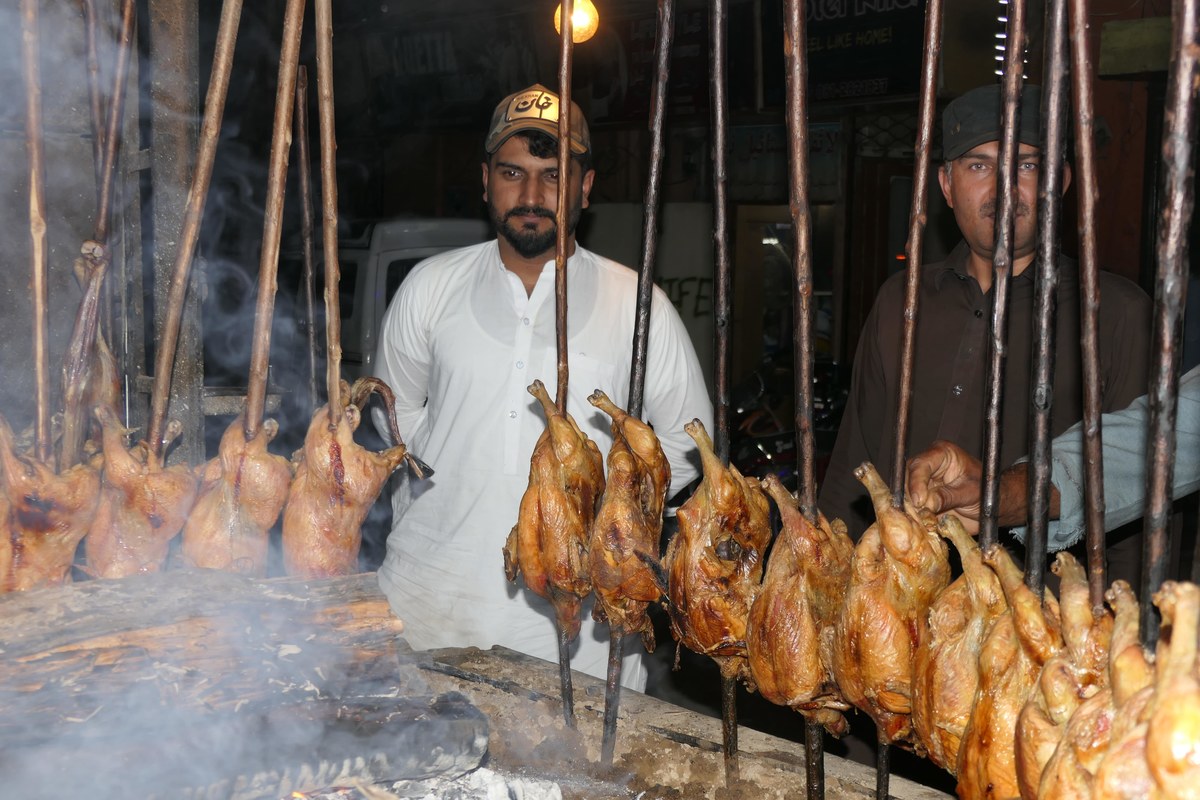
Baloch Khan, in white shirt, queues at a Balochi sajji shop in Quetta on July 21,2021. (AN photo by Saadullah Akhter)
“In Pakistan Baloch tribes have introduced the sajji because they used to live in the mountains and hunt. They cooked their meals slowly, without any spices.”
With some urban evolution, spices have lately been used if customers ask for them, although still rather conservatively so that the unique and raw smoke flavor of the sajji meat is not disturbed.
“Before, they were avoiding using spices but now they started putting a bit of black paper, following customer’s demand,” Baloch Khan, who brings sacrificial meat to Balochi sajji shops every year, told Arab News.
For his family and friends, sajji is a must on Eid Al-Adha.
“I have been seeing my father who used to prepare Balochi sajji every Eid Al-Adha for his friends, and the whole family developed a taste for it,” he said. “We never missed the chance of eating Balochi sajji of our sacrificial animals during Eid.”


