

Hajj 2021: Revealing the history behind famous Islamic names

1 / 2
Dr. Abdullah Al-Malki, translation coordinator at Hadiya Charity Association and former dean of the College of Languages and Translation at Abha’s King Khalid University, speaks to Arab News during an interview. (AN photo)
2 / 2
Pilgrims perform the symbolic stoning of the devil ritual at the massive Jamarat complex in the tent city of Mina on Wednesday. (AN photo by Waddah Mudarris)
Short Url
Updated 22 July 2021
Follow

Hajj 2021: Revealing the history behind famous Islamic names

  • New exhibition details history of Mina and Arafat for educating pilgrims and Saudis
  • For the history of “Arafat,” Al-Malki said this place earned its name because Adam and Eve knew each other in Arafat. “In Arabic, the word ‘araf’ means ‘knew’ in English”

MINA: For many, the origin of Islamic names is a mystery. The history behind the names of towns — such as Mina and Arafat — has escaped many Arabs. To fix this, the Royal Commission for Makkah City and Holy Sites has launched a new exhibition to enrich Muslims’ knowledge about various locations of Islam’s birthplace.  

The “Between Thabeer and Al-Sabeh” exhibition was opened on Tuesday and welcomed hundreds of pilgrims hoping to learn more about the places that have long been associated with their religious rituals.

For its project, the commission has worked closely with the Hadiya Charity Association (Hadiya). Its translation coordinator and former dean of the college of languages and translation at Abha’s King Khalid University, Dr. Abdullah Al-Malki, told Arab News that the name “Mina” came from the Arabic term “Al-Muna,” plural of “Omniah,” which means “wish.”

“When the Angel Gabriel wanted to leave Adam, he asked to make a wish (Omniah). Adam wished for Paradise. The place was then called Mina, plural of Omniah. There are other narratives which have different claimed explanations for the meaning,” Al-Malki said.

HIGHLIGHTS

• The name ‘Mina’ came from the Arabic term ‘Al-Muna,’ plural of ‘Omniah,’ which means ‘wish.’ When the Angel Gabriel wanted to leave Adam, he asked to make a wish (Omniah). Adam wished for Paradise. The place was then called Mina.

• The exhibition also presents the story of the Prophet Abraham with the devil, who tried to trick the prophet into disobeying Allah’s order to kill his son Ishmael.

Al-Malki added that visitors can also learn about the 70 prophets who have passed the valley of Mina. “Mina is a valley alongside of which there are two mountains, Thabeer and Al-Sabeh, and it is believed that some 70 prophets have passed through this place, wearing white woolen garments.”

The exhibition also presents the story of the Prophet Abraham with the devil, who tried to trick the prophet into disobeying Allah’s order to kill his son Ishmael. “The heavenly order was just to test Prophet Abraham’s faith.”

Al-Malki said that the exhibition teaches its visitors how the Quranic surah of Al-Mursalat was revealed in a cave in Mina.

For the history of “Arafat,” Al-Malki said this place earned its name because Adam and Eve knew each other in Arafat. “In Arabic, the word ‘araf’ means ‘knew’ in English.”
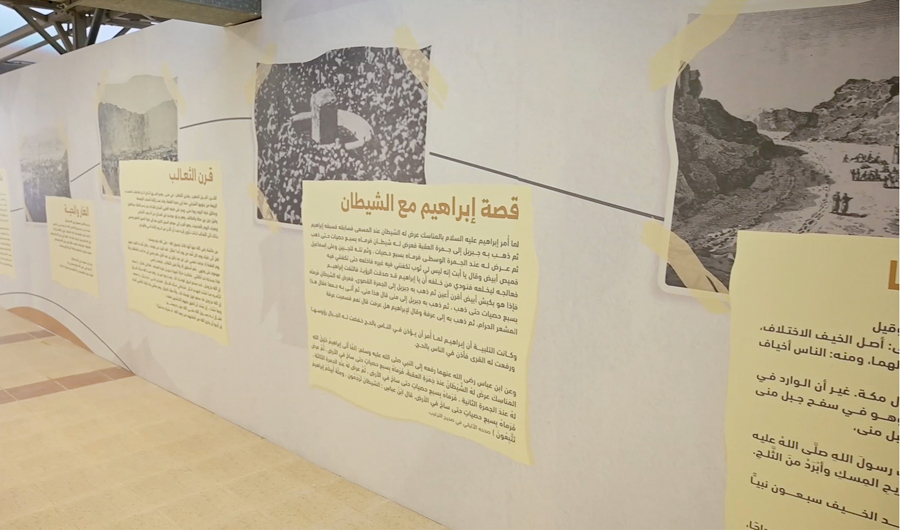
He added that it is important that pilgrims and ordinary people learn about the history of these places because they are central to Arab civilization.

Al-Malki pointed out that the exhibition, which is being held for the first time, includes 10 sections where visitors can learn more about Al-Masha’er and what services the Saudi kings have offered to contribute to the development of key historical Islamic sites.

“The care and unlimited spending of the leaders of this county — beginning from the late King Abdul Aziz and his sons, to the era of King Salman and Crown Prince Mohammed bin Salman — have made these places a source of pride for us all through the giant projects that have been implemented here,” he said.

He added that their efforts have also made the mountains and valleys secure and safe places.
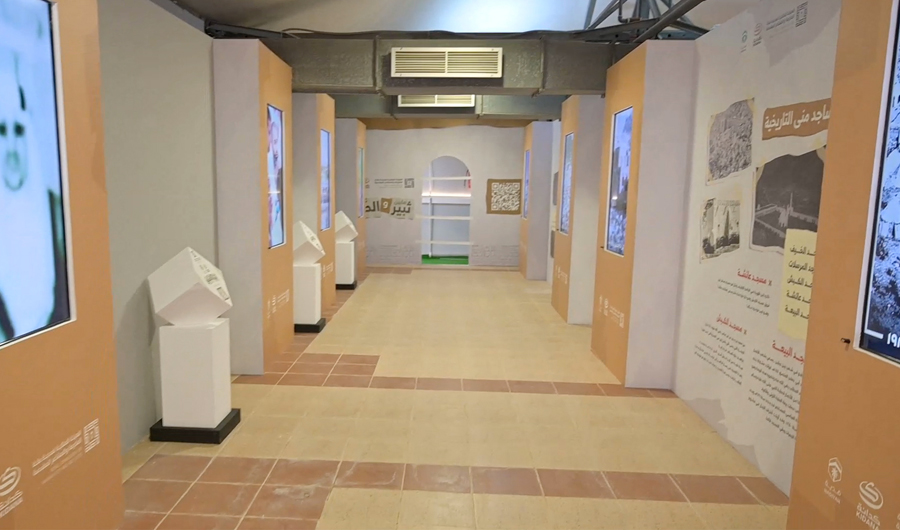
“All the historical information about Mina — its water wells, mosques, and mountains — can all be discovered here under one ceiling,” he said, adding: “We are also broadcasting digital materials and pictures with detailed information about the landmarks of the holy sites to enrich the pilgrims’ experience.”

A similar exhibition called “Alsakhrat” was also opened in Arafat to provide pilgrims with historical information about the site. However, the two exhibitions were combined into one in Mina, where the pilgrims are present during the Days of Al-Tashreeq, on which they carry out their “stoning of the Devil” rite.

Pilgrims can also scan an iQR code to visit the exhibition’s multi-language website to read more about the holy places.


Joy Awards 2026 spotlights arts in the Arab world

Updated 18 January 2026
Follow

Joy Awards 2026 spotlights arts in the Arab world

RIYADH: Riyadh hosted its annual Joy Awards, bringing together stars and creative projects from across the Arab world as part of an event that has been held annually since 2022. The 2026 ceremony continued its focus on recognizing storytelling and creative work, while highlighting projects released over the past year.
As audiences anticipated the winners following the release of the nominees, awards were presented across six sectors; music, cinema, series, directors, sports and influencers. In addition to category awards, the ceremony also honored recipients of special accolades including Personality of the Year, Lifetime Achievement, and Joy Honorary awards.
Previous events have recognized Arab and international figures for their contributions to the arts, including Matthew McConaughey, who received the Personality of the Year Award in 2025.
Amid the Kingdom’s expansion of its entertainment sector — spanning film, music and sports — the Joy Awards reflected Riyadh Season’s role in hosting large-scale cultural events.
This year’s fan-favorite nominees, many of whom were Saudi nationals, were cheered on as they walked the Joy Awards’ iconic lavender carpet, where fashion once again took center stage as a key expression of the region’s evolving creative identity.
Among winners who took home the Joy Awards was Saudi 14 year old Rateel Alshehri, who won Favorite Female Influencer. Speaking to Arab News on the lavender carpet, Rateel shared her excitement towards Joy Awards:
“I’m so excited about being at Joy Awards today, it’s something I’ve been looking forward to (…) Everyone here deserves to be here.” On her beautiful sky-blue gown, Rateel shared that she was wearing Saudi designer, Adnan Akbar.
Rateel’s excitement towards the awards was echoed by both Arab and non-Arab guests on the lavender carpet as many took in the unique atmosphere that Riyadh offers Joy Awards; where Arab entertainment and art is celebrated.
Lebanese actress Laila Abdullah also shared her enthusiasm towards both the award show and the Kingdom’s ambitions in hosting the Joy Awards and creating a hub for creative voices.
Speaking to Arab News she emphasized Saudi’s unique qualities: “It’s this mix of culture and luxury (…) It has that Gulf Arab character, the Saudi touch, you know? And that’s what really makes it stand out” Joy Awards was filled with a bustling energy that was eager and excited to give a platform to dreamers, artists, and talents who have been waiting to showcase their visions within the Arab world. It was a celebration that went beyond mere award-giving, reflecting the same ambition and creative momentum that defines Riyadh Season.
The lavender carpet paved way for international guests to speak to Saudi media on how it feels to be a part of an artistic celebration of Arab talent. Speaking to Arab News, Australian actor Luke Arnold shared his excitement towards attending the Joy Awards: “What I’m most excited about is kind of what I love about film and television, which is people from all over the world coming together to tell stories and share their expertise (…) It’s really exciting hearing about some of the potential projects happening, meeting some of the local talent here…just really excited to have more stories out in the world.”
Speaking to Arab News, Lebanese fashion influencer Karen Wazen reiterated the sentiment on Riyadh giving Joy Awards a special and unique energy for the arts, saying: “I am so impressed, I’m so proud to be at an event like this in our region, in Saudi Arabia. This is probably the most impressive and big carpet that I’ve ever seen (…) I’m very excited to watch the ceremony, but also I think to just meet so many people from our industries, it’s a beautiful place to do so.”
That vibrant atmosphere was on full display at the Joy Awards as the ceremony continued with stars like Millie Bobby Brown winning the Personality of the Year Award and the Lifetime Achievement Honor presented to acting legend Forest Whitaker. The stardom was not limited to the film sector, as American pop star Katy Perry performed her iconic songs live; and British singer Robbie Williams took to stage to give a standout performance.
The Joy Awards 2026 once again proved that setting new benchmarks in entertainment and creative expression is not only achievable, but celebrated when driven by local talent and support. As stars from around the world took to Riyadh’s lavender carpet, Arab culture was placed firmly at the forefront — spanning film, music, and digital creativity. The Joy Awards stand as a symbol of the broader cultural transformation that Riyadh is championing across the Arab world’s entertainment industry.