SINGAPORE: The dollar stood on the verge of fresh year-to-date peaks on Wednesday, as jitters about surging virus infections buttressed gains built on higher interest rate expectations, with investors waiting on the European Central Bank for their next cue.
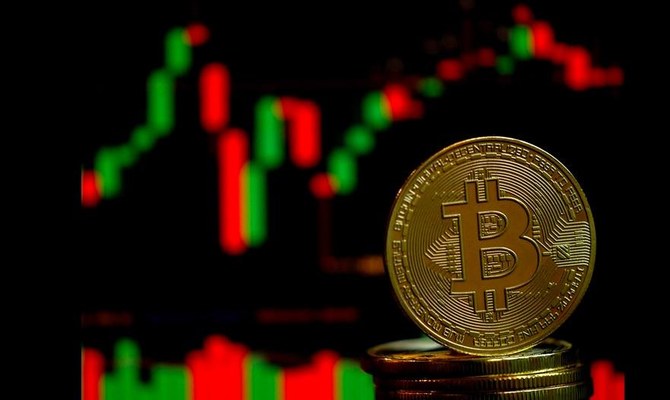
In the digital space, cryptocurrencies clawed back Tuesday’s losses to drag bitcoin from a one-month low and back over $30,000.
The euro touched its lowest since April on Tuesday and, at $1.1772 in Asia, was not far above the year’s nadir at $1.1704. It might find support if the ECB fails to meet expectations for a dovish tweak to rates guidance at its Thursday meeting. But if that is delivered, it could open the way for further weakness.
“The implication is the ECB’s monetary policy will now remain ultra easy for even longer which is a headwind to the euro,” said Commonwealth Bank of Australia strategist Kim Mundy.
Other majors likewise faced difficulty escaping multi-month lows leaving sterling, the Canadian, Australia and New Zealand dollars to trade under pressure in the Asia session.
“The US dollar does seem to have quite an undertow of support,” said Westpac analyst Sean Callow in Sydney.

Virus scare puts dollar near year's highs as bitcoin back above $30,000
https://arab.news/r7tru
Virus scare puts dollar near year's highs as bitcoin back above $30,000
- The global spread of the Delta variant has rattled currency markets
Up to $600m in additional tariffs on Saudi exports to the US
RIYADH: Gulf exports have become targets of US President Donald Trump’s tariffs, which he raised from 10 percent to 15 percent on all countries.
The increase comes after the US Supreme Court ruled that the legal basis Trump had used to impose earlier tariffs was unlawful.
Previously, Gulf countries were among the few that had not raised their tariffs above 10 percent, while many other countries, most notably China, had already been subject to higher tariffs. However, with this latest increase, the Gulf states will be among those affected.
According to the financial analysis unit of Al-Eqtisadiah newspaper, Gulf exports to the US in 2024 amounted to about $26.2 billion, with Saudi Arabia accounting for roughly half of that, at $12.7 billion. These exports are subject to potential additional tariffs of SR637 million ($169 million).
It is likely that tariffs on Saudi exports will grow from $1.3 billion annually to $1.9 billion, a rise of 50 percent, following Trump’s recent increase.
Customs duties on Gulf exports will also increase, from $2.6 billion annually to $3.9 billion.
In 2024, Gulf exports are distributed as follows: $7.5 billion from the UAE, $1.8 billion from Qatar, and $1.6 billion from Kuwait, as well as $1.3 billion from Oman, and finally, $1.2 billion from Bahrain.
Gulf trade with the US in 2024 reached approximately $86 billion, comprised of $26.2 billion in exports and approximately $60 billion in imports, resulting in a Gulf trade deficit of $33.5 billion.
Trump responds to Supreme Court ruling
US President Donald Trump raised the global tariffs from 10 percent to 15 percent in response to the US Supreme Court ruling that his previous tariff implementation mechanism was unlawful.
Trump said in a post on his Truth Social account today: “As President of the US, I will, effective immediately, raise the global tariffs imposed on countries that have been taking advantage of the US for decades with impunity (until I took over!) to the legally permitted and tested level of 15 percent.”
Hours after the Supreme Court ruling on Feb. 20, Trump imposed a 10 percent global tariff on foreign goods, a move aimed at maintaining his trade agenda.
Trump had expressed his displeasure with the Supreme Court’s decision to overturn the tariffs imposed by his administration, asserting that the ruling would not restrict him. He vowed to impose tariffs far exceeding those struck down by the court, indicating that he had stronger alternatives to tariffs, raising questions about his future trade strategy.
The US Supreme Court struck down Trump’s sweeping global tariffs, undermining his signature economic policy and inflicting his biggest legal defeat since returning to the White House.
By a six-three vote, the court ruled that Trump exceeded his authority by invoking the federal emergency powers law to impose his reciprocal tariffs worldwide, in addition to targeted import duties that the administration claims are intended to combat fentanyl smuggling.


