

Pakistani among 10 set to be freed from Guantanamo — media

US military guards walk within Camp Delta military-run prison, at the Guantanamo Bay U.S. Naval Base, Cuba, in April 2006. (AP/File)
Short Url
Updated 20 July 2021
Follow

Pakistani among 10 set to be freed from Guantanamo — media

  • Saifullah Paracha has spent 16 years in custody without ever being charged with a crime
  • At 73, he is the oldest prisoner at the US base in Cuba that President Biden has vowed to close 

ISLAMABAD: Of the 39 remaining prisoners at Guantánamo Bay, 10, including a Pakistani man, are eligible to be transferred out, Pakistan’s Dawn newspaper reported on Tuesday.
President Joe Biden’s administration said on Monday it had transferred its first detainee from the US military prison at Guantanamo, a Moroccan man imprisoned since 2002, lowering the population at the facility to 39. Abdul Latif Nasir, 56, was repatriated to Morocco.
Set up to house foreign suspects following the September 11, 2001, attacks on the United States, the prison came to symbolize the excesses of the US “war on terror” because of harsh interrogation methods critics said amounted to torture.
While former President Donald Trump kept the prison open during his four years in the White House, Biden has vowed to close it, a promise White House press secretary Jen Psaki reiterated on Monday.
“The list [of those to be freed] may include a Pakistani, Saifullah Paracha, who spent 16 years in custody without ever being charged with a crime. At 73, he is the oldest prisoner at the US base in Cuba,” Dawn reported. “Paracha, who is accused of having ties to Al Qaeda, was notified in May this year that he has been approved for release.”
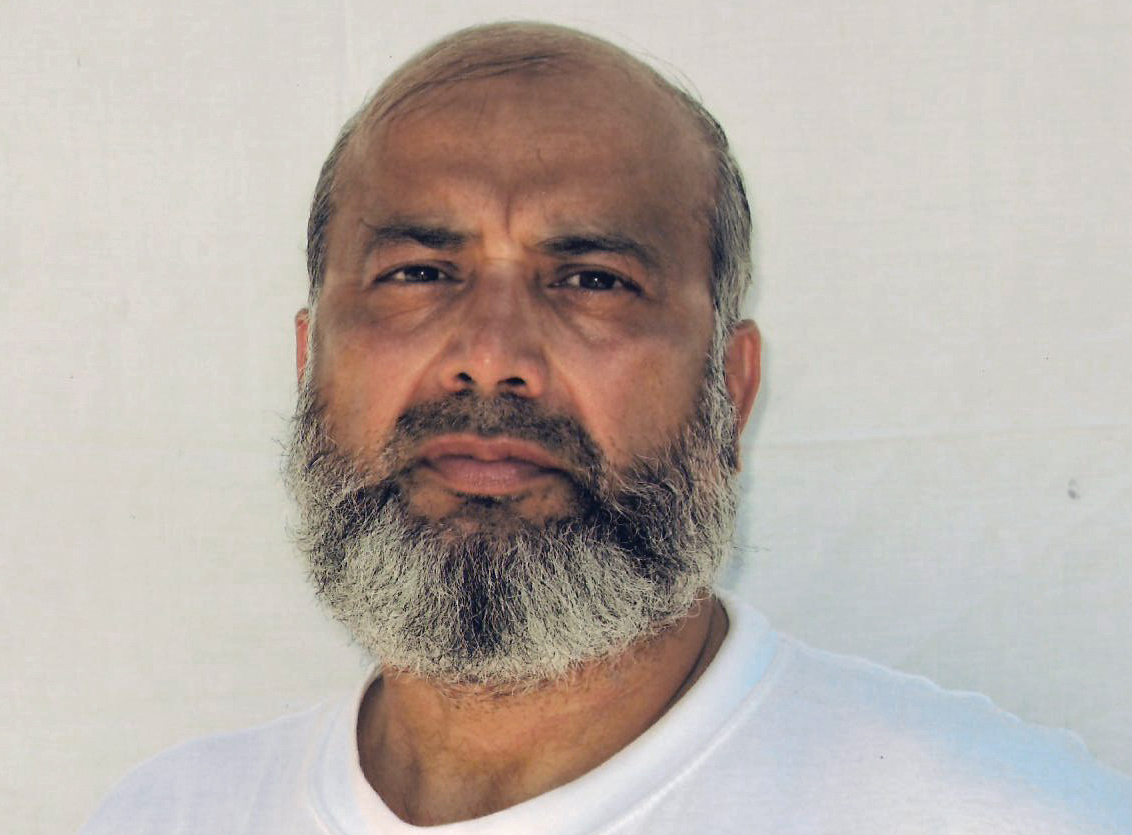


This undated photo made by the International Committee of the Red Cross and provided by lawyer David H. Remes, shows Guantanamo prisoner Saifullah Paracha. (AP)

“Of the 39 detainees remaining at Guantánamo, 10 are eligible to be transferred out, 17 are eligible to go through the review process for possible transfer,” a senior administration official told journalists in Washington, according to Dawb. “Another 10 are involved in the military commission process used to prosecute detainees and two have been convicted.”
Advocacy groups welcomed the move but said more needed to be done.
“The Biden administration urgently needs to negotiate and implement similar decisions for other cleared prisoners,” Hina Shamsi, director of the American Civil Liberties Union’s national security project, said, referring to the Moroccan man’s release.
“Bringing an end to two decades of unjust and abusive military detention of Muslim men at Guantanamo is a human rights obligation and a national security necessity,” Shamsi said.
Opened under Republican President George W. Bush, the prison’s population peaked at about 800 inmates before it started to shrink. President Barack Obama, a Democrat like Biden, whittled down the number, but his effort to close the prison was stymied largely by Republican opposition in Congress.
US Secretary of State Antony Blinken said last month the Biden administration was actively looking into recreating the position of a State Department envoy for the closure of the prison at the Guantanamo Bay naval base.


Pakistan’s president defends ongoing strikes in Afghanistan, urges Kabul to dismantle militants

Updated 02 March 2026
Follow

Pakistan’s president defends ongoing strikes in Afghanistan, urges Kabul to dismantle militants

  • Afghanistan on Thursday launched attacks in retaliation for Pakistani airstrikes the previous Sunday
  • Pakistan’s military says it is only targeting Afghan military installations to avoid civilian casualties

ISLAMABAD: Pakistan’s president on Monday defended his country’s ongoing military strikes in neighboring Afghanistan, saying Islamabad tried all forms of diplomacy before targeting militants operating from Afghan territory, and called on the Taliban government in Kabul to disarm groups responsible for attacks in Pakistan.

Pakistan earlier said it is in “open war” with Afghanistan, alarming the international community. The border area remains a stronghold for militant organizations including Al-Qaeda and the Daesh (Islamic State) group.

“(The Afghan Taliban) must choose to dismantle the terror groups that survive on conflict and its war economy,” Asif Ali Zardari said during a speech to lawmakers, adding that “no state accepts serial attacks on its soil.”

Afghanistan on Thursday launched attacks in retaliation for Pakistani airstrikes the previous Sunday. Since then, Pakistan has carried out operations along the border, with Information Minister Attaullah Tarar claiming the killing of 435 Afghan forces and the capture of 31 Afghan positions.

Kabul has denied such claims.

In Afghanistan, the deputy government spokesman Hamdullah Fitrat said Pakistan’s military fired mortar shells at a refugee camp in eastern Kunar province, killing three children and injuring three others.

Afghanistan’s defense ministry said Afghan forces carried out strikes targeting a Pakistani military facility near Paktia province, causing “substantial losses and heavy casualties.”

Pakistan’s military did not respond to questions. It has said Pakistan is only targeting Afghan military installations to avoid civilian casualties.

Pakistan has witnessed a surge of violence in recent months and blames it on the outlawed Pakistani Taliban, known as Tehreek-e-Taliban Pakistan or TTP. It operates both inside Pakistan and from Afghan territory.
Islamabad accuses Afghanistan’s Taliban government of providing safe havens for the TTP, which Kabul denies.

The latest cross-border fighting ended a ceasefire brokered by Qatar and Turkiye in October. The two sides failed to reach a permanent agreement during talks in Istanbul.

Zardari reiterated Pakistan’s call for talks, saying, “We have never walked away from dialogue.”

The Pakistani leader again accused Afghanistan of acting as a proxy for India by sheltering militant groups.

“Stop being used by another country as a battlefield for their ambitions,” he said.

Zardari cited a recent report from the United Nations Security Council’s monitoring team that described the presence of militant groups in Afghanistan as an extra-regional threat.