

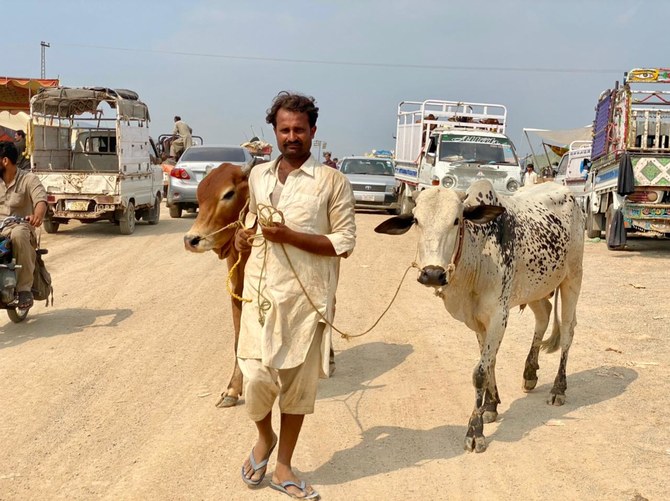

ISLAMABAD: Thousands of Pakistanis, sellers and buyers, defied government warnings over the coronavirus to crowd vast livestock markets near the capital without wearing face masks or following other health guidelines just days before the Muslim Eid Al-Adha holiday, officials, vendors and customers said.
Muslims slaughter cows, sheep or goats to mark the holiday, with the meat shared among family and friends and donated to the poor.
Earlier this month, Pakistan’s federal COVID-19 pandemic response body, the NCOC, issued guidelines for the Eid Al-Adha holiday, requiring all persons to wear face masks and ordering vendors selling sacrificial animals to be vaccinated. The NCOC also ordered authorities to enforce social distancing at cattle markets and provide hand sanitizers, masks and rapid antigen testing services on entry to the markets.
But restrictions are not being followed, Islamabad additional deputy commissioner Baber Sahib Din told Arab News, saying 10 markets had already been closed and a number of people arrested for violating standard operating procedures (SOPs).
A view of Sangjani animal market in Islamabad, Pakistan, on July 17, 2021. (AN Photo)
“We have closed 10 unsanctioned animal markets and arrested six people for violation of SOPs despite multiple warnings,” he said in an interview ahead of Eid. “Our teams are also vaccinating vendors. We are trying to convince and also create fear through arrests so that people should follow SOPs.”
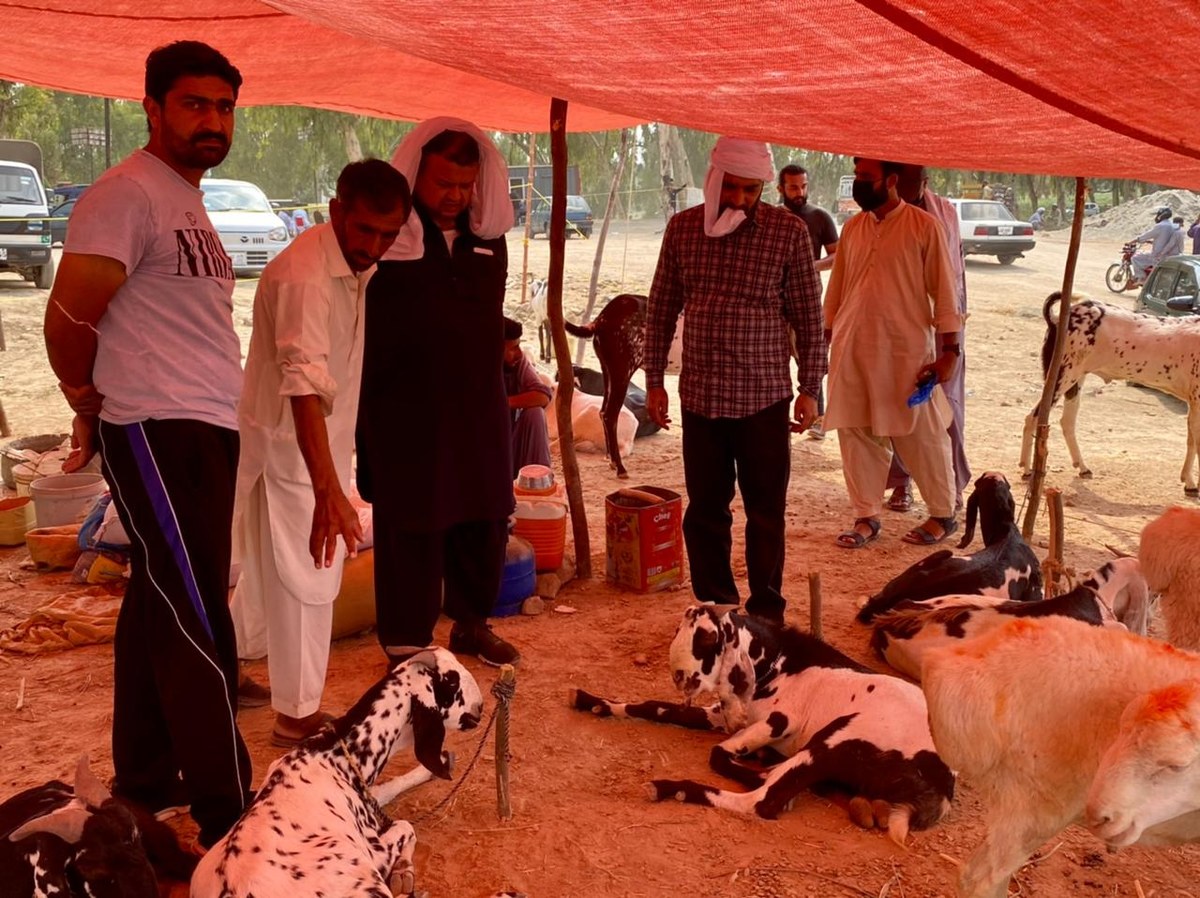
Customers buy sacrificial animals at the Sangjani animal market in Islamabad, Pakistan, on July 17, 2021. (AN Photo)
District Health Officer Islamabad Dr. Zaeem Zia said the health administration was conducting random coronavirus screenings at markets.
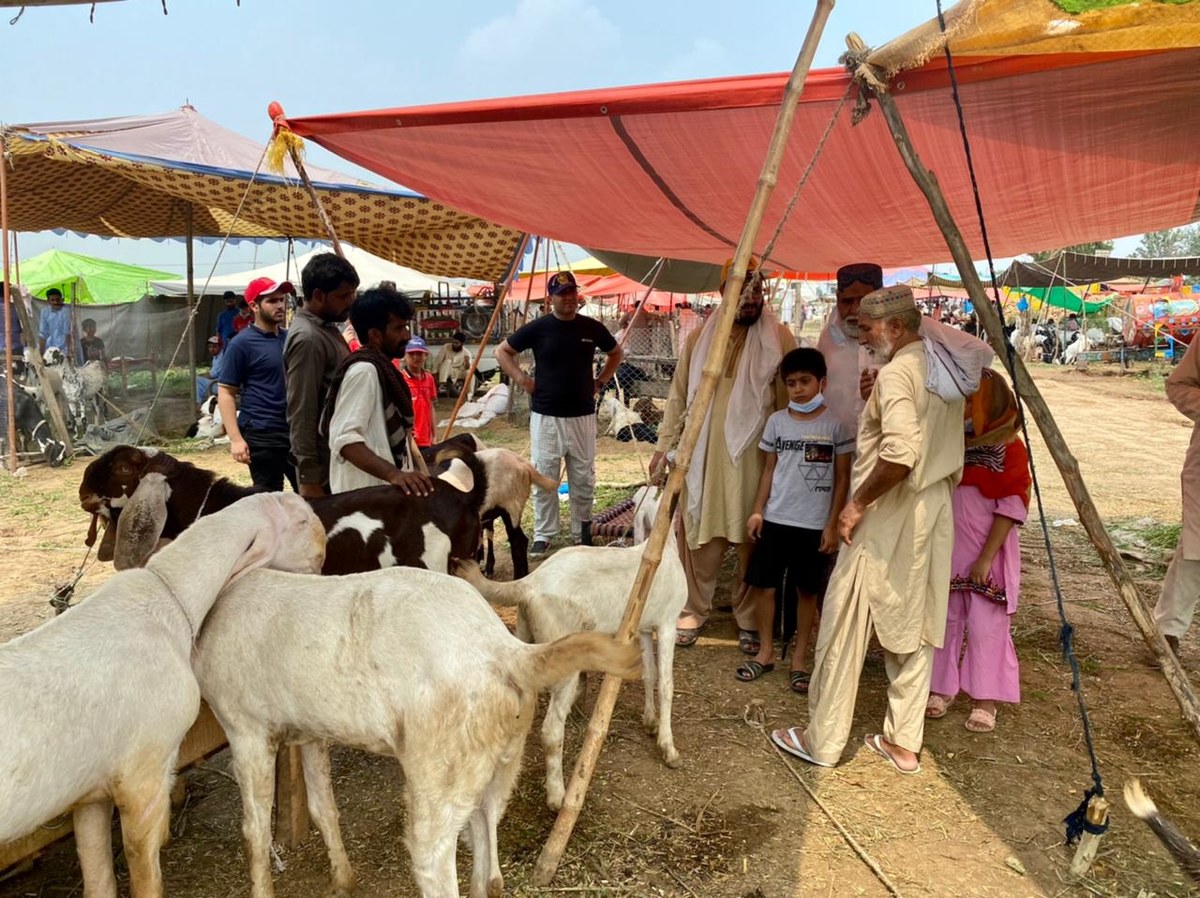
Customers buy sacrificial animals at the Sangjani animal market in Islamabad, Pakistan, on July 17, 2021. (AN Photo)
“The positivity ratio is already above six percent in Islamabad,” Zia said. “We are observing the situation closely and also implementing smart lockdowns in different areas.”
Vendors at three major government-approved animal markets in Islamabad and Rawalpindi told Arab News they were lax about rules because there was no enforcement.
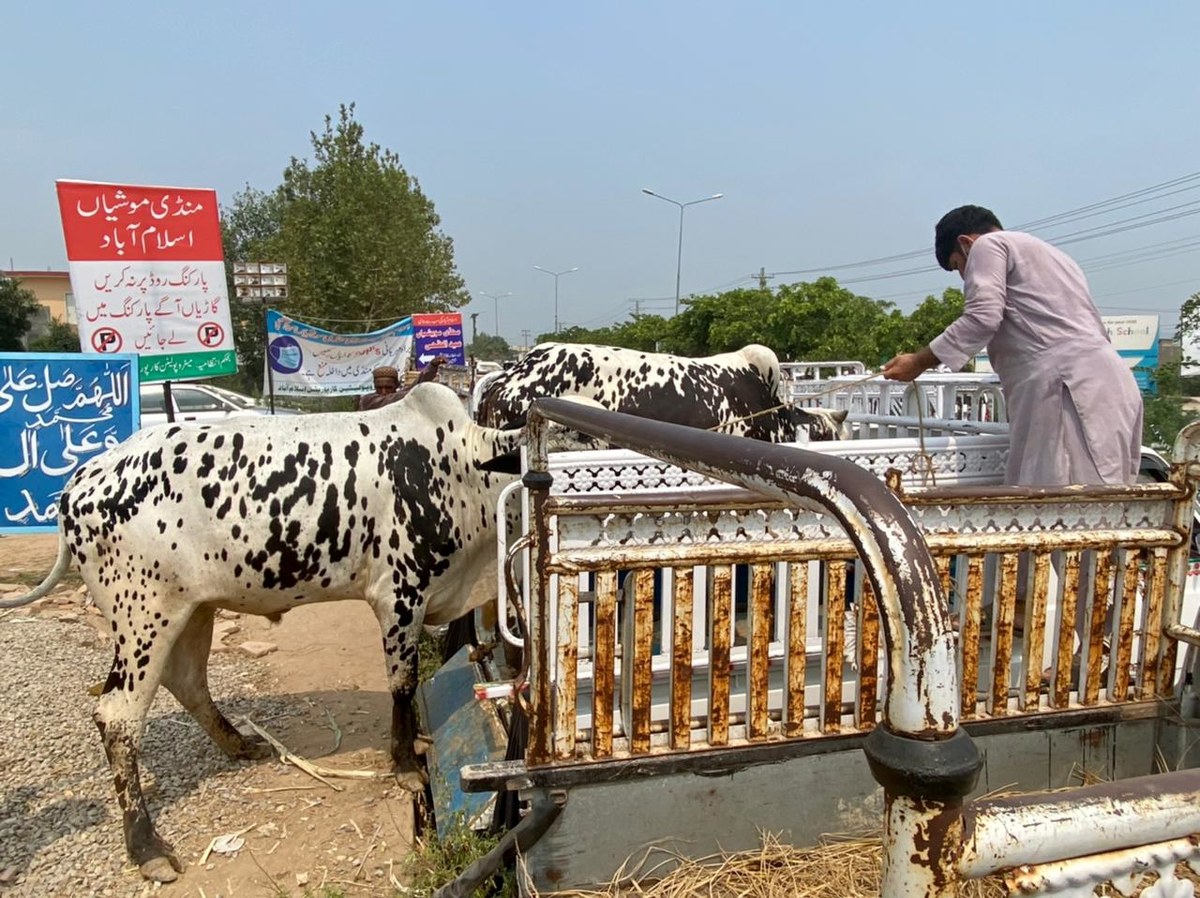
A vendor offloads sacrificial aniamls from a vehicle at the Sangjani animal market in Islamabad, Pakistan, on July 17, 2021. (AN Photo)
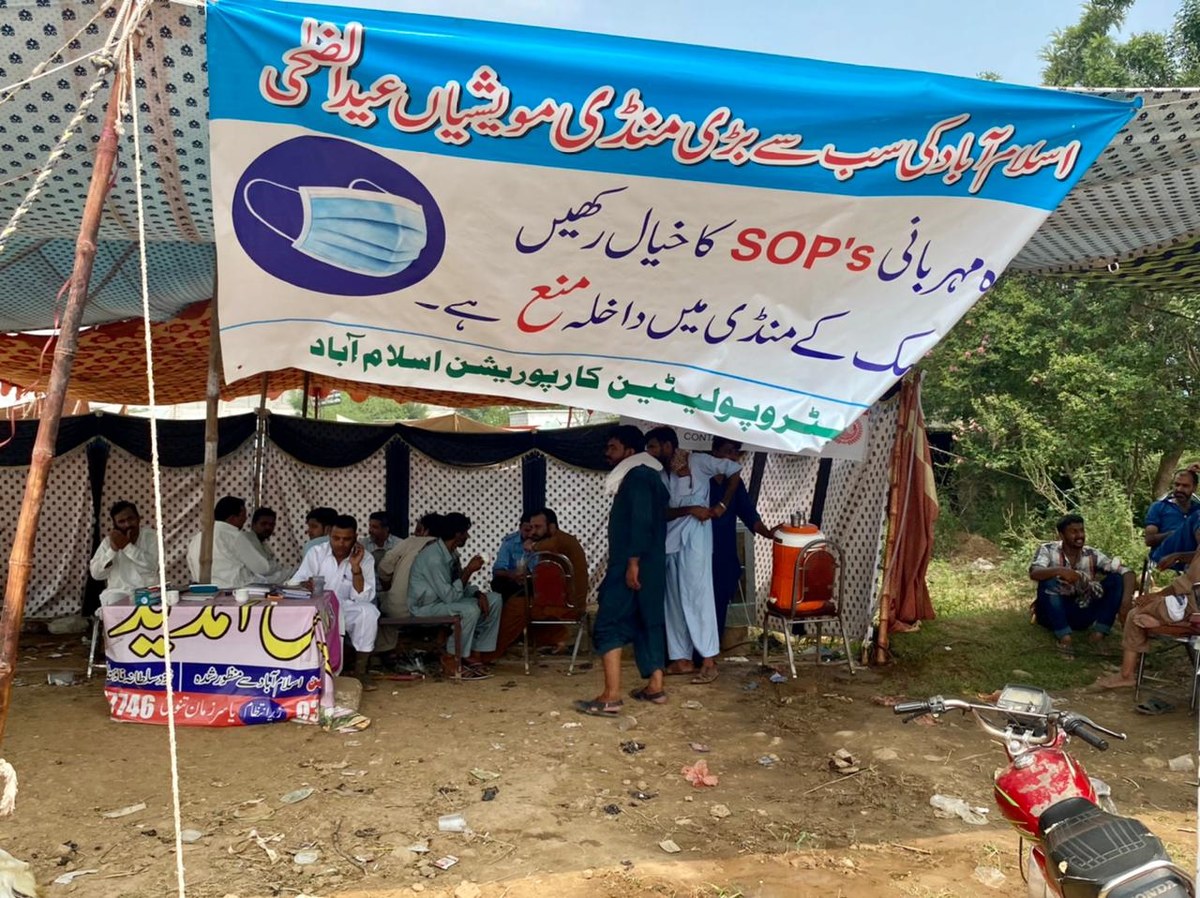
“We did not have fans here, then how can we wear masks,” Javeid Ahmed, a livestock seller at the Lehtrar Road animal market, told Arab News on a hot afternoon last week.
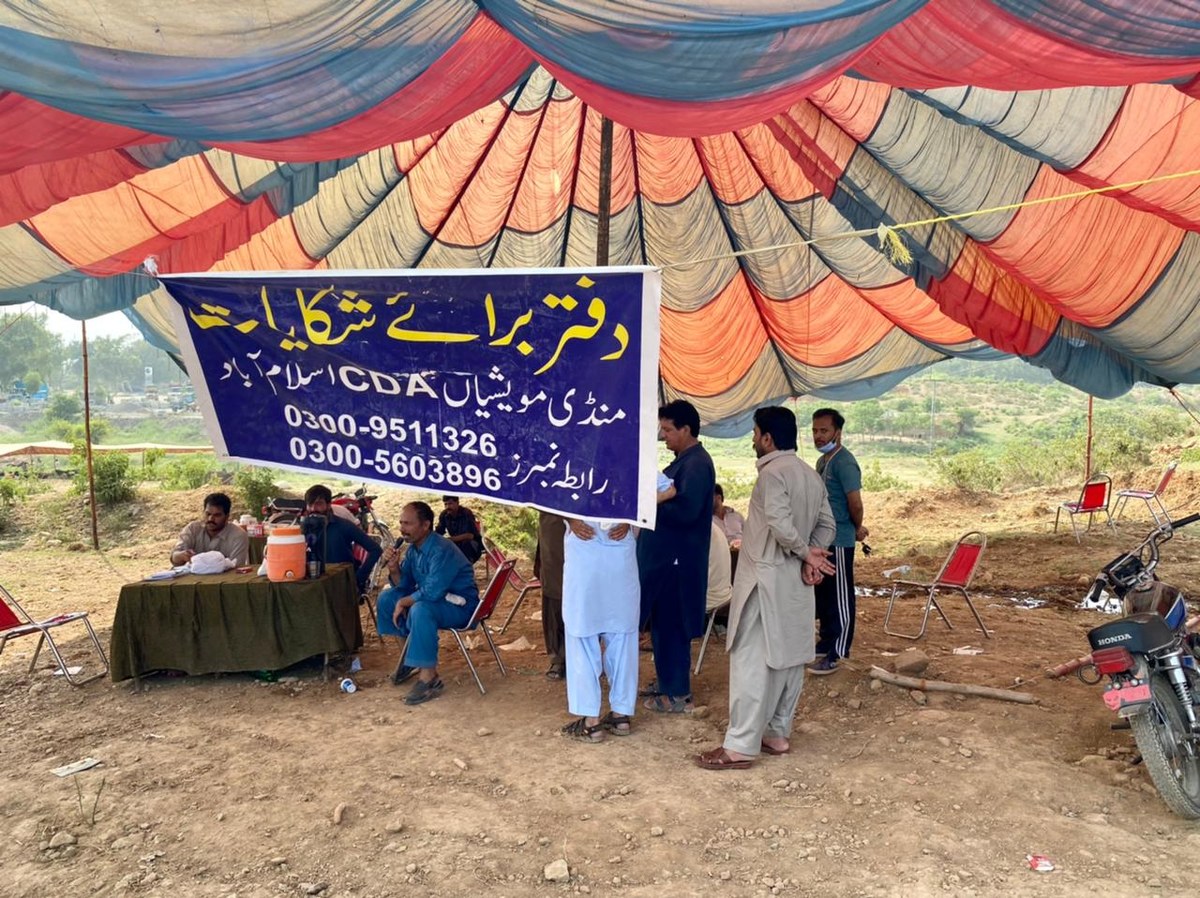
A view of complaint office set up at the Lehtrar road animal market in Islamabad, Pakistan, on July 17, 2021. (AN Photo)
He also said while authorities were offering free coronavirus testing to vendors, “I haven’t seen anyone who was tested during the last five days.”
Muhammad Kashif, who was visiting an Islamabad livestock market with his children, said no one had asked him to wear a mask: “We forgot to wear masks, but are trying not to come in close proximity of sellers.”
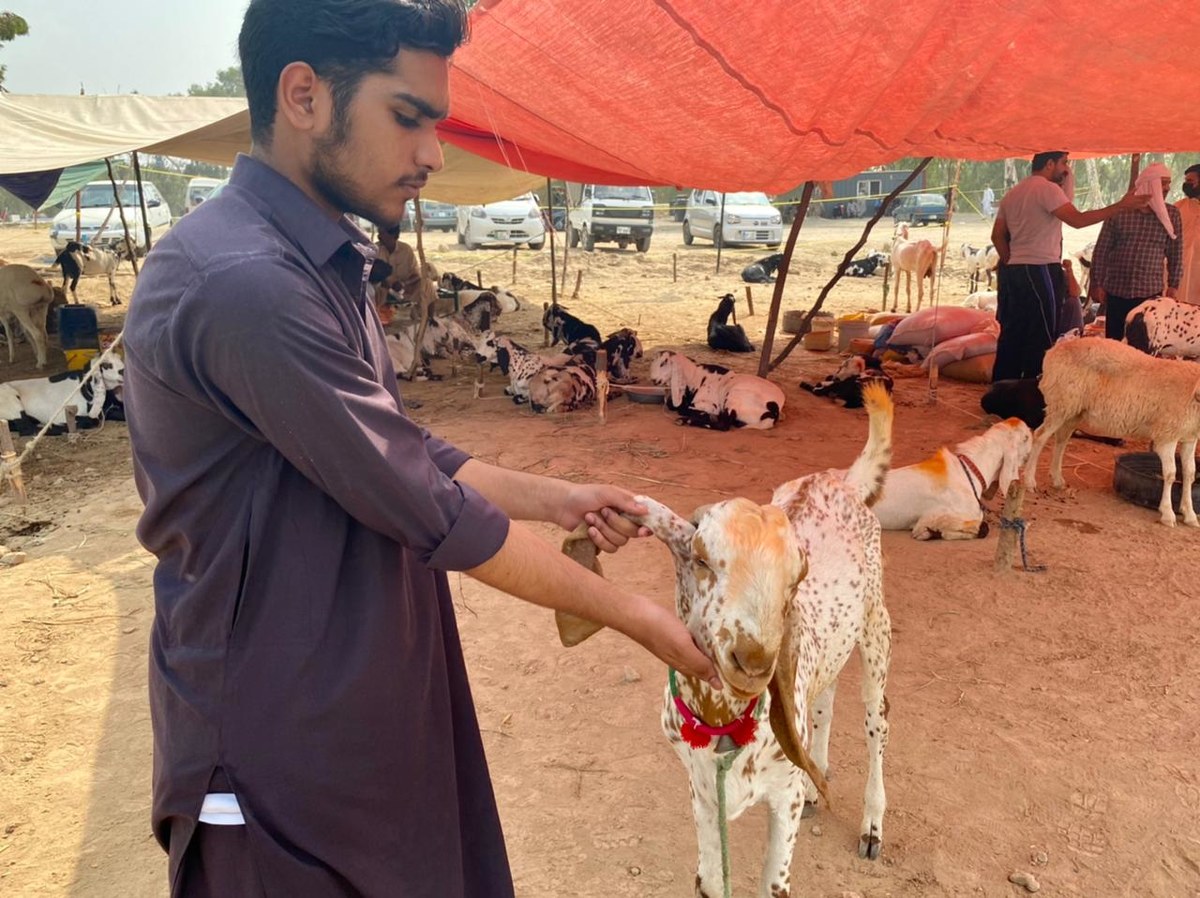
A man is seen with a goat at the Lehtrar road animal market in Islamabad, Pakistan, on July 17, 2021. (AN Photo)
Whether the sellers have been inoculated in accordance with NCOC orders is also unclear, with some saying there were no checks for vaccine certificates.
“I am not vaccinated, and they have not demanded from any of us [to get vaccinated],” Azhar Ali, a seller at Islamabad’s main animal market in Sangjani, said. “The administration is providing us free masks but wearing masks in this hot and humid weather is not possible.”
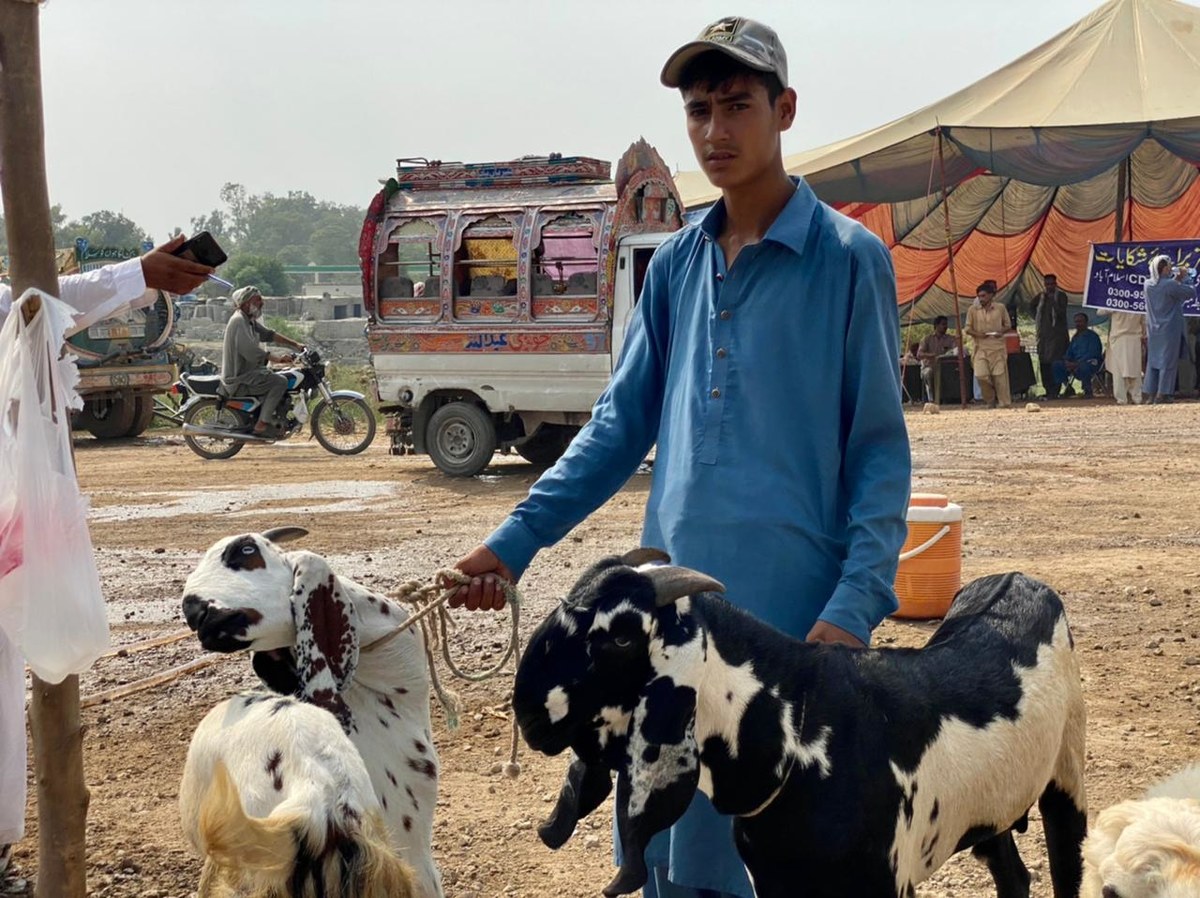
A man stands near sacrificial animals at the Lehtrar road animal market in Islamabad, Pakistan, on July 17, 2021. (AN Photo)
Sami Ullah, a manager at the Lehtrar Road market, said he was not checking vendors’ vaccination certificates as no one had ordered him to, complaining that most sellers were resisting wearing masks.
“We are providing free masks and basic medicines,” he said. “They are not wearing them despite our requests.”
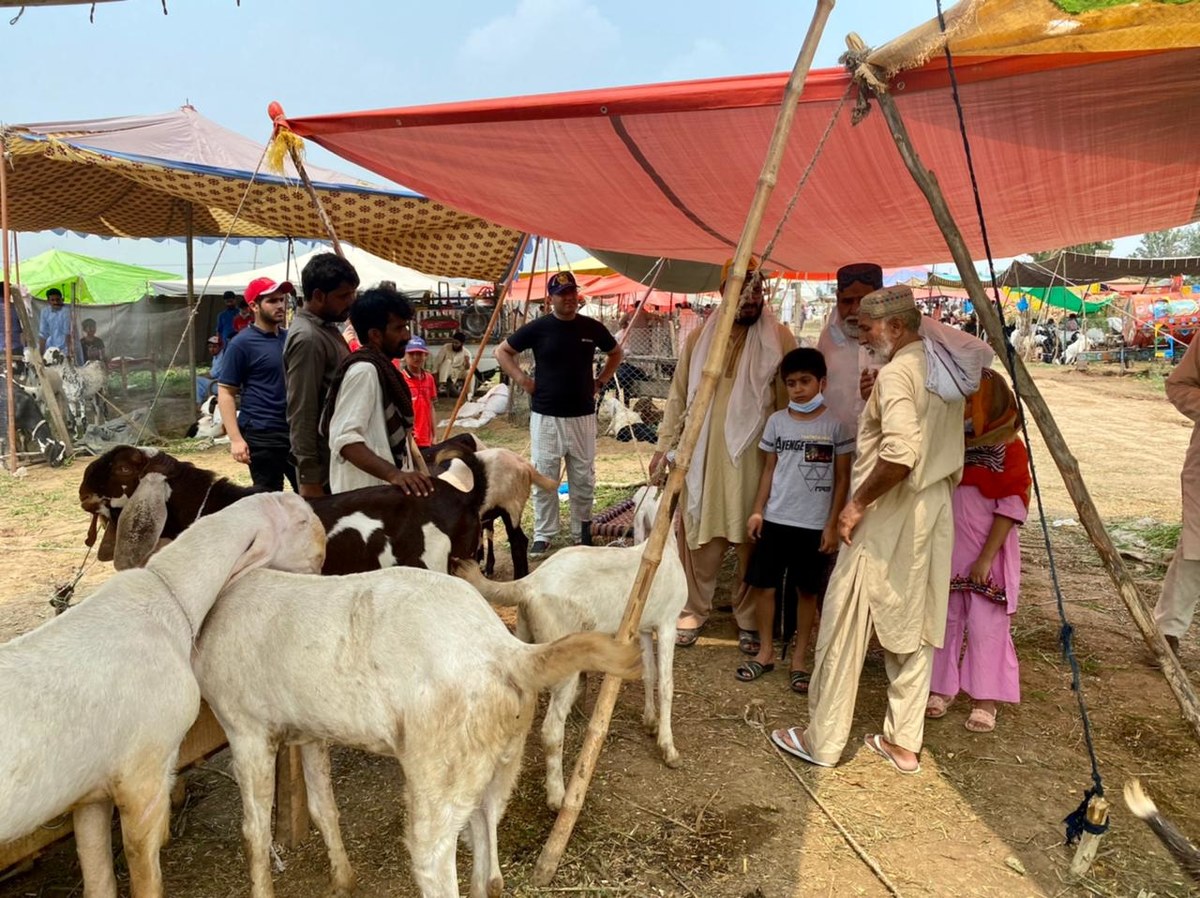
Customers buy sacrificial animals at the Sangjani animal market in Islamabad, Pakistan, on July 17, 2021. (AN Photo)


