

Hajj 2021 explained: Kiswa

1 / 10
The Kiswa, or Kiswat Al-Kaabah — which means “pall” in Arabic — is the cloth that covers the Kaaba in Makkah’s Grand Mosque. (SPA)
2 / 10
The Kiswa, or Kiswat Al-Kaabah — which means “pall” in Arabic — is the cloth that covers the Kaaba in Makkah’s Grand Mosque. (SPA)
3 / 10
The Kiswa, or Kiswat Al-Kaabah — which means “pall” in Arabic — is the cloth that covers the Kaaba in Makkah’s Grand Mosque. (SPA)
4 / 10
The Kiswa, or Kiswat Al-Kaabah — which means “pall” in Arabic — is the cloth that covers the Kaaba in Makkah’s Grand Mosque. (SPA)
5 / 10
The Kiswa, or Kiswat Al-Kaabah — which means “pall” in Arabic — is the cloth that covers the Kaaba in Makkah’s Grand Mosque. (SPA)
6 / 10
The Kiswa, or Kiswat Al-Kaabah — which means “pall” in Arabic — is the cloth that covers the Kaaba in Makkah’s Grand Mosque. (SPA)
7 / 10
The Kiswa, or Kiswat Al-Kaabah — which means “pall” in Arabic — is the cloth that covers the Kaaba in Makkah’s Grand Mosque. (SPA)
8 / 10
The Kiswa, or Kiswat Al-Kaabah — which means “pall” in Arabic — is the cloth that covers the Kaaba in Makkah’s Grand Mosque. (SPA)
9 / 10
The Kiswa, or Kiswat Al-Kaabah — which means “pall” in Arabic — is the cloth that covers the Kaaba in Makkah’s Grand Mosque. (SPA)
10 / 10
The Kiswa, or Kiswat Al-Kaabah — which means “pall” in Arabic — is the cloth that covers the Kaaba in Makkah’s Grand Mosque. (SPA)
Short Url
Updated 19 July 2021
Follow

Hajj 2021 explained: Kiswa

  • Specialist team replaces Kaaba cloth

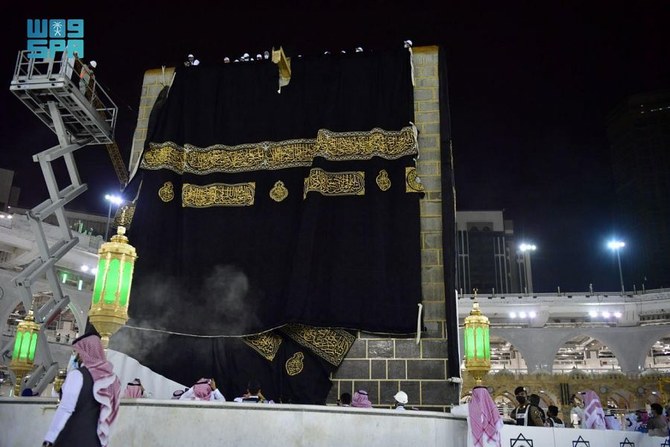
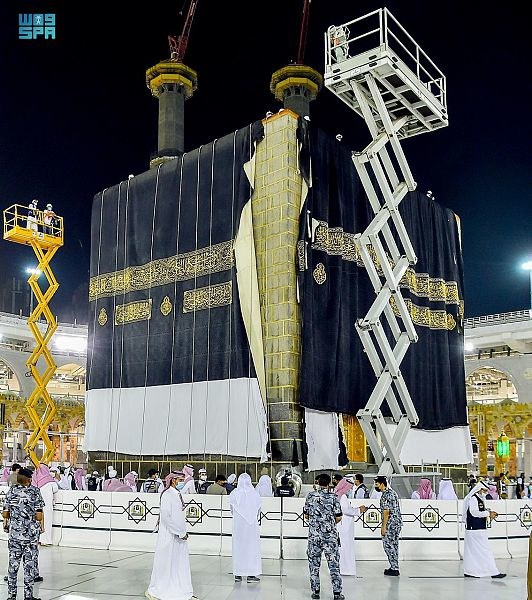
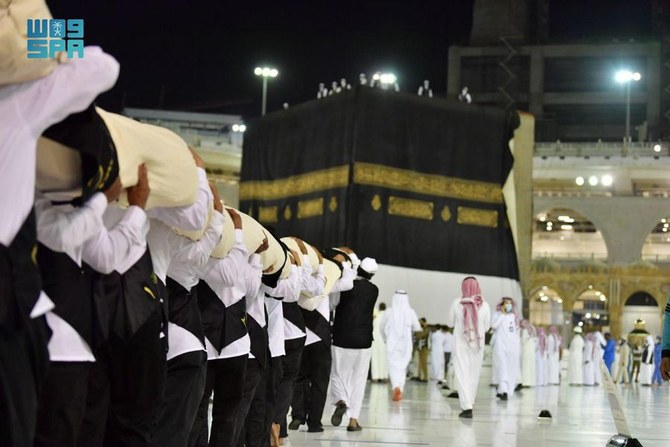
On Monday, The General Presidency for the Affairs of the Two Holy Mosques replaced the covering of the Kaaba.

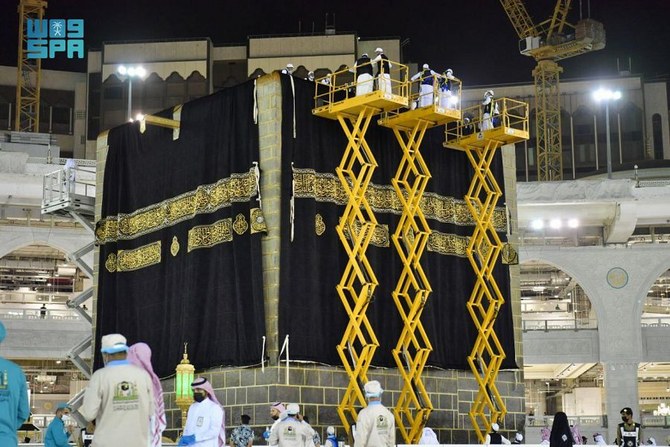
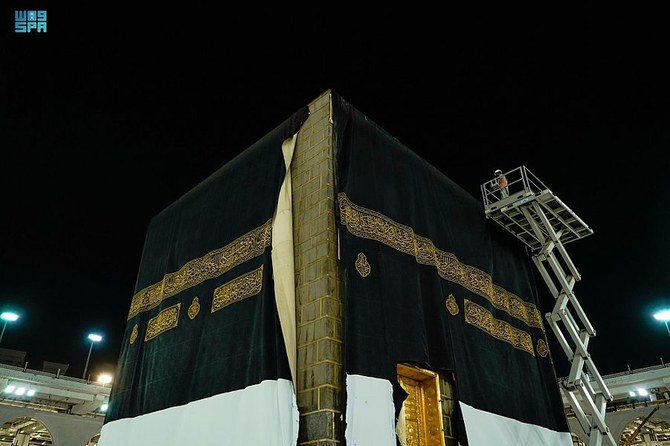
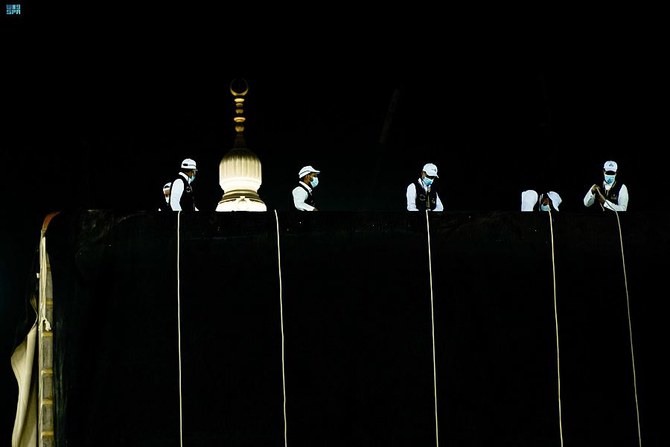
The specialist team from the King Abdul Aziz Complex for Holy Kaaba Kiswa dismantled the old kiswa and installed the new one.

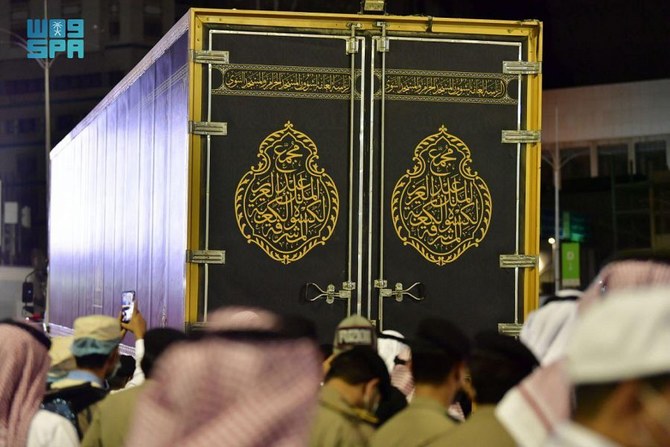
The Kiswa, or Kiswat Al-Kaabah — which means “pall” in Arabic — is the cloth that covers the Kaaba in Makkah’s Grand Mosque.

Every year, on the ninth day of the month of Dhu Al-Hajjah, the day pilgrims leave for the plains of Mount Arafat during the Hajj pilgrimage, the Kaaba is draped with a new kiswa. The old one gets cut into pieces and given to visiting foreign Muslim dignitaries and organizations.

The kiswa consists of 47 pieces of cloth. Each piece is 14 meters long and 101 centimeters in breadth. The kiswa is wrapped around the Kaaba and fixed to its base with copper rings.

It is made of black silk textile with inscriptions embroidered in gold and silver wire. These inscriptions include verses from the Qur’an and supplications to Allah.

The cost of making the kiswa is around SR17 million. The entire cover is 658 sq. meters in length and is comprised of 670 kg of pure silk, and 150 kg of pure gold and silver in the thread used for the embroidery.

According to Arab folklore, the tradition of draping the kaabah goes back to 390-420 CE, when the king of Himyarite Kingdom in Yemen, King Tuba Abu Karab As’ad, ordered cloth to cover the Kaaba for the first time, during the rule of the Jurhum tribe in Makkah.

The tradition continued for centuries, including the reign of Prophet Muhammad. The Kaaba was draped over for years without removing the old kiswas. Then the Abbasid King, King Al-Nasir, established the new practice of draping the Kaaba with only one layer as he saw that accumulated Kiswas could cause damage to the holy site.

Although the known color of kiswa is black, the colors of the kiswa would change during the reigns of various rulers and caliphs. The Prophet Muhammad and his caliphs used a white color for the kiswa. Red, green and black have all been used, until King Al-Nasir and King Al-Ma’mun agreed that black should be the color of the kiswa.

The cloth was be manufactured in Egypt from the time of Ayyubids to the Ottoman Empire. Amir Al-Hajj, the commander of the Hajj caravan, was responsible for delivering the kiswa from Egypt to Makkah. In 1927, the manufacture was partially moved from Egypt to Makkah before it was fully relocated in 1962.



Saudi FM joins Arab counterparts in talks with Slovenia on Gaza, regional stability

Updated 06 February 2026
Follow

Saudi FM joins Arab counterparts in talks with Slovenia on Gaza, regional stability

  • Prince Faisal and Tanja Fajon later signed general cooperation agreement aimed at enhancing ties between Kingdom and Slovenia

LJUBLJANA: Saudi Foreign Minister Prince Faisal bin Farhan held talks with Slovenia’s Deputy Prime Minister and Minister of Foreign and European Affairs Tanja Fajon in Ljubljana on Friday, as he joined Arab counterparts for an expanded meeting focused on Gaza and wider regional developments.

Prince Faisal met Fajon separately to review Saudi-Slovenian relations and explore ways to strengthen cooperation across various fields, the Saudi Press Agency reported.

The two sides later signed a general cooperation agreement aimed at enhancing ties between the Kingdom and Slovenia and intensifying joint efforts to support further progress and prosperity for both countries, SPA added.

The expanded ministerial meeting also brought together Jordanian Deputy Prime Minister and Foreign Minister Ayman Safadi, Egyptian Foreign Minister Badr Abdelatty, Bahraini Foreign Minister Abdullatif Al-Zayani and Qatar’s Minister of State for Foreign Affairs Sultan Al-Muraikhi.

During the talks, ministers discussed ways to bolster regional and international security and stability, with a focus on the situation in Gaza.

They stressed the need to uphold the ceasefire agreement between Israel and Hamas, ensure its full implementation and deliver sufficient and sustainable humanitarian aid to the enclave.

The officials also reviewed efforts to advance US President Donald Trump’s peace plan and reiterated the importance of achieving a clear political horizon leading to an independent and sovereign Palestinian state along the 1967 borders, with East Jerusalem as its capital, based on the two-state solution.

They addressed developments in the occupied West Bank, calling for an end to illegal, unilateral Israeli measures and violations against Islamic and Christian holy sites in occupied Jerusalem, warning that such actions undermined de-escalation efforts.

The ministers praised Slovenia’s support for Palestinian rights and its recognition of a Palestinian state, and also discussed broader regional developments, ways to reduce escalation through dialogue, and efforts to resolve the Russia-Ukraine crisis.