

UAE embassy says 'attestation' of vaccination certificates not mandatory for Pakistani travelers

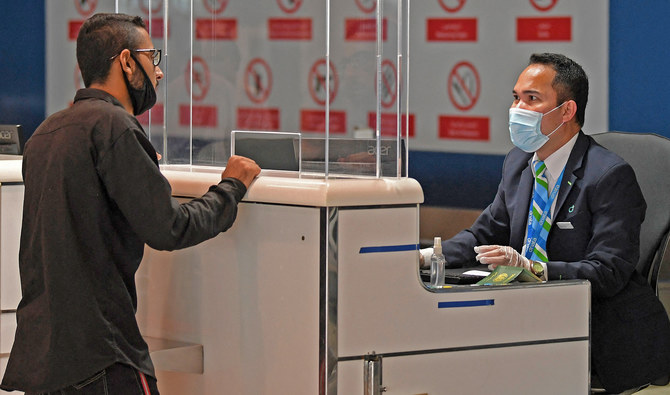
A Pakistani national checks in at the Dubai International Airport before leaving the Gulf Emirate on a flight back to his country, on May 7, 2020. (AFP/File)
Short Url
Updated 15 July 2021
Follow

UAE embassy says 'attestation' of vaccination certificates not mandatory for Pakistani travelers

  • The United Arab Emirates imposed travel restriction on Pakistan and three other nations in May, though Pakistani officials expressed hope it would review the decision
  • The UAE is Pakistan’s largest trading partner in the Middle East and home to more than 1.6 million Pakistani nationals

ISLAMABAD: Passengers from Pakistan are not required to get their coronavirus vaccine certificates attested by the diplomatic mission of the United Arab Emirates before flying to the Gulf state, clarified the UAE authorities on Thursday.

Earlier, local publications reported that the Arab country had made it mandatory for travelers from Pakistan to carry attested COVID-19 vaccine certificates.

However, the UAE embassy clarified in a Twitter post there was no such travel requirement currently.

The UAE imposed restrictions on travelers from four countries, including Pakistan, on May 12.

However, the foreign office spokesperson Zahid Hafeez Chaudhri expressed hope last month that the Arab country would review its decision since the COVID-19 situation was gradually improving in Pakistan.

In recent months, Pakistan has ramped up its vaccination program and administered over 21 million doses since the beginning of the nationwide inoculation campaign.

The UAE is Pakistan’s largest trading partner in the Middle East and home to more than 1.6 million Pakistani nationals.

Pakistan has also increased the capacity of inbound international flights by 50 percent from today to facilitate overseas Pakistanis ahead of the Islamic festival of Eid Al-Adha next week.


Pakistan to begin first phase of Hajj 2026 trainings from today

Updated 31 December 2025
Follow

Pakistan to begin first phase of Hajj 2026 trainings from today

  • Training programs to be held in phases across Pakistan till February, says religion ministry
  • Saudi Arabia allocated Pakistan a total quota of 179,210 pilgrims for Hajj 2026

ISLAMABAD: Pakistan’s religious affairs ministry has said that it will begin the first phase of mandatory Hajj 2026 training for pilgrims intending to perform the pilgrimage from today, Thursday.

The one-day Hajj training programs will be held in phases across the country at the tehsil level until February. The ministry directed intending pilgrims to bring their original identity cards and the computerized receipt of their Hajj application to attend the training sessions.

“Pilgrims should attend the one-day training program according to their scheduled date,” Pakistan’s Ministry of Religious Affairs (MoRA) said in a statement.

The ministry said training schedules are being shared through the government’s Pak Hajj 2026 mobile application as well as via SMS. It added that details of the schedule are also available on its website.

According to the ministry, training programs will be held in Abbottabad on Jan. 2; Ghotki, Thatta and Kotli on Jan. 3; and Tando Muhammad Khan and Khairpur on Jan. 4.

Hajj training sessions will be held in Rawalakot, Badin and Naushahro Feroze on Jan. 5, while pilgrims in Fateh Jang, Dadu and Tharparkar will receive the training on Jan. 6.

The ministry said training programs will be conducted in Umerkot and Larkana on Jan. 7, followed by sessions in Mirpurkhas, Shahdadkot and Mansehra on Jan. 8.

Pakistan’s religious affairs ministry has previously said these trainings will be conducted by experienced trainers and scholars using multimedia.

It said the training has been made mandatory to ensure that intending pilgrims are fully aware of Hajj rituals and administrative procedures.

Saudi Arabia has allocated Pakistan a quota of 179,210 pilgrims for Hajj 2026, of which around 118,000 seats have been reserved under the government scheme, while the remainder will be allocated to private tour operators.

Under Pakistan’s Hajj scheme, the estimated cost of the government package ranges from Rs1,150,000 to Rs1,250,000 ($4,049.93 to $4,236), subject to final agreements with service providers.