LONDON: OPEC stuck to its forecast for a strong recovery in world oil demand in the rest of 2021 and predicted oil use would rise further in 2022 similar to pre-pandemic rates, led by growth in China and India.
The Organization of the Petroleum Exporting Countries said in its monthly report on Thursday that demand next year would rise by 3.4 percent to 99.86 million barrels per day (bpd), averaging more than 100 million bpd in the second half of 2022.
Oil demand averaged 99.98 million bpd in 2019, according to OPEC.
“In 2022, healthy expectations for global economic growth in addition to improved containment of COVID-19 through the acceleration of vaccination programs, effective treatment and natural immunization, particularly in emerging and developing countries, along with frequent testing procedures, are assumed to spur consumption of oil next year to comparable pre-pandemic levels,” OPEC said in the report.
The report reflected OPEC’s confidence that world demand would recover robustly from the pandemic, allowing the group and its allies to further ease record supply curbs made in 2020. Some analysts had seen oil demand peaking in 2019.
OPEC also maintained its prediction that demand would grow by 5.95 million bpd in 2021.
Oil was trading just below $74 a barrel before the OPEC report was released. The price has climbed more than 40 percent so far this year with the help of supply cuts by OPEC and its allies, a group known as OPEC+.
OPEC+ agreed in April to gradually ease output cuts from May to July and has yet to decide on plans for the rest of 2021 after a dispute between Saudi Arabia and the United Arab Emirates disrupted talks. Reuters reported on Wednesday that the two had reached a compromise.
Thursday’s report showed higher OPEC oil output, reflecting the decision to pump more. Output in June rose 590,000 bpd to 26.03 million bpd, OPEC said.

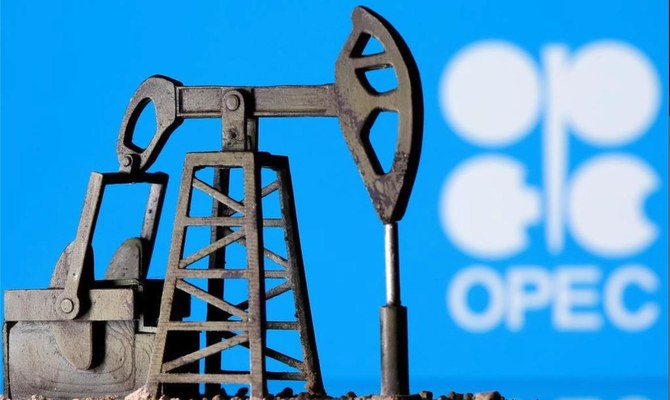
OPEC sees world oil demand reaching pre-pandemic level in 2022
https://arab.news/gug77
OPEC sees world oil demand reaching pre-pandemic level in 2022
- Demand next year to rise by 3.4 percent to 99.86 million bpd
- Demand to average more than 100 million bpd in the second half of 2022
Islamic banks’ market share in Turkiye rises to 9.2%: Fitch Ratings
RIYADH: Islamic banks in Turkiye lifted their asset market share to 9.2 percent in 2025 from 8.1 percent a year earlier, as financing and deposits outpaced the broader banking sector, a new analysis showed.
In its latest report, Fitch Ratings said financing and deposit market shares rose to 7.9 percent and 10.4 percent, respectively, by the end of 2025, compared with 7.3 percent and 9.4 percent in 2024.
The agency noted that new digital Islamic banks are emerging in the country, with investment from Gulf Cooperation Council countries expected to continue.
Turkiye’s strong ties with Islamic countries across the Balkans, Africa and the Middle East support the development of its Islamic banking sector, attracting investors and contributing to the industry’s growth.
In its latest report, Fitch stated: “Three recently established private Islamic banks (two digital) grew rapidly in the first nine months of 2025. Investment in digital participation banking from the Gulf Cooperation Council countries underscores the potential for further investment from the region.”
It added: “Planned establishment of new participation banks, and rapid growth of recently established banks – albeit from small bases – means that the segment landscape may be reshaped in 2026.”
Dubai Islamic Bank PJSC’s investment in digital bank TOM underscores the potential for further GCC investment.
Turkish regulators have approved the establishment of Halk Katilim Bankasi A.S. and Adil Katilim Bankasi A.S. (digital), while BIM Birlesik Magazalar A.S.’s application is pending.
Fitch added that state-owned participation banks may merge or pursue initial public offerings, potentially reshaping the banking landscape.
The report predicts Islamic banks’ market share will rise further in 2026, supported by strong internal capital generation and growth appetite. However, the non-performing financing ratio may increase moderately due to high inflows.
“The segment’s non-performing financings ratio deteriorated to 2 percent at end-2025 compared to 1.2 percent in 2024 but remained below the sector average of 2.5 percent,” said Fitch.
It added: “We expect pressure to persist given still-high financing rates, high but declining inflation, and the sensitivity of unsecured retail (lower share than conventional banks) and SME segments to economic cycles. We forecast a moderate increase in the segment NPF ratio in 2026.”