BEIRUT: The families of vulnerable children in Lebanon have started receiving UNICEF cash handouts in US dollars as the UN children’s fund seeks to put a stop to hefty losses in aid due to unfavorable exchange rates at Lebanese banks.
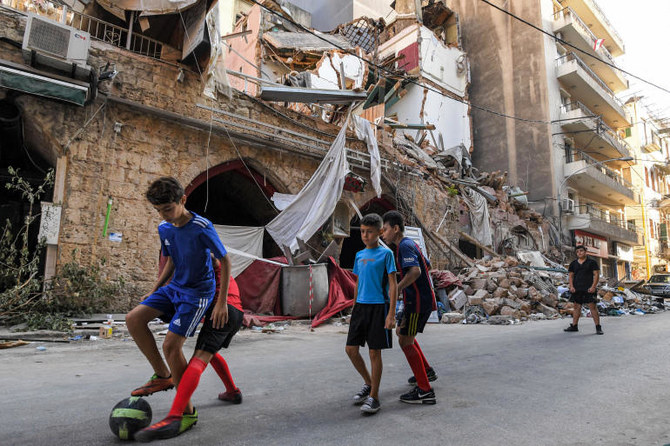
The new initiative, named Haddi, or “next to me” in Arabic, provides cash aid to 70,000 Lebanese, Syrian and Palestinian children at risk of child labor, early marriage or exclusion from schooling during Lebanon’s deep economic crisis.
“UNICEF chose to explore the risks and feasibility aspects related to switching to USD disbursements ... we assessed that the benefits were important and made the decision to switch to USD,” the fund told the Thomson Reuters Foundation by email.
To get the full value of aid to those who need it, UNICEF’s Haddi program includes a new cash disbursal mechanism that cuts out private banks and instead channels aid in greenbacks to beneficiaries via money transfer services.
Families with one child will receive monthly assistance of $40, rising to $60 for those with two children and $80 for larger families, allowing them to choose how to spend it “to ensure people retain some dignity in the current situation.”
UK-based charity Save the Children said on Tuesday it had documented a “dramatic increase” in child labor in Lebanon this year, identifying 306 cases so far compared to 346 in all of 2020.
Children as young as five are selling fuel on the streets and collecting scrap metal or plastic, and more than one million minors — Lebanese and refugees — now need support, it said.
Lebanon’s outgoing deputy prime minister, who has been involved in aid talks, could not immediately be reached for comment on the new UNICEF strategy, nor could the caretaker ministers of finance or social affairs.
UNICEF has now effectively left a program known as LOUISE, which also involves the UN refugee agency (UNHCR) and the World Food Programme (WFP), to disburse aid via the Banque Libano-Francaise (BLF) bank.
A Thomson Reuters Foundation investigation in June found unfavorable conversion rates used by the bank had led to losses in aid of about $250 million via the program since 2019. The bank has declined to comment on the rates used.
The foreign exchange losses stemmed from a plunge in the value of the Lebanese pound since the country’s economy began to collapse in late 2019, sending prices soaring and forcing many Lebanese into poverty.
During 2020 and the first four months of 2021, banks exchanged dollars for UN agencies at rates on average 40 percent lower than the market rate, thereby slashing the amount of money reaching beneficiaries.
Though LOUISE agencies have since received progressively better exchange rates, they still lag behind the market price.
Some UN agencies, donor nations and Lebanese officials have raised concerns that paying out dollars to refugees, the country’s primary aid beneficiaries, would fuel tensions between them and members of host communities.
But including Lebanese children in the Haddi program and using money transfer outlets should alleviate such risks, UNICEF said.
“Providing cash through ATMs ... often leads to crowding and raises tensions in the community. To avoid this, Haddi does not use ATMs, instead leveraging a much larger network of money transfer branches across the entire country,” UNICEF said.
It said small-scale surveys among the first beneficiaries had not highlighted any safety or exchange rate problems.
“The response so far has been one of relief,” the fund said.


![]()

Stung by Lebanon currency loss, UNICEF gives aid handouts in dollars
Short Url
https://arab.news/m85e5
Stung by Lebanon currency loss, UNICEF gives aid handouts in dollars
- The new initiative, named Haddi, or ‘next to me’ in Arabic, provides cash aid to 70,000 Lebanese, Syrian and Palestinian children
- Families with one child will receive monthly assistance of $40, rising to $60 for those with two children and $80 for larger families


Latest updates


© 2026 SAUDI RESEARCH & PUBLISHING COMPANY, All Rights Reserved And subject to Terms of Use Agreement.