



JEDDAH: As the number of certain species of sea turtles declines, NEOM and King Abdullah University of Science and Technology (KAUST) have taken it upon themselves to ensure their preservation and protection.
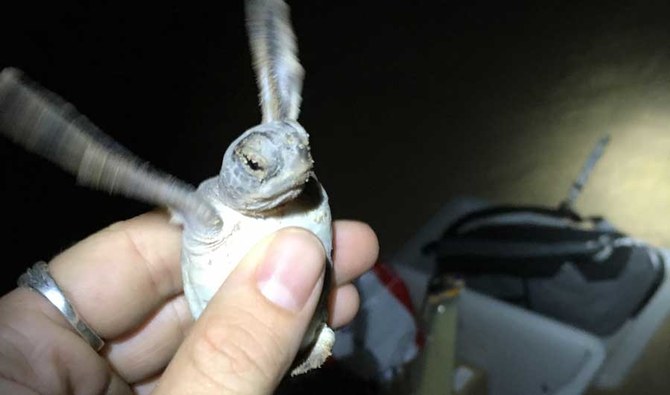
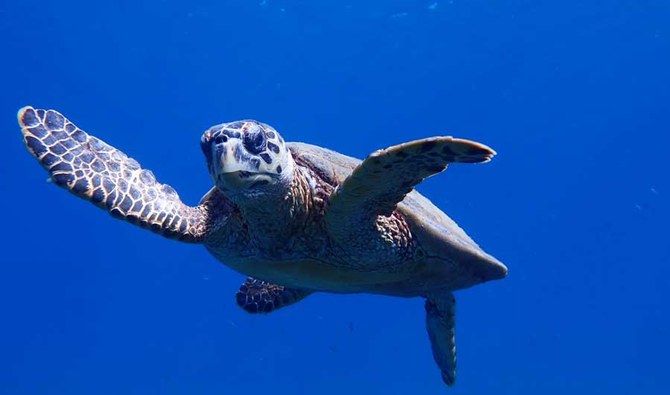
The Red Sea is home to five out of seven of the different sea turtle species, including the endangered green turtle and hawksbill turtle, which is critically so. NEOM, though, has become a recognized safe haven for them.
Carlos Duarte, KAUST’s distinguished marine bioscientist, explained that the turtles are endangered due to being hunted excessively for their distinctive shells.
“Their carapaces are popular historically in Europe and are still being hunted and then sold on the black market today,” said Duarte. “Their shells are used to make hair combs, bracelets, sunglasses and other materials. Some just buy the shells as decorative pieces.”
Duarte added that the collection of turtle eggs is not as prevalent as it used to be, but still occurs and impacts population numbers.
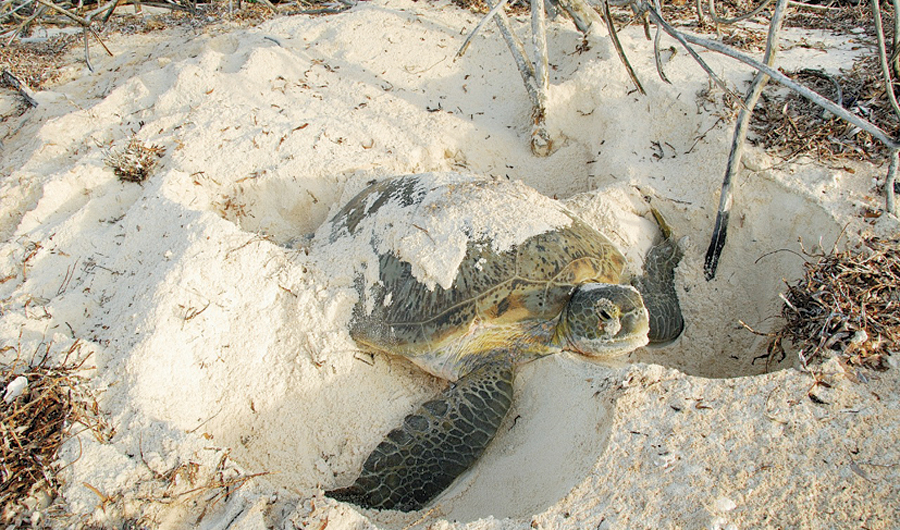
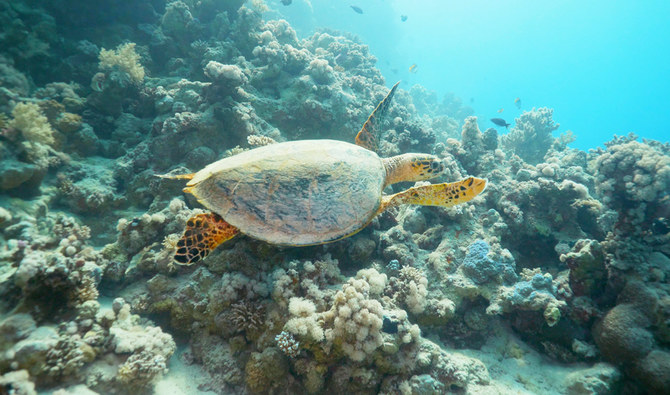
The Red Sea’s coral reefs are well maintained and in very good health, so hawksbill turtles can find good feeding grounds. (Shutterstock)
Turtles face other threats from humans, too. “Since sea turtles are reptiles, they will come to the surface of the water to breathe and the fast metal propellers from boats could puncture their shells, and at times, even their lungs, since they’re placed right underneath their carapaces,” Lyndsey Tanabe, a doctoral student at KAUST working on the nesting ecology and conservation of sea turtles in the Red Sea, explained.
“Often the turtles get entangled in plastic under the water, meaning they can drown if they don’t free themselves in time to reach the surface to breathe.”
According to Tanabe, the most common way turtles drown is by getting entangled in ghost nets thrown by fishermen with the intention of trapping fish; the nets are usually discarded and left in the water. The turtles also tend to mistake pieces of plastic for jellyfish, which they feed on.
Duarte shared with Arab News how the Red Sea shores are safe nesting sites for endangered turtles, due to the health of the reefs and the protection the Kingdom provides them.
“Fortunately, the Red Sea’s coral reefs are well maintained and in very good health, so the hawksbill turtles can find good feeding grounds. It is illegal in the Kingdom to hunt them and they are well taken care of and protected here,” Duarte said.
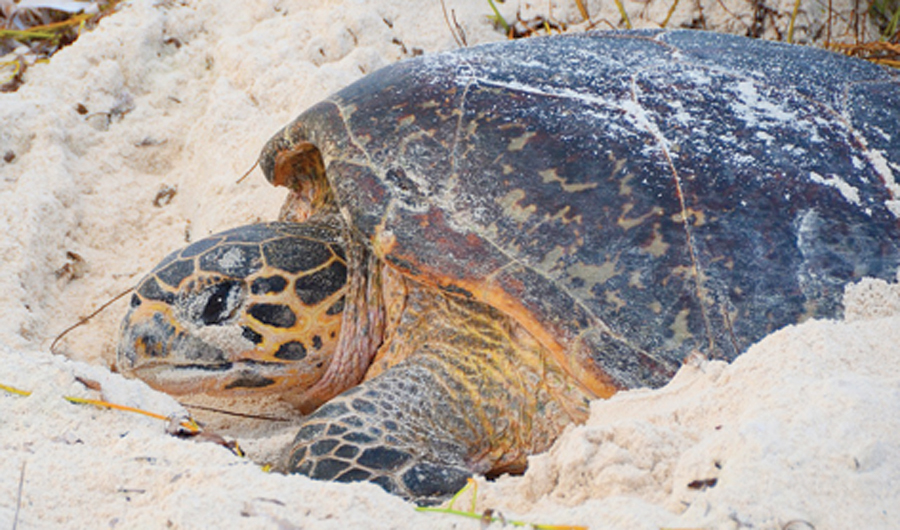
The Red Sea’s coral reefs are well maintained and in very good health, so hawksbill turtles can find good feeding grounds. (Shutterstock)
He listed the different dependable nesting sites for the turtles along the Kingdom’s coast, and mentioned that the best area is what is now under NEOM’s stewardship, which is located in the northwest of Saudi Arabia.
In NEOM, various programs and projects are being implemented with the intention of protecting endangered species and conserving the environment.
NEOM is committed to protecting species in all four categories of endangerment — least concerned, vulnerable, endangered and critically endangered — such as the sooty falcon, the humpback dolphin or the whale shark.
However, there is a considerably higher focus on the critically endangered species such as the hammerhead shark and the hawksbill sea turtle.
The director of the marine conservation environment department in NEOM, Dr. Ameer Eweida, stated that NEOM’s shores and coast are perfect nesting and feeding sites for sea turtles, due to the region being the highest latitude in the world with a tropical marine climate. This makes its coral reefs and seagrass an ideal source of nutrients for the turtles.
FASTFACTS
• The Red Sea is home to 5 out of 7 of the different sea turtle species, including the endangered hawksbill and green turtles.
• The collection of turtle eggs is not as prevalent as it used to be, but still occurs and impacts population numbers.
• Often the turtles get entangled in plastic, meaning they can drown if they don’t reach the surface to breathe.
“What makes NEOM such a unique place for sea turtles is its offshore islands,” said Eweida. “They are easily accessible to these turtles and are safe environments for them to nest in. We found significant numbers of nests on all the islands — I’d say potentially about 60-70 percent of the turtles in the Red Sea have nested in NEOM’s islands.”
He also stated that the type of sand on the beaches of NEOM and its islands is excellent for nesting.
In addition to the natural environment in NEOM being perfect, there are strict guidelines NEOM’s beach visitors must follow in order to not disturb the sea turtles or harm their homes.
Eweida added that they developed buffers around the turtles’ nesting sites so as to protect them from construction.
Both NEOM and KAUST are running projects to help better understand the behaviors of sea turtles and work out how else they can be protected, and what they need to be protected from.
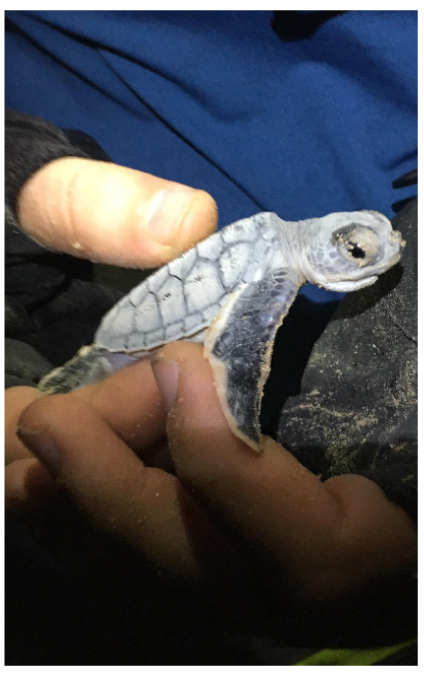
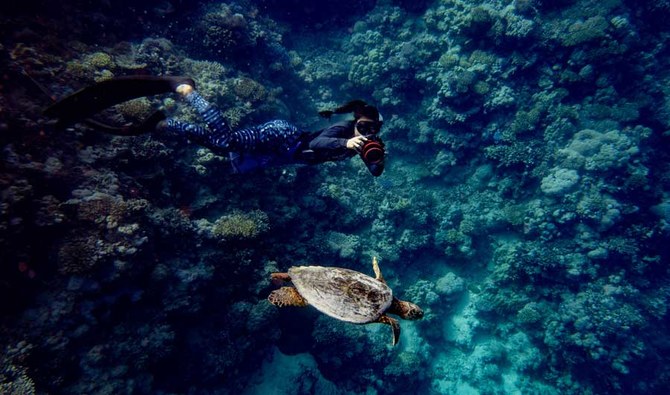
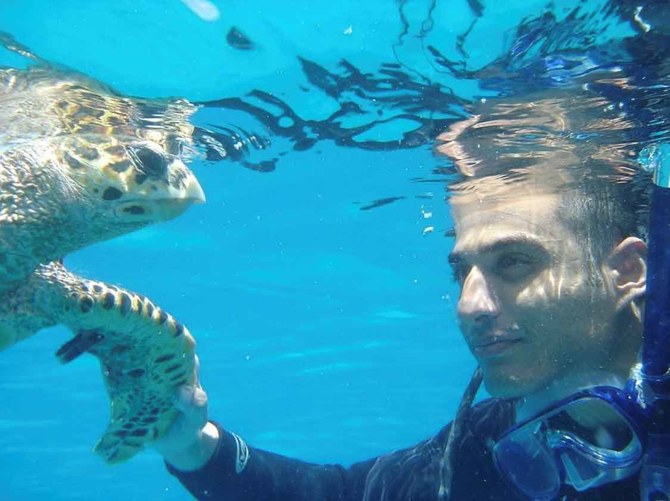
In KAUST, Duarte, collaborating with the Red Sea Development Co. and NEOM, ran a project which tagged and tracked turtles in the Red Sea to understand their use of the coastal habitat as well as the size, frequency and distribution of the animals.
Sea turtles’ existence is vital for the basic function of the marine ecosystem. “Sea turtles are what we call keystone species,” said Eweida, “which means they are critical for the functioning of a system because they influence other species around them and are responsible for their balance. Naturally, when a keystone species is removed from a system, that balance and order falls apart, harming all other species.”
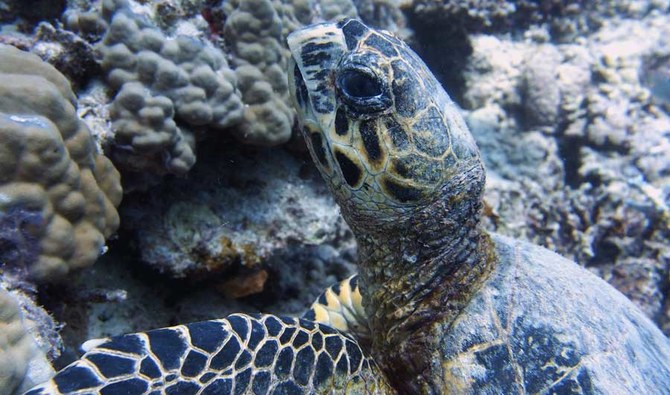
Tanabe added that Hawksbill turtles eat mostly sponges, “and sponges try to take up more space than coral reefs, damaging them. So by removing these sponges, the hawksbill turtles are keeping the coral reefs habitable and healthy for other marine species.”
Duarte said that without sea turtles, there would be an overgrowth in the jellyfish population, highlighting the important roles of green sea turtles in an ecosystem. “Since they feed on seagrass, without them there would be an excess amount of seagrass which will affect the oxygen level, which will of course lead to a high mortality rate. It’s a chain reaction. That’s why we have to protect them.”
Although sea turtles off the west coast of the Kingdom are well protected, it is important to note that they are still threatened by other natural elements that organizations such NEOM or KAUST cannot shield them from.
Sea turtles, like many other species, tend to travel and migrate to other oceans, seas and beaches where hunting is still prevalent.
Climate change, meanwhile, is affecting all living things on Earth, and sea turtles are no exception. Temperatures in seas can determine turtles’ gender, which in turn can decrease the population of one gender if the temperature is at an extreme level.
The NEOM and KAUST experts said that individuals can make small changes that could have a “tremendously positive” impact on the lives of sea turtles. Some of these changes are as simple as reducing the use of plastic, not littering on the beaches or in the water — specifically nylon fishing lines, which can get wrapped around turtles’ flippers and dig into their bones — and keeping eyes open for nesting sites on beaches to avoid disturbing them.