


ISLAMABAD: Federal Minister for Information and Broadcasting, Chaudhry Fawad Hussain, said on Tuesday Pakistan had demanded that international press freedom group Reporters Without Borders share the criteria it had used to include Prime Minister Imran Khan on a list of 37 world leaders “who crack down massively on press freedom.”
Two women, the prime ministers of India and Bangladesh and Hong Kong’s administrative chief, were also on the list. This is the first time in five years that the watchdog, known by its French initials RSF, has published its press freedom predators list.
“Pakistan is facing an international propaganda war in which [issues like] missing persons and freedom of expression are used [against it],” Hussain told Dunya News’ Nuqta-e- Nazar talk show, adding that the government had demanded that RSF share the standards it had used to compile the list.
RSF has said cases of brazen censorship had multiplied in Pakistan since Khan became prime minister in August 2018, with newspaper distribution interrupted, media outlets threatened with the withdrawal of advertising and signals of television channels jammed.
“Journalists who cross the red lines have been threatened, abducted and tortured,” RSF said. “In the shadows, behind Khan in the limelight, Pakistan is reliving some of the worst moments of its past military dictatorships.”
Hussain rejected this as a “conspiracy” against Pakistan in a Twitter post, saying it was part of an effort to bring the country under regulatory frameworks like the Financial Action Task Force (FATF), a global dirty money watchdog that in 2018 put Pakistan on a grey list of nations with inadequate terror funding controls.
ایک سازش کے تحت پاکستان میں آزادی اظہار پر بندش کا بیانیہ دیا جا رہا ہے، پاکستان کو FATFاوراس جیسے دیگر ریگولیٹری نیٹ ورکس میں لانے کیلئے ایک مخصوص گروپ اس پروپیگنڈے کا حصہ بنتے ہیں باہر سے جعلی گروپ خبر شروع کرتے ہیں پاکستان میں ایک مخصوص ٹولہ جانتے نہ اس بیانیےکو آگے بڑھاتا ہے
— Ch Fawad Hussain (@fawadchaudhry) July 6, 2021
Dr. Arslan Khalid, the prime minister’s focal person on digital media, also rejected the report in a Twitter post, calling it “typical propaganda.”
Typical propaganda report by @RSF_inter. Journalists who live abroad hav opted tht life themselves.They were never attacked here nor intimidated anywhere else.If this had been true,how come Gvt authorities abroad hav never said anything abt Pak involvement in any of the attacks pic.twitter.com/cyxyUEnd5c
— Dr Arslan Khalid (@arslankhalid_m) July 6, 2021
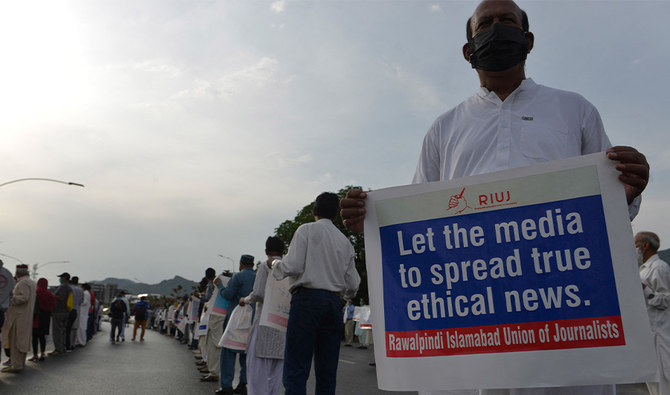
In the backdrop of these developments, the Pakistan Federal Union of Journalists (PFUJ) said it was struggling to ensure the safety and security of working journalists across the country while pressing the government to “lift unannounced censorship” on the media.
“The government has been trying to suppress critical voices in the media by adopting different tactics,” Nasir Zaidi, PFUJ secretary general, told Arab News. “This is the darkest age for press freedom.”
The Pakistani government vehemently denies it censors the press or harasses journalists.


