Talaat Moustafa posts record first-half sales on Noor project launch

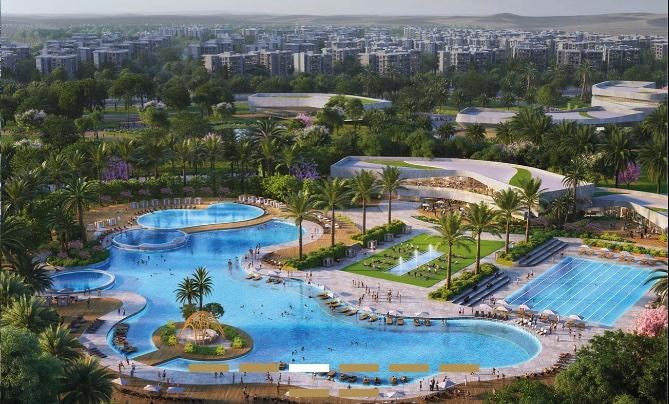
Noor Capital Gardens is expected to cost 500 billion Egyptian pounds to build. (Supplied)
Short Url
Updated 06 July 2021
Follow

Talaat Moustafa posts record first-half sales on Noor project launch

  • Noor generated 15 billion Egyptian pounds of sales in the three weeks after its launch
  • Talaat Moustafa raises full-year sales forecast

RIYADH: Talaat Moustafa Holding Group (TMG) achieved record sales of 21 billion Egyptian pounds ($1.34 billion) in the first half of the year as it saw strong demand for its Noor Capital Gardens project, Asharq reported.

Noor, slated to be Egypt’s first green smart city, generated 15 billion Egyptian pounds of sales within three weeks of launching, prompting TMG to raise its revenue forecast for the current year to 30 billion Egyptian pounds, it said on Sunday

TMG sales have jumped by 377 percent compared to the same period last year, and 79 percent compared to the first half of 2019, according to Asharq calculations.

Noor Capital Gardens is located on an area of 21 million square meters in front of the New Administrative Capital, east of Cairo.

TMG purchased the project’s land from the New Urban Communities Authority six months ago. The group will pay the value of the land to the Authority through a mixture of finance and housing after its construction.

Noor’s cost is expected to be about 500 billion Egyptian pounds, with sales in excess of 800 billion Egyptian pounds.


Riyadh sees 24% decrease in infrastructure project duration in 2025

Updated 52 min 1 sec ago
Follow

Riyadh sees 24% decrease in infrastructure project duration in 2025

RIYADH: Saudi Arabia’s capital recorded a 24 percent decrease in the execution time of infrastructure projects in 2025 compared to 2024, with the average implementation period falling from 34 days to 26 days.

According to Riyadh Infrastructure Projects Center, the improvement reflects effective coordination among various partners and stakeholders, alongside steady growth in project volumes.

This reduction came despite a rise in the total number of permits from more than 150,000 in 2024 to over 195,000 in 2025, marking a 29 percent increase in energy, water, telecommunications, and road projects in the region.

RIPC explained that the improvement is directly linked to the implementation of a comprehensive infrastructure plan and enhanced pre-planning, aligned with its strategic approach to managing projects through an integrated value chain covering planning, coordination, and enablement.

This approach, RIPC noted, relies on continuous regulatory and standard updates to boost procedural efficiency, minimize time and spatial conflicts, and reduce duplication of work.

The center highlighted that this approach reflects its regulatory role in unifying operational vision, improving stakeholder coordination, activating tools that enhance execution quality, and ensuring alignment with quality-of-life objectives and asset protection.

Operational indicators also reflected growth in project lengths, increasing from 9,490 km to 11,784 km — a 24 percent rise — alongside a surge in handled reports, which rose from 101,102 to 233,101, marking a 131 percent increase, highlighting an expanded monitoring scope and improved efficiency in managing infrastructure-related reports.

Supervisory visits rose from 84,316 in 2024 to 292,794 in 2025, a 247 percent increase, alongside an improvement in license compliance rates from 91 percent to 92 percent. These results reinforce the center’s commitment to strengthening adherence to safety and quality standards through effective oversight and standardized compliance guidance.

RIPC also highlighted that these achievements reflect its strategic focus on minimizing obstacles from infrastructure projects and reducing their urban impact during implementation, adding that this approach contributes to improving the city’s urban landscape, limiting closures and disruptions, and enhancing the daily experience of Riyadh residents.

It affirmed its continued efforts to advance planning, coordination, digitalization, and data management, while updating the regulatory and standards framework as part of a long-term strategic roadmap.

The center emphasized that this strategy is designed to keep pace with project expansion, boost organizational efficiency and sustainability, and support the development of a more integrated and harmonious urban environment for the city and its residents.