

Nearly three-quarters of Lebanese families struggle to secure enough food amid soaring inflation

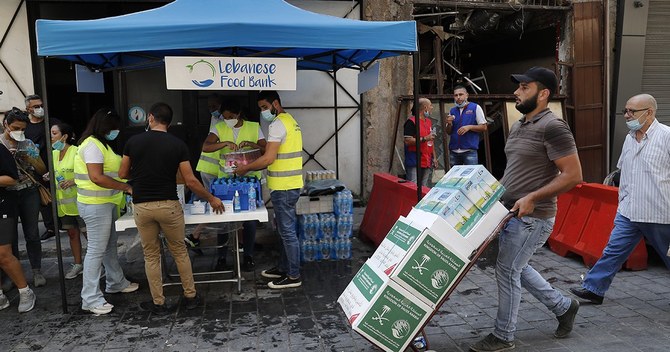
The high inflation in food prices is linked to the deterioration of the exchange rate of the Lebanese pound against the US dollar. (AP)
Short Url
Updated 06 July 2021
Follow

Nearly three-quarters of Lebanese families struggle to secure enough food amid soaring inflation

  • Lebanon’s currency, pegged to the dollar since the 1990s, has lost more than 91 percent of its value

DUBAI:  A staggering 72 percent of local families across Lebanon will face challenges to make ends meet given the severe economic downturn coupled with skyrocketing inflation, according to Crisis Observatory.

The Crisis Observatory is an interdisciplinary research program launched by the American University of Beirut (AUB) to track the repercussions of the economic crisis in Lebanon.

The report, based on price tables from the Ministry of Economy and Trade, found that a family of five now spends more than three times the minimum wage for main meals for a month — or about LL2.1 million a month — while about three-quarters of families have a monthly income of less than LL2.4 million.

The price of sunflower oil has increased by more than 1,100 percent since the summer of 2019, that is, before the financial and economic collapse kicked off, while the price of beef increased by 627 percent and ordinary rice by 545 percent.

Eggs, meanwhile, saw their price increase by 450 percent, and the price of milk doubled by 275 percent.

In a separate report issued last week by UNICEF, children in Lebanon are bearing the brunt of one of the world’s worst economic collapses in recent times, which will likely rank in the top 10, possibly top three, most severe crises episodes globally since the mid-nineteenth century according to the World Bank.

The report found that over 30 percent of children went to bed hungry and skipped meals in the past month, with 60 percent of households having to buy food on credit or borrow money.

The high inflation in food prices is linked to the deterioration of the exchange rate of the Lebanese pound against the US dollar, the report noted, as Lebanon imports the majority of its food needs from commodities or raw materials from abroad.

Lebanon’s currency, pegged to the dollar since the 1990s, has lost more than 91 percent of its value since mass protests erupted in October 2019.

It is currently trading at just short of LL18,000 per greenback on the black market as the central bank struggles to subsidize essential raw materials and products like wheat, fuel and medicine.

Since the beginning of 2021, bread prices have been hiked eight times because of the central bank’s cessation of subsidies on sugar and yeast.

The per-gram price of large bread bundles in bakeries rose by 23 percent, selling at LL3,500 for an 865 gram bundle.

To make matters worse, bakeries have also been hit by fuel shortages, raising fears over potential hitches in bread production in the crisis-hit country.

However, late on Sunday, a fuel sector representative told a local radio station that two tankers laden with fuel would begin unloading diesel at the beginning of the week with hospitals, bakeries and generator owners being prioritized. 


Free trade negotiations between GCC, India mark new phase of partnership, says sec-gen

Updated 24 February 2026
Follow

Free trade negotiations between GCC, India mark new phase of partnership, says sec-gen

RIYADH: The Gulf Cooperation Council’s secretary-general affirmed that the negotiations for a free trade agreement between the GCC and India, and the signing of the joint statement, represents a new phase of strategic partnership.

Jasem Mohamed Al-Budaiwi said that this contributes to enhancing close cooperation and strengthening economic and trade ties, according to the Saudi Press Agency.

This came during the signing ceremony of the joint statement on launching the free trade agreement negotiations between the Al-Budaiwi and India’s Minister of Commerce and Industry, Piyush Goyal, which took place in New Delhi, on Tuesday.

During the signing ceremony, Al-Budaiwi said that the Terms of Reference, signed on Feb. 5, provide a comprehensive and clear framework for these negotiations. The two nations agreed to discuss enhancing cooperation in vital strategic areas, including trade in goods, customs procedures, and services.

Additionally, the framework covers Sanitary and Phytosanitary measures, intellectual property rights, cooperation on Micro, Small, and Medium Enterprises, along with other topics of mutual interest. This reflects the comprehensive nature of the agreement and its ability to keep pace with the future economy.

Al-Budaiwi expressed hope that these negotiations would lead to a comprehensive and ambitious free trade agreement that works to remove customs and non-customs barriers, enhance the flow of quality investments in both directions, and achieve further liberalization in trade and investment cooperation between the GCC and India for mutual benefit. 

This would provide a stimulating economic environment and an investment climate that opens broad horizons for the business sector, supports supply chains, and accelerates the pace of economic growth in line with the ambitious developmental visions of the GCC states. 

The top official affirmed the full readiness of the General Secretariat to host the first round of negotiations at its headquarters in Riyadh during the second half of this year.

The two sides held a meeting during which they reviewed the existing cooperation relations between the GCC and India and discussed ways to develop and elevate them to broader horizons, serving mutual interests and enhancing opportunities for strategic partnership between the two sides, particularly in the economic, investment, and trade fields.

They praised the role undertaken by the negotiating teams from both sides, appreciating the efforts contributing to reaching a comprehensive agreement that enhances economic integration and supports the smooth flow of trade between the two nations.