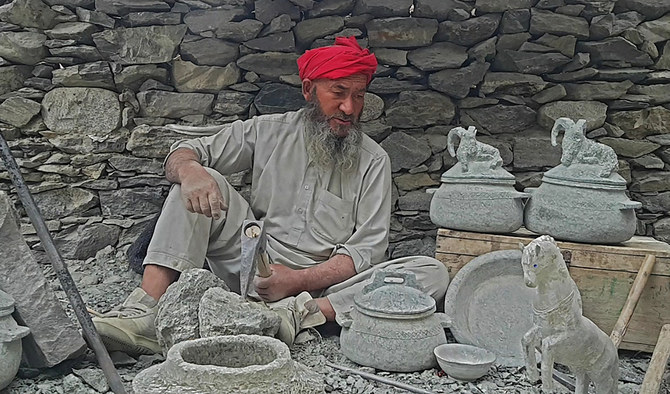

KHAPLU, GILGIT-BALTISTAN: Chorbat Valley, which stretches between the mountainous northern areas of Pakistan’s Gilgit-Baltistan and the mainly Buddhist Indian region of Ladakh, was once known as home to practitioners of an ancient art of stoneware that local historians say dates back to the Stone Ages.
Today, only a few people practice the craft in the valley, carving hard, granite-like stones known as “koro” into dinnerware. Most have learnt the technique from Ghulam Haider, a 71-year-old craftsman that many historians say is the last living master of the artform.
“I learnt these skills from my father.” Haider told Arab News. “When I started to work in my childhood, there were over 30 artisans in my village. Now, many have died, and many have left this work.”
It was a “very tough job,” Haider said, to find and cut the special stone from the valley’s mountains and then carve it into pots. But the technique had long been practiced in Gilgit-Baltistan, he said, where people preferred pots of stone over the more common pottery made from clay or mud that was found in other parts of Pakistan.
Yusuf Hussain Abadi, a historian of the Baltistan region and collector of traditional pottery, said Haider was the last stoneware master in the region.
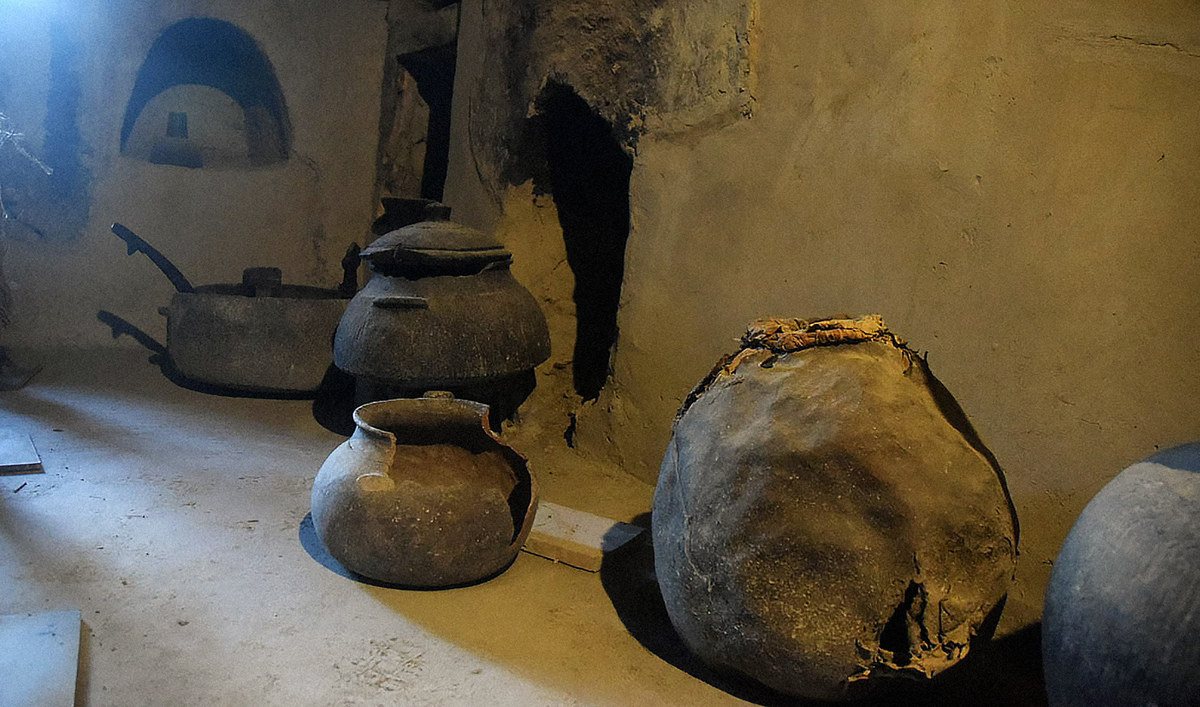
Stone pots on display in Ghanche district, Gilgit-Baltistan, Pakistan, July 1, 2021. (AN photo by Nisar Ali)
“According to my knowledge, Ghulam Haider is the only artist who is still associated with this profession in Gilgit-Baltistan. Earlier, one or two more people of Chorbat valley made stone items,” he said.
While little is known about the origin of the art, it is likely a continuation of a craft developed in the Stone Ages, Abadi said.
“We can’t say when the stoneware industry started, there is no history of this art in the written form,” the historian said. “It was the need of people to use stone pots and other utensils in the region before the discovery of bronze and metal.”
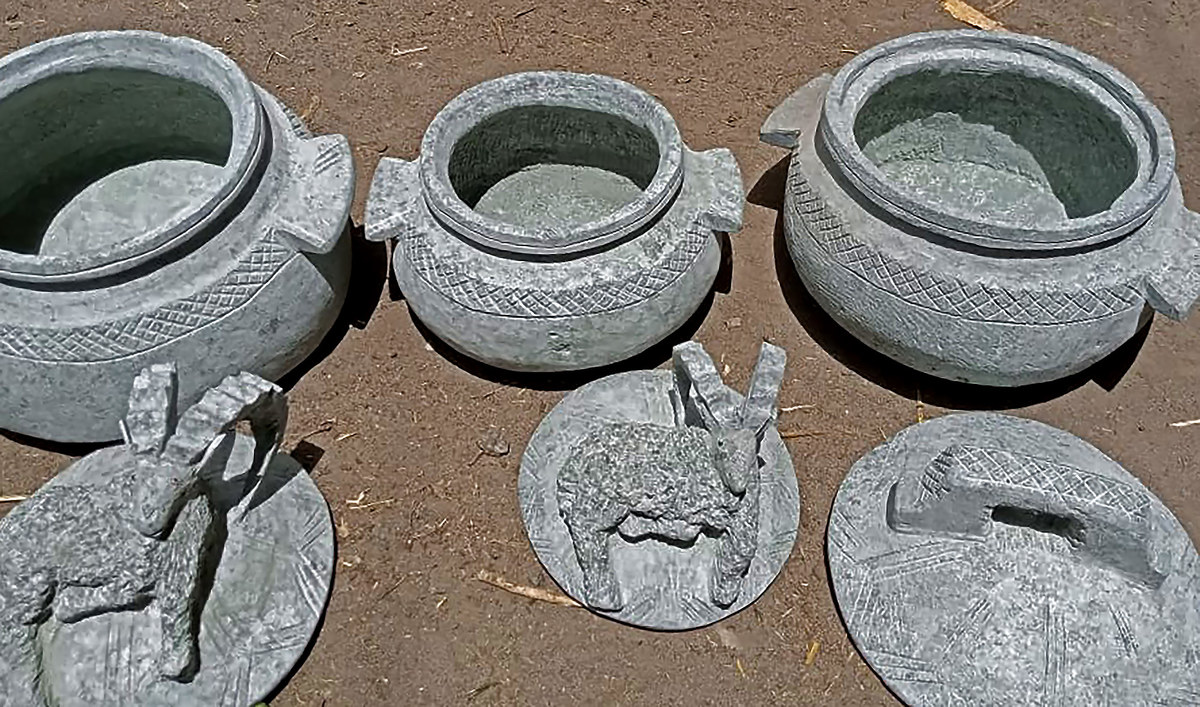
Stone pots on display in Ghanche district, Gilgit-Baltistan, Pakistan, July 1, 2021. (AN photo by Nisar Ali)
Though the pots, known as “gorkon” or “kwat” in the local Bali and Shina languages, have mostly disappeared from the region’s kitchens, some still use them as decorative items in their homes or prepare and serve food in them on special occasions like the Eid festivals.
“We make special dishes in these pots on special occasions,” Babar Ali, a resident of Gilgit-Baltistan’s Ghanche district, said.
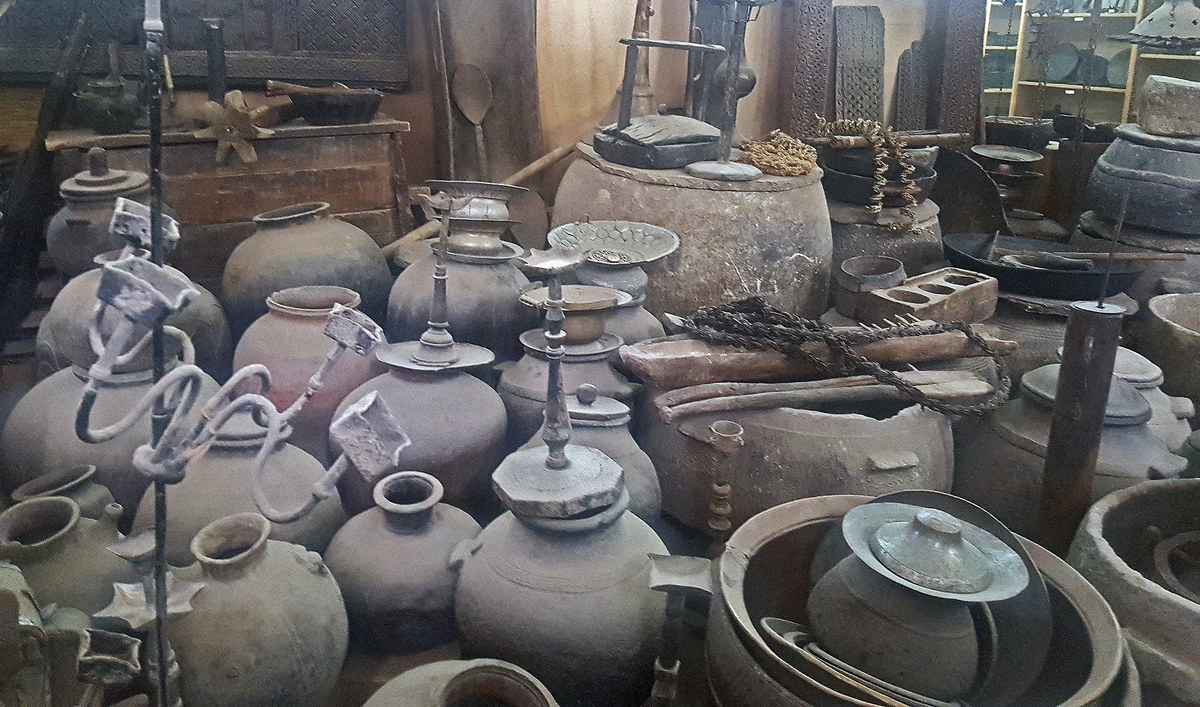
Stone pots on display in Ghanche district, Gilgit-Baltistan, Pakistan, July 1, 2021. (AN photo by Nisar Ali)
Food cooked in stone pots tasted much better, said hotelier Syed Israr Shah from Nagar district who is trying to revive the tradition at his guesthouse.
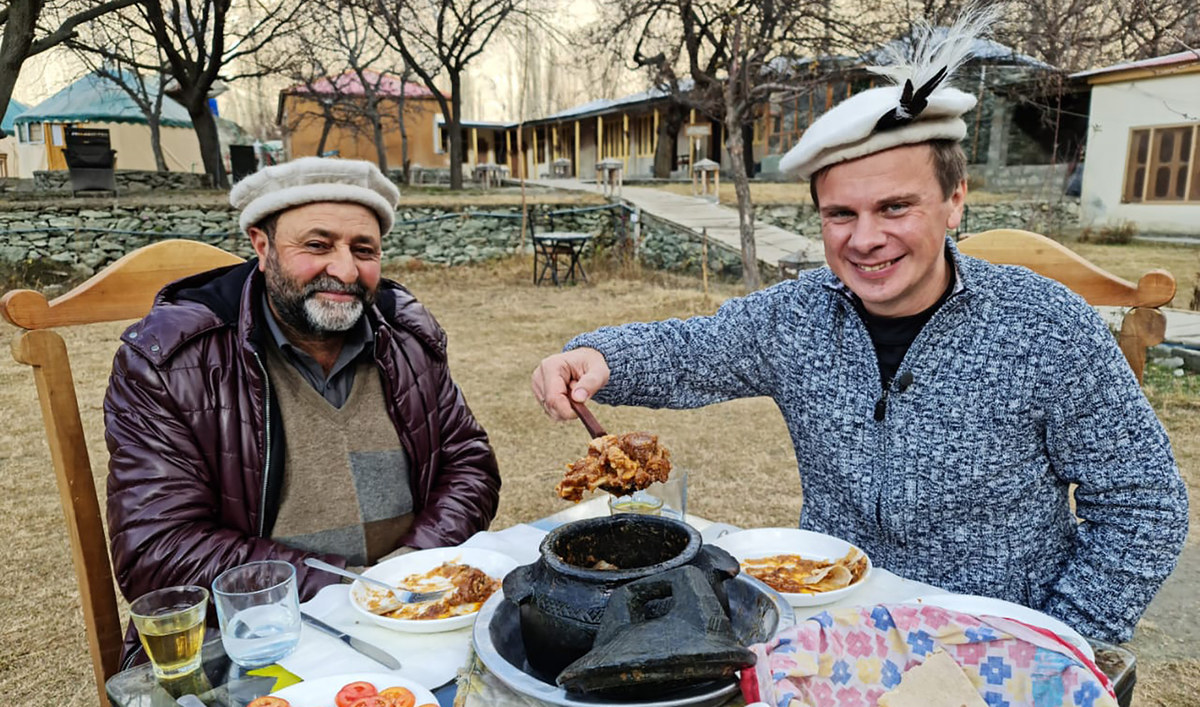
Tourists enjoy food cooked in stone pots at Syed Israr Shah's guesthouse in Nagar district, Gilgit-Baltistan, Pakistan. (Photo courtesy: Syed Israr Shah)
“We collected over two dozen stone pots from different old homes,” he told Arab News, saying mutton or biryani rice cooked in stoneware had a “much richer” flavor.
“Every guest now prefers dishes made in stone pots,” Shah said. “Foods cooked in stone-pots become tastier and remain hot for long hours.”