SR10,000 fine for anyone trying to access Grand Mosque, holy sites without permit during Hajj season

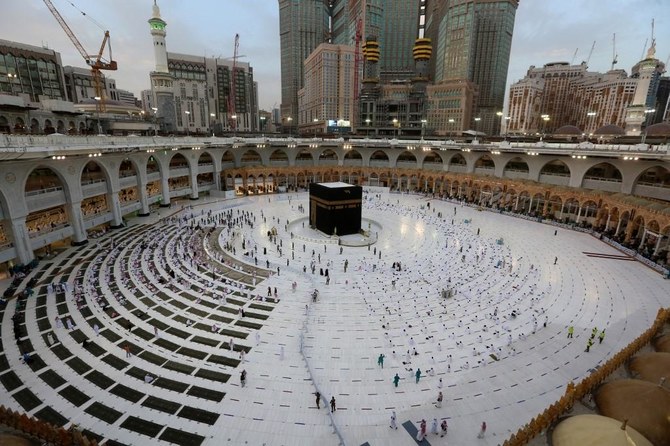
Anyone found attempting to access the Grand Mosque and Hajj sites during the pilgrimage season will be fined SR10,000. (File/AFP)
Short Url
Updated 04 July 2021
Follow

SR10,000 fine for anyone trying to access Grand Mosque, holy sites without permit during Hajj season

RIYADH: Anyone found attempting to access Makkah’s Grand Mosque, the area around it and the holy Hajj sites without a permit from Monday till the end of the annual pilgrimage will be fined SR10,000 ($2,666).
Holy sites include Mina, Muzdalifah and Arafat, and the fine will be doubled if the offense is carried out twice, the interior ministry said.
The ministry called on all citizens and residents to abide by instructions issued regarding the Hajj season this year and said that security personnel will carry out their duties on all roads and paths leading to the Grand Mosque and the holy sites to prevent violations and issue penalties to violators.


Saudi wildlife center releases 140 wild animals into royal reserve

The initiatives aim to enhance ecological balance and restore biodiversity in natural habitats. (SPA)
Updated 07 February 2026
Follow

Saudi wildlife center releases 140 wild animals into royal reserve

  • This milestone reflects significant progress in the management and governance of wildlife across the Kingdom, supporting the goals of the Saudi Green Initiative and aligning with the objectives of Saudi Vision 2030

RIYADH: The National Center for Wildlife released 140 wild animals into the King Salman bin Abdulaziz Royal Reserve as part of ongoing programs to reintroduce endangered species. The initiatives aim to enhance ecological balance and restore biodiversity in natural habitats.

The release, carried out in cooperation with the King Salman bin Abdulaziz Royal Reserve Development Authority, included 30 Arabian oryx, 70 reem gazelles (sand gazelles), and 40 houbara bustards, the SPA reported on Thursday. 

The initiative forms part of efforts to reintroduce species to their natural habitats and establish stable, self-sustaining wildlife populations capable of breeding, contributing to improved ecosystem functioning and sustainability.

The NCW continues to implement its strategic plans for wildlife development, with the total number of animals reintroduced through its specialized programs now exceeding 10,000.

This milestone reflects significant progress in the management and governance of wildlife across the Kingdom, supporting the goals of the Saudi Green Initiative and aligning with the objectives of Saudi Vision 2030.