

Saudi Arabia’s CMA gives green light for ACWA Power IPO

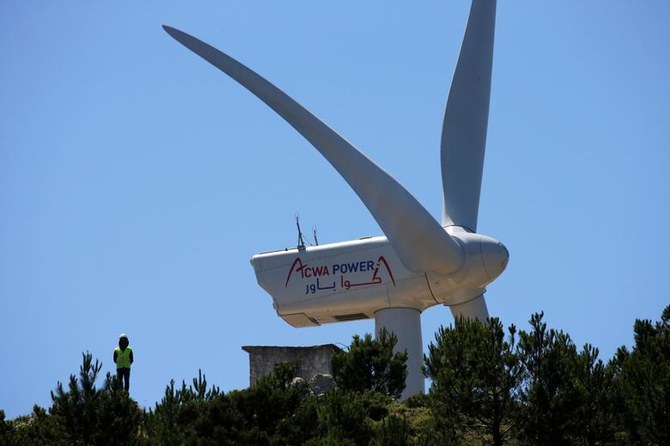
The Public Investment Fund, Saudi Arabia's sovereign wealth fund, said in November it increased its stake in ACWA Power to 50% from 33.6%. (Reuters/File Photo)
Short Url
Updated 01 July 2021
Follow

Saudi Arabia’s CMA gives green light for ACWA Power IPO

  • The regulator explained that the approval of the application is valid for a period of 6 months

RIYADH: Saudi Arabia's Capital Market Authority said on Wednesday it has approved an initial public offering of an 11.1% stake in ACWA Power.

ACWA Power, which delayed IPO plans in 2018, leads a consortium that will build and operate renewable power-based utilities at Saudi Arabia's flagship Red Sea tourism project.

"The company's prospectus will be published within sufficient time prior to the start of the subscription period," CMA said, adding its approval for ACWA's offering of 81,199,299 shares was valid for six months.

The Public Investment Fund, Saudi Arabia's sovereign wealth fund, said in November it increased its stake in ACWA Power to 50% from 33.6% as part of a move to support the renewable energy sector in Saudi Arabia. 

The CMA explained that the approval of the application is valid for a period of 6 months from the date of the Authority's decision, and the approval is considered canceled in the event that the offering and listing of the company's shares are not completed during this period, Saudi Press Agency reported.

* With Reuters


Jordan’s exports to Syria jump 341% in first 10 months 

Updated 7 sec ago
Follow

Jordan’s exports to Syria jump 341% in first 10 months 

RIYADH: Jordan’s national exports to Syria rose to 203 million Jordanian dinars ($286 million) in the first 10 months of 2025, marking a 341.3 percent year-on-year increase, new figures show. 

According to foreign trade data issued by the Department of Statistics, Jordan’s imports from Syria reached around 75 million dinars over the same period, up 47.1 percent annually, the Jordan News Agency, Petra, reported. 

Total trade between the two countries stood at 278 million dinars in the first 10 months of the year, compared with 97 million dinars in the same period of 2024. 

The growth reflects closer bilateral ties, as Jordan has reaffirmed its commitment to supporting Syria’s recovery and reintegration, a relationship seen as important for reconstruction efforts as well as regional stability and economic cooperation. 

In May, the two sides also agreed to draft a comprehensive road map to guide future cooperation, with a focus on investment, joint ventures and reconstruction initiatives.  

“Trade relations between Jordan and Syria recorded notable growth over the last ten months of this year, driven by the resumption of commercial activity and a marked increase in bilateral trade flows,” the Petra report stated.  

It added: “Jordanian exports to Syria are primarily concentrated in construction-related industries and building materials, including cement, steel, marble, tiles, paints, and pipes, in addition to electrical equipment, as well as food, agricultural, and chemical products.” 

Jordan and Syria are also expected to strengthen cooperation and exchange expertise in the banking and financial sectors, following meetings between the two countries’ central bank governors earlier this month. 

Jordan’s export growth to Syria comes amid a broader rise in trade with Arab markets, as Jordanian exports to countries in the Greater Arab Free Trade Area continued to climb during the first 10 months of the year, keeping Arab states at the forefront of the country’s trading partners. 

According to foreign trade data from the Department of Statistics, Jordanian exports to the region rose 8.7 percent year on year to 3.24 billion dinars, compared with 2.98 billion dinars in the same period last year. Arab countries accounted for about 41.5 percent of Jordan’s total exports during the period. 

Imports from countries within the Greater Arab Free Trade Area also increased, rising 8 percent to 4.58 billion dinars in the first 10 months of the year, up from 4.25 billion dinars a year earlier. 

As a result, Jordan’s trade deficit with the region widened to about 1.34 billion dinars during the period, compared with 1.26 billion dinars in the corresponding period last year, reflecting stronger import growth alongside rising exports.