


LONDON: A teenage neo-Nazi who threatened to attack Muslims, refugees and migrants has pleaded guilty a number of terror offenses.
The British 15-year-old, who cannot be named for legal reasons, discussed a proposed attack with other members of a far-right online group he had created on encrypted messaging app Telegram.
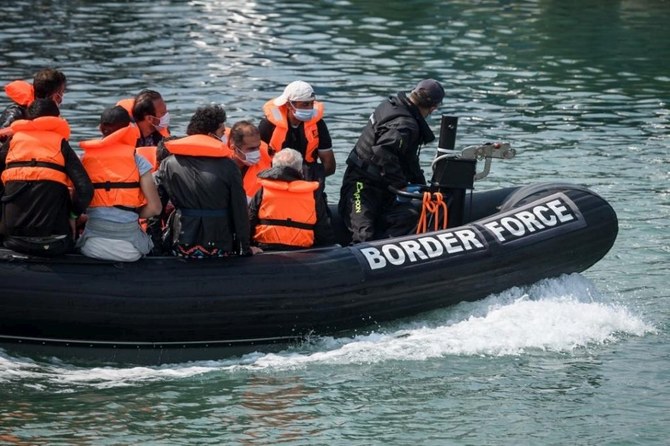
“I am planning an attack against the Dover coast where every Muslim and refugee has been given safety. If you’re interested tell me now,” he wrote in September last year.
When other group members asked about his proposed methods and what weapons he would use, he suggested Molotov cocktails and “metal bats” and advised any other participants to wear thick clothing to protect them from Tasers.
He pleaded guilty on Monday, the first day of his trial, to encouraging terrorism and to possessing and disseminating a terrorist publication. A London court heard he has a previous conviction for threatening to blow up a mosque in January last year.
The teenager appeared in court alongside a 16-year-old boy who admitted disseminating terrorist publications. Prosecutors said both teenagers possessed “a large quantity of extreme right-wing propaganda,” including photos, videos and documents.
The material included footage of the March 2020 terrorist attacks on two mosques in Christchurch, New Zealand, in which 51 people were killed. The massacre was live streamed over Facebook by the killer.
The older boy had carried out numerous internet searches relating to guns, weapons and bombs, while the younger had made significant online efforts to recruit others to their cause. When the 15-year-old was arrested, he told police: “Basically, I’m far right and you guys don’t like it.”
The number of terrorism cases involving children in the UK has been rising. Official figures released this month indicated that more than one in 10 terror suspects arrested in the country is categorized as a child. It is part of a wider rising tide of far-right extremism in the UK and Europe.
Islamist extremists are still more likely to attempt attacks than far-right extremists, but by November last year the number of deradicalization referrals received by the UK’s anti-terror watchdog relating to right-wing and Islamist extremists reached the same level for the first time.
Islamophobic propaganda and messaging by far-right groups is often a major driving force behind their recruitment efforts, and experts have warned that the increased isolation during the COVID-19 pandemic has been a dangerous development that increased the risk of radicalization for individuals most vulnerable to it.
Britain’s senior national coordinator for counterterrorism policing, Dean Haydon, said: “COVID-19 has driven huge numbers of people to spend a lot more time online and we have seen an increase in the volume of online extremism — much of which sits below a criminal threshold, but which creates a permissive environment which makes it easier for extremists to peddle their brand of hatred.”


