

Saudi Arabia’s Islamic studies center seeks to write new chapter with Philippines

Photo/Twitter
Short Url
Updated 28 June 2021
Follow

Saudi Arabia’s Islamic studies center seeks to write new chapter with Philippines

  • King Faisal Center for Research and Islamic Studies is looking to enhance academic collaboration with Filipino students, Malacanang says

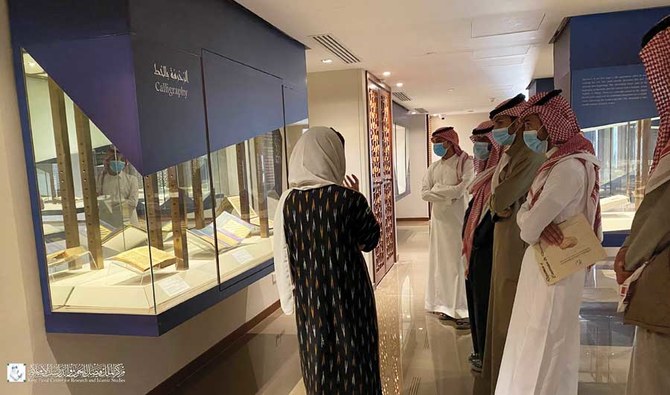
MANILA: An Islamic studies and research center in Saudi Arabia is “opening its doors” to Filipinos seeking to pursue scholarly work as part of efforts to strengthen bilateral ties between the two countries.

In a statement on Saturday, Malacanang said that the King Faisal Center for Research and Islamic Studies (KFCRIS) had “conveyed its readiness” for the initiative to Presidential Assistant on Foreign Affairs and Special Envoy Robert Borje during his recent visit to the Kingdom.

In a meeting with KFCRIS Secretary-General Turki Bin Mohammed Al-Shuwaier, Borje underscored the importance of enhancing academic and people-to-people exchanges between the two countries.

Al-Shuwaier said he “hopes to forge more tie-ups with institutions of higher learning in the Philippines, including those in the Bangsamoro Autonomous Region in Muslim Mindanao (BARMM),” the statement said.

Borje visited the KFCRIS to “pay respect to the Kingdom’s Islamic heritage, values and identity” and honor the “enduring ties” between the Philippines and Saudi Arabia, it added.

The visit by President Rodrigo Duterte’s special envoy was an “important opportunity for Saudi Arabia to work with the Philippines,” the statement quoted Al-Shuwaier as saying, while Borje expressed gratitude to the Saudi official for “opening opportunities to Filipino students seeking to study at the center.”

“Enhanced collaboration on education, research and culture between the two countries is part of President Duterte’s thrust for forging multi-dimensional relations with Saudi Arabia,” Borje said.

In comments to Arab News on Sunday, the Philippine Embassy in Riyadh told Arab News that the KFCRIS was “accepting visiting fellows who would like to research topics that are relevant to its thrusts of the center, and is encouraging Filipinos to join its network of academic researchers.”

“The embassy is also working to establish linkages between the center and some universities in the Philippines, particularly in the Bangsamoro, to promote cooperation between Philippine and Saudi academic institutions, among others,” it added.

On when the collaboration between the KFRIC and the Philippines would begin, Filipino ambassador Adnan Alonto told Arab News on Sunday that it was “subject to further talks with the center.”

“The embassy will follow through. We will discuss any future visits,” he added.

Borje’s visit to the KFCRIS was part of a string of activities during his five-day official trip to Saudi Arabia, which ended on June 24 and included a meeting with Gulf Cooperation Council (GCC) Secretary-General Dr. Nayef Falah M. Al-Hajjraf.

During their talks, Borje expressed hope for greater cooperation with GCC and member states, especially as the Philippines rebounded from the pandemic.

He said he was optimistic that a “much deeper collaboration with GCC and member states would help further spur and sustain lasting development in Mindanao particularly in BARMM,” the Malacanang statement said, adding that the Philippines had “instituted reforms to make it a preferred investment destination.”  

Borje explained that GCC members could play the role of “vital partners” as the BARMM proceeds with governance and growth.

Noting that economic development was essential to address long-standing social issues such as peace and security in the southern Philippines, Borje said such support was “vital to realize the development potentials of BARMM.”  
Al-Hajjraf said that he would be “happy to explore greater GCC cooperation with the Philippines,” including the establishment of a formal coordinating mechanism for trade and investments and economic partnership,” the Malacanang statement said.  
The two officials also stressed the importance of continuing cooperation to uphold migrant workers’ rights and combat terrorism and violent extremism.
The GCC is a regional organization comprising Bahrain, Kuwait, Oman, Qatar, Saudi Arabia and the UAE. Established in 1981, the group’s objectives are to enhance coordination, integration and inter-connection among its members.


Jeddah masterclass explores power of sound in cinema with leading industry experts

Updated 7 sec ago
Follow

Jeddah masterclass explores power of sound in cinema with leading industry experts

  • The event offered an intimate look into cinematic sound design, attracting aspiring filmmakers and composers eager to learn from one of the industry’s leading voices

JEDDAH: The Alliance Francaise of Jeddah, in collaboration with the French Consulate, recently hosted an exclusive masterclass on Sound and Cinema led by Fanny Lamothe, CEO of Cercle Rouge Productions, along with composers Fabien and Mike Kourtzer.

The event offered an intimate look into cinematic sound design, attracting aspiring filmmakers and composers eager to learn from one of the industry’s leading voices.

Cercle Rouge Productions has contributed to internationally acclaimed films such as “John Wick 4” and “Emilia Perez,” as well as notable Saudi productions including “Mandoob” by Ali Kalthami, “Al Zarfa” by Abdullah Majed, and “Sayfi” by Wael Abumansur.

Lamothe, who also heads the music department at Why Not Productions, oversees all aspects of sound in film — from composition and recording to editing, foley, and legal clearances — bringing extensive experience to both international and regional projects.

During the masterclass, Lamothe and the Kourtzers highlighted two key areas for participants: understanding the precise process of creating original music for a film and establishing clear communication between composers and directors to ensure a shared understanding of the film’s deeper meaning. “This allows us to express our own point of view and add an extra dimension to the story,” they said.

Discussing her approach to composing for films with strong cultural identities, Lamothe added: “It’s a process of back-and-forth with the director, along with many researches that allow us to immerse ourselves in the context and universe of the film and to perceive different cultural threads that resonate with it.

“Each city, for instance, has its own rhythm, its own sound. Music in itself is a universal language, and emotions can be transmitted to audiences worldwide when expressed with a clear artistic direction and a confident musical discourse.”

Fabien Kourtzer said: “Working with international directors broadens our perspective. What has particularly enriched our film scores from the Arab world is the ancient aspect of these civilizations, which is a powerful influence even when we work on films from other parts of the world.

Mike Kourtzer said: “The growth of Saudi cinema is explosive. It stems from a very strong desire among industry players to share stories that showcase this cultural heritage to the rest of the world. This dynamic will give birth to major works that will stand out on the global audiovisual landscape.”

Lamothe offered advice to young Saudi composers and filmmakers aiming to enter film scoring: “Seek to deeply understand the film you are working on and take the necessary time to achieve the best result.

“Start by understanding the director — what they want to express through communication and building a human relationship. Then, understand yourself and your musical identity. Your own point of view and artistic vision are what set you apart.”

Larry Lamartiniere, managing director of Alliance Francaise in Jeddah, highlighted the significance of the event. “It was an honor to host this masterclass on music and cinema with Cercle Rouge Productions. We organized it in partnership with the French Consulate of Jeddah as a closing event of a very intense and productive sequence for France at the Red Sea International Film Festival.

“This evening highlighted the vital role of sound in storytelling and celebrated the creative exchange between France and Saudi Arabia. Supporting such conversations not only strengthens our cultural ties but also nurtures the next generation of filmmakers and sound artists in the region,” he said.

With Saudi cinema experiencing rapid growth and a surge in international collaborations, events like this masterclass provide a platform for emerging talent to learn from industry leaders and shape the Kingdom’s filmmaking future.

All three confirmed their ongoing commitment, saying: “We have already worked on eight Saudi films, and these experiences have been more than enriching. We have had fantastic encounters, and we have a very strong desire for this adventure to continue.”