

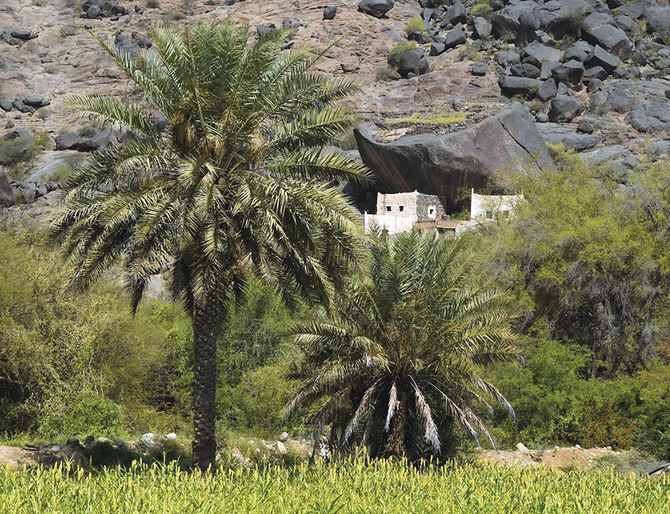
ThePlace: Asir’s Al-Majarda village is home to a wide range of wildlife and rare plants

Photo/SPA
Short Url
Updated 26 June 2021
Follow

ThePlace: Asir’s Al-Majarda village is home to a wide range of wildlife and rare plants

  • Village residents rely on corn, millet, bananas and coffee beans for employment and income generation

Located in the Asir region, Al-Majarda village is home to a wide range of wildlife and rare plants. Visitors arrive in search of the sounds of nature as well as the sight of green growth and waterfalls.

Visitors to the villages in the northern Majarda governorate can enjoy spectacular sights from the mountainside of Tahawi, famous for its volcanic rock. Heavy rain in the areas since Ramadan has increased growth in valleys and on  mountainsides, as well as pastures.

Temperatures in the area can change quickly, and visitors can look forward to both cool and warm conditions, thanks to roads that connect low-lying areas with high mountains.

Village residents rely on corn, millet, bananas and coffee beans for employment and income generation. They also trade and sell livestock and farm products in local and surrounding centers.



Red Sea cleanup initiative launches in Jeddah

Updated 7 sec ago
Follow

Red Sea cleanup initiative launches in Jeddah

  • The campaigners removed over 500 kg of waste and general pollutants, including more than 4,000 meters of abandoned fishing lines

JEDDAH: A major cleanup initiative titled “Our Sea, Our Responsibility,” to safeguard the Red Sea’s marine ecosystems, was launched in Jeddah on Thursday.

The participants include the Saudi Red Sea Authority, Border Guard, Jeddah Municipality, Saudi Water Sports and Diving Federation, National Center for Wildlife, and General Organization for Conservation of Coral Reefs and Turtles in the Red Sea.

The initiative focuses on removing hazardous seabed debris that poses a direct threat to coral reefs and marine biodiversity, the Saudi Press Agency reported.

Special diving teams conducted underwater surveys and retrieval operations, followed by rigorous sorting, documentation, and safe disposal of recovered waste.

The campaigners removed over 500 kg of waste and general pollutants, including more than 4,000 meters of abandoned fishing lines.