
MANILA: The Philippines and Saudi Arabia have agreed to increase cooperation on labor reforms and ensure the well-being of over 800,000 Filipino migrant workers in the Kingdom.
The subject was discussed during a meeting on Sunday between President Rodrigo Duterte’s special envoy and presidential assistant on foreign affairs, Robert Borje, and Saudi Minister of Human Resources and Social Development, Ahmed bin Suleiman Al-Rajhi.
Philippines Ambassador to Saudi Arabia Adnan Alonto, Foreign Affairs Undersecretary for Migrant Workers’ Affairs Sara Lou Arriola, and Foreign Affairs Assistant Secretary Enrico Fos were also part of the discussions.
Presidential Communications Assistant Secretary for Global Media Affairs J.V. Arcena told Arab News on Monday that Borje and Al-Rajhi highlighted the two nations’ commitment to “significant advancements in labor reform and fair migration.”
Borje told Al-Rajhi that Duterte welcomed Saudi Arabia’s Labor Reform Initiative (LRI), introduced in March, “as a significant step toward addressing issues with the existing sponsorship system” in the Kingdom.
He also expressed confidence that the initiative will raise productivity and competitiveness of the labor market in the Kingdom.
“Saudi Arabia’s LRI is commendable, and President Duterte hopes Filipino household workers will be included in the reform initiative,” Borje said.
He emphasized Manila’s commitment to work with the Saudi government in implementing the labor reforms, especially to advance the rights and welfare of migrant workers. At the same time, Borje sought the Saudi official’s support for other initiatives to support Overseas Filipino Workers (OFWs) in the Kingdom.
These include a repatriation program for distressed OFWs affected by the COVID-19 pandemic, efforts to strengthen the Philippine Embassy in Riyadh and the Philippine Consulate-General in Jeddah, and to make consular services more accessible to Filipinos in Saudi Arabia.
Borje underscored the need to address fundamental issues of all migrant workers in the Kingdom, such as harnessing technology to improve access to labor sector services, protection of wages, and automation of recruitment processes.
“Both sides are looking forward to the Joint Commission Meeting and also showed eagerness to sign a memorandum of understanding (MoU) on labor soon, based on the LRI reforms that the Saudi government has done,” the statement said.
It added that Riyadh and Manila “hope to see the convening of a technical working group on the details of the MOU on labor.”
Describing the Saudi government’s reforms on migrants’ rights as “bold and visionary,” Borje aired his optimism that the Philippine-Saudi relations would “continue to grow beyond labor cooperation,” such as in the trade and investment sectors.
The Philippines is willing to collaborate with Saudi Arabia on a multi-dimensional partnership, in line with Duterte’s vision, he said.
Borje’s meeting with Al-Rajhi was part of the Philippine delegation’s five-day visit to Saudi Arabia, anchored on the president’s commitment to protect the rights and promote the welfare of OFWs.
According to the Saudi Press Agency (SPA), the two officials also discussed “issues of common interest,” following which Saudi King Salman received a written letter from Duterte which dealt with relations between Riyadh and Manila, and ways to support and enhance them in various fields.
The Philippines and Saudi Arabia marked 50 years of diplomatic ties in 2019, with Duterte congratulating King Salman for the Kingdom’s “landmark” LRO, which, among other benefits, abolished the kafala system for migrant workers last year.
In a phone call with Crown Prince Mohammed bin Salman in May, Duterte renewed the Philippines’ commitment to strengthen bilateral and trade ties and intensify efforts to ensure migrant workers’ rights.
He also conveyed his appreciation for the Kingdom’s free COVID-19 vaccinations for Filipinos and the financial assistance extended to the Philippine health sector during outgoing Saudi Ambassador to the Philippines Abdullah Al-Bussairy’s farewell event in the Malacanang last week.
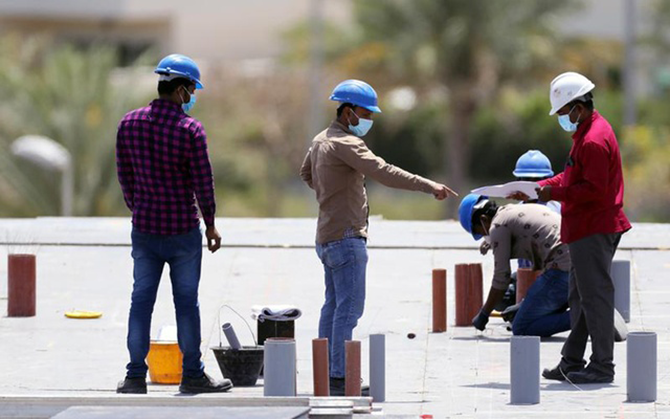
Saudi Arabia hosts more than 800,000 Filipinos, the largest number of any Gulf state, according to a 2020 government estimate. About half work as domestic laborers, while others are employed in the Kingdom’s construction, outsourcing and healthcare sectors.