

Samina Baig embarks on expedition to become first Pakistani, Muslim woman to scale K2

This photograph received from Pakistan Youth Outreach (PYO) and taken on May 19, 2013 shows Pakistani female climber Samina Baig holding her national flag on the peak of Mount Everest, Nepal. (AFP/ File)
Short Url
Updated 18 June 2021
Follow

Samina Baig embarks on expedition to become first Pakistani, Muslim woman to scale K2

  • Baig was first Pakistani woman to climb Mount Everest and the Seven Summits, first and youngest Muslim woman to climb Everest
  • Described as the Savage Mountain, K2 straddles Pakistan-China border and is widely considered the world’s toughest and most dangerous climb 

SKARDU: Renowned Pakistani mountaineer Samina Baig, the first Pakistani woman and the first and youngest Muslim woman to climb Mount Everest and the seven highest peaks in seven continents, now has a new dream: becoming the first Pakistani and the first Muslim woman to complete an ascent of K2, the world’s second tallest mountain. 
Famously called the Savage Mountain, K2 straddles the Pakistan-China border and is widely considered the world’s toughest and most dangerous climb.

This January, a team of climbers from Nepal made history by becoming the first mountaineers to successfully complete a winter attempt on the summit of K2. But the euphoria of the year’s climbing season quickly turned to despair when Muhammad Ali Sadpara, Pakistan’s most famous climber, John Snorri of Iceland, and Juan Pablo Mohr of Chile, disappeared on the mountain on February 5, just 300 meters short of the summit. They were declared dead by the government on February 18 though their remains have not been found yet. 
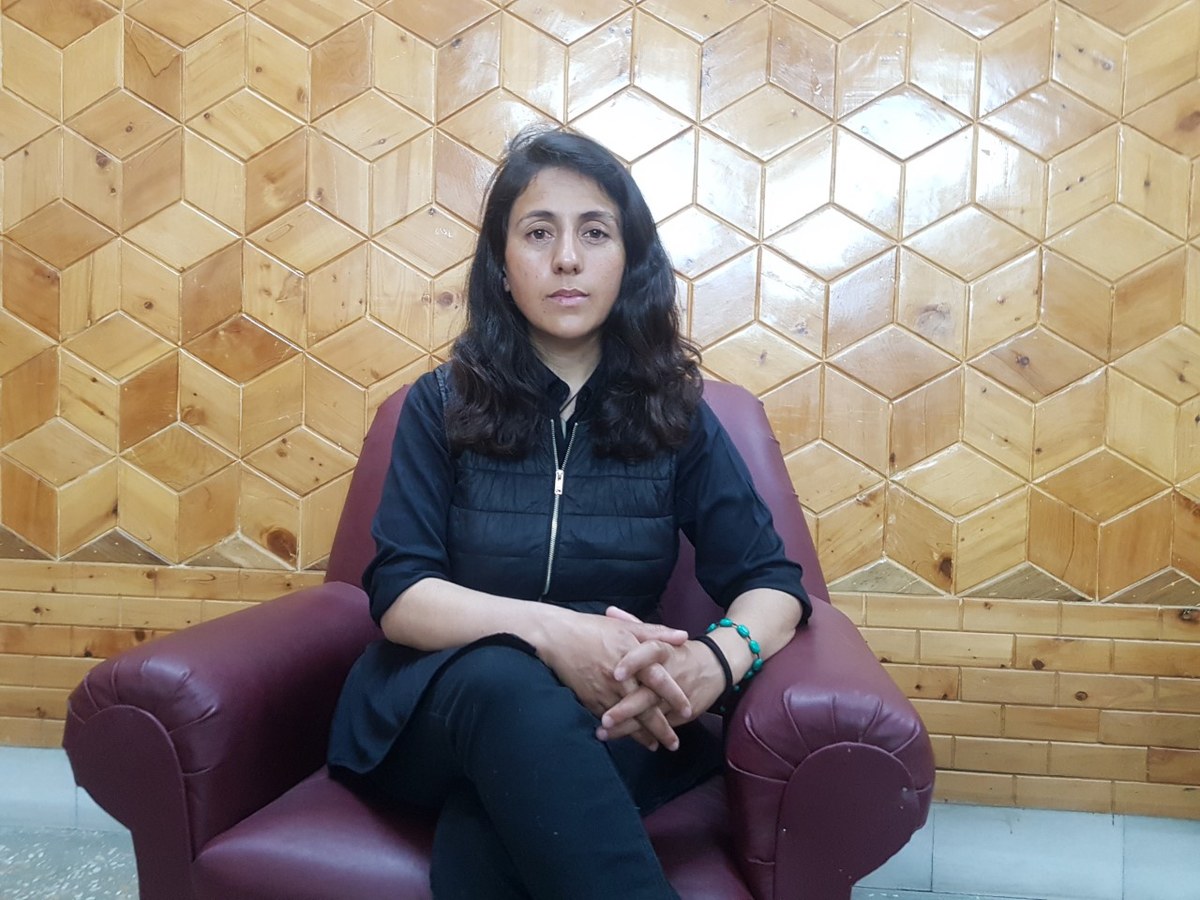


Samina Baig poses for a photograph at a hotel in Skardu, Gilgit-Baltistan, Pakistan, on June 15, 2021. (AN Photo by Nisar Ali)

“K2 is definitely one of the toughest mountains in the world,” Baig told Arab News in an exclusive interview this week, ahead of leaving for the K2 climb on Friday. “Many people have lost their lives on its slopes. Most recently, we lost our colleague [Muhammad] Ali [Sadpara] Bhai. But this is all part of life. It is part of the game.”
Born in Pakistan’s picturesque Gilgit-Baltistan (GB) region, a mountainous territory stretching across northern Pakistan, Baig was awarded the government’s Pride of Performance award following her successful expedition of Everest in 2013. She also served as an adviser on tourism, sports and culture for GB’s chief minister last year.
“I decided to join this profession since there was no representation of Pakistani women in this sport and I wanted to encourage them to try mountaineering,” Baig said. “At max, women go to the mountains for trekking.”
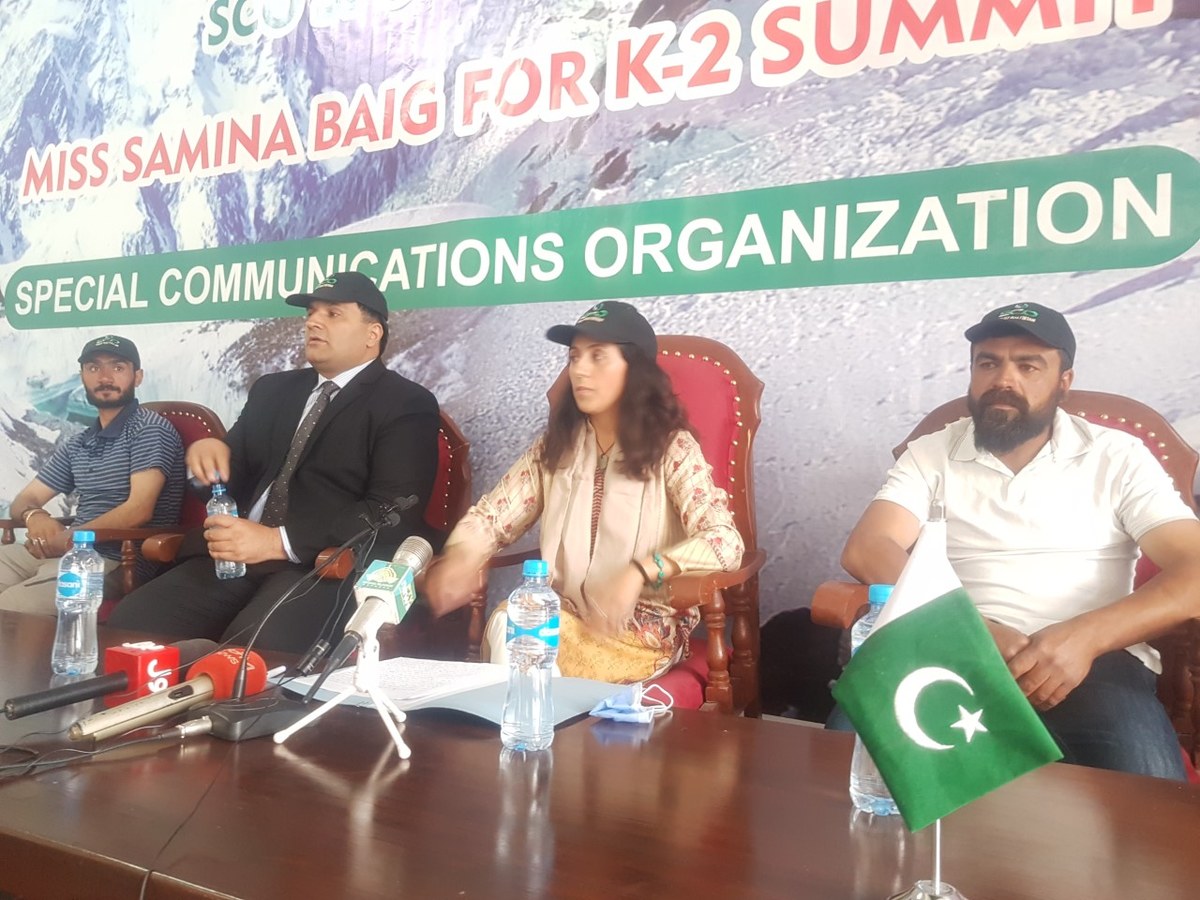


Samina Baig briefs journalists about her upcoming K2 expedition at the Skardu press club, Gilgit-Baltistan, Pakistan, on June 16, 2021. (AN Photo by Nisar Ali)

“If women can work in offices and participate in different sporting activities, they can also climb mountains,” she said. “After summiting Mount Everest, I also hoisted Pakistan’s flag on seven summits in seven continents. Some of these mountains have never been scaled by any Pakistani climber.”
“As a Pakistani, it is a matter of honor for me that I represent my country wherever I go,” Baig said, adding: “Being a woman, my message to people is to encourage and support their daughters and let them choose their own profession. Let them make their own mark and build the image of their own country.”
Asked if she had safety concerns given the recent accidents on K2, the climber said mountaineers always prepared themselves for the worst. 
“Safety of all climbers is our top priority, but when the mountain accepts us, we manage to scale it; when it does not, we cannot,” Baig said, echoing a widespread myth among local climbers that reflects a deep reverence for nature’s mightiest peaks.
Asked about Sadpara, Baig described him as “the most amazing, technical and strong climber” in the country’s history.
“However, anything can happen on a mountain,” she said. “A mountaineer can either face harsh weather or experience physical exhaustion. I cannot say what happened to him and the rest of his team, but it was extremely tragic.”


Pakistan urges revival of long-paralyzed SAARC as bloc marks 40th charter anniversary

Updated 4 sec ago
Follow

Pakistan urges revival of long-paralyzed SAARC as bloc marks 40th charter anniversary

  • PM Sharif says political rifts have stalled regional collaboration, calls for economic and digital connectivity
  • He mentions regional challenges requiring collective responses based on mutual trust, spirit of cooperation

ISLAMABAD: Prime Minister Shehbaz Sharif on Monday called for reviving the long-paralyzed South Asian Association for Regional Cooperation (SAARC), saying deeper economic collaboration and collective responses to shared challenges were essential as the bloc marked the 40th anniversary of its founding charter.

SAARC has been effectively dysfunctional since 2016, when its planned Islamabad summit collapsed after India withdrew following a militant attack it blamed on Pakistan. Islamabad denied involvement, but New Delhi’s decision prompted Afghanistan, Bangladesh and Bhutan to pull out, leading to the indefinite postponement of the summit.

Beyond the immediate rupture, SAARC was widely believed to have already become stagnant because of structural issues, including the India-Pakistan rivalry and New Delhi’s pivot toward alternative regional groupings.
Sharif extended his greetings to the peoples and the governments of “all SAARC member states” in a statement circulated by his office.

“When SAARC was established, over four decades ago, it was meant to provide an essential platform, to promote dialogue, foster cooperation and strengthen the bonds that bring our nations together,” he said.

“While these goals have, regrettably, remained elusive due to political considerations within the region, I commend the SAARC Secretariat for striving hard to provide its dedicated assistance as well as for its efforts to advance the organization’s goals and create opportunities for meaningful collaboration among the member states,” he added.

The prime minister noted his administration remained committed to the principles and objectives of the SAARC Charter.

“We believe that genuine cooperation, guided by sovereign equality, mutual respect and constructive engagement, can unlock South Asia’s vast potential and ensure a better tomorrow for all,” he said.

Sharif maintained the region needed stronger economic, digital and people-to-people connectivity to expand trade, investment, innovation and cultural exchange, adding that South Asian states faced shared pressures from poverty, climate-induced natural disasters, food and energy insecurity and public-health vulnerabilities.

These, he continued, required “collective responses based on mutual trust, goodwill and a spirit of cooperation.”

His statement did not directly mention India, though last week, his deputy, Ishaq Dar, urged a “reimagining” of South Asia’s fractured regional architecture, saying an 11-year freeze in dialogue with New Delhi had eroded prospects for long-term stability in one of the world’s most volatile regions.

Dar criticized the paralysis of SAARC, saying “artificial obstacles” needed to be removed for it to resume its role as a platform for economic cooperation, and argued the region would only achieve its political and economic potential if countries committed to cooperation and a future “where connectivity replaces divisions.”