

Turkey begins construction of fourth warship for Pakistan Navy at Karachi shipyard 

Group photo shows Pakistani Chief of the Naval Staff, Admiral Muhammad Amjad Khan Niazi (eighth from right), with Pakistani and Turkish navy officials in Karachi, Pakistan, on June 15, 2021. (Photo courtesy: Pakistan Navy)
Short Url
Updated 17 June 2021
Follow

Turkey begins construction of fourth warship for Pakistan Navy at Karachi shipyard 

  • Contract for four MILGEM class corvettes was signed with Turkey in 2018
  • Induction of ships will significantly enhance maritime defense, deterrence capability, Pakistan Navy says 

ISLAMABAD: Turkey this week began construction of a Turkey-made small warship called the corvette in the southern port city of Karachi to be supplied to the Pakistan Navy.
On May 10, 2017, Turkey and Pakistan signed a memorandum of understanding for the sale of four Turkish made corvette warships and 52 Pakistan-made training planes for Ankara’s armed forces. Ankara described it as Turkey’s biggest single military export deal and “a very important day” for the defense industry.
Under the deal, the Karachi Shipyard (KS&EW) would buy four corvettes made under Turkey’s MILGEM warship program, aimed at designing and building locally a fleet of multipurpose corvettes and frigates that will replace older ships.
“Pakistan Navy has concluded a contract with M/s ASFAT for construction of 04 x corvettes out of which two are being constructed at Istanbul Naval Shipyard whereas the remaining two at Karachi Shipyard and Engineering Works,” Pakistan Navy said in a statement on June 15.
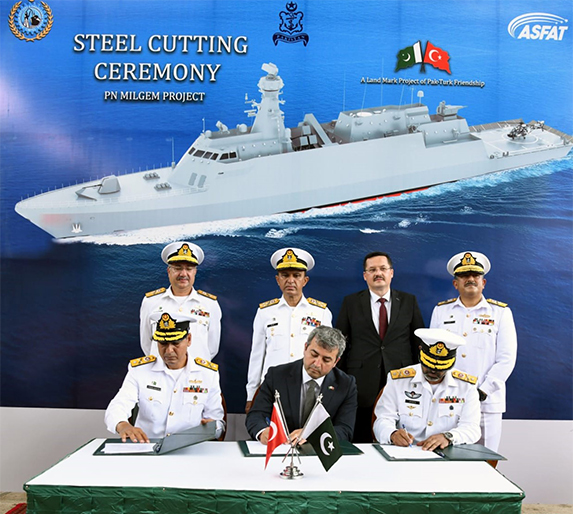


Officials from the Pakistan and Turkish navy sign a memorandum of understanding for the sale of four Turkish-made corvette warships and 52 Pakistan-made training planes in Karachi, Pakistan, on June 15, 2021. (Photo courtesy: Pakistan Navy)

The contract for four MILGEM class corvettes for the Pakistan Navy with transfer of technology was signed with ASFAT Inc, a Turkish state owned defense contractor in 2018.
“These corvettes will be fitted with state-of-art Surface, Sub-Surface and Anti-Air Weapons & Sensors, integrated through an advanced Network Centric Combat Management System,” the navy statement said. “It is a historic occasion as Ministry of Defense Production, Pakistan Navy, Karachi Shipyard and M/s ASFAT of Turkey have joined hands for construction of this Corvette.”
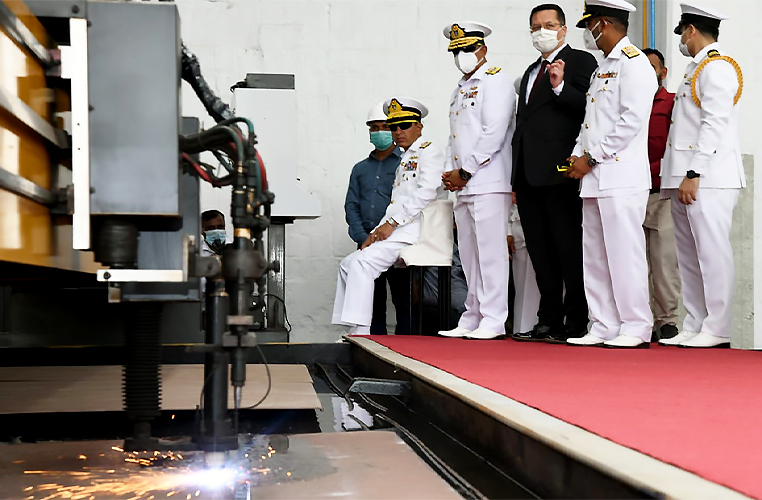


Pakistan's Chief of the Naval Staff, Admiral Muhammad Amjad Khan Niazi (first from left), observes the making of the Turkey-made small warship under the MILGEM program at the Karachi port in Pakistan, on June 15, 2021. (Photo courtesy: Pakistan Navy)

Pakistan Navy said the induction of the corvettes would significantly enhance the force’s maritime defense and deterrence capabilities: “These corvettes will become a core element of PN’s kinetic response to traditional and non-traditional challenges and to maintain balance of power in the Indian Ocean Region.”


Pakistan’s Mahnoor Omer named among TIME’s ‘Women of the Year’ for 2026

Updated 01 March 2026
Follow

Pakistan’s Mahnoor Omer named among TIME’s ‘Women of the Year’ for 2026

  • Omer moved a Pakistani court against the so-called ‘period tax’ in Sept. 2025 which has since sparked a national debate
  • Taxes on sanitary pads in Pakistan can add up to 40 percent to retail price, UNICEF says only around 12 percent women use such products

ISLAMABAD: Pakistani women’s rights activist Mahnoor Omer, who fought against taxes on menstrual products, has been named among the TIME magazine’s ‘Women of the Year’ for 2026.

Omer’s efforts have been recognized alongside 16 activists, artists, athletes and businesswomen in the TIME’s Women of the Year 2026 list, including Olympic gold medalist Sydney McLaughlin-Levrone and Oscar-nominated filmmaker Chloe Zhao.

Dissatisfied with the efforts to educate Pakistani girls about sexual violence, Omer founded the Noor Foundation at the age of 14 and held her own workshops with village girls about everything from climate change to menstruation, according to the TIME magazine.

Two years later, a conversation with a domestic worker about the price of pads made her realize that not everyone could afford these essentials. She moved a court against the so-called “period tax” in Sept. 2025 and the case has sparked a national debate on the subject, considered a taboo by many in Pakistan, since its first hearing late last year.

“A decade and one law degree after her interest in activism was sparked, Omer, now 25, is putting her passion and expertise to work in the name of gender equity,” TIME wrote about Omer on its website.

Taxes imposed on sanitary products in Pakistan can add up to 40 percent to the retail price. UNICEF estimates just 12 percent of women in the country use commercially produced pads or tampons. The alternative, using cloth, risks health impacts including rashes and infections, and can make it impossible for girls to attend school while menstruating.

Omer’s suit, which awaits the government response, has sparked a national discussion. She says she spoke about menstruation to her father and male cousins, who thanked her for standing up for their daughters.
The 25-year-old, who is currently enrolled in a master’s degree in gender, peace, and security at the London School of Economics, sees this case as just the first of many.

“I’m not free until every woman is free,” she was quoted as saying by TIME. “I want to leave no stones unturned in terms of what I can do with the next few decades, as a lawyer for the women in my country and gender minorities in general.”